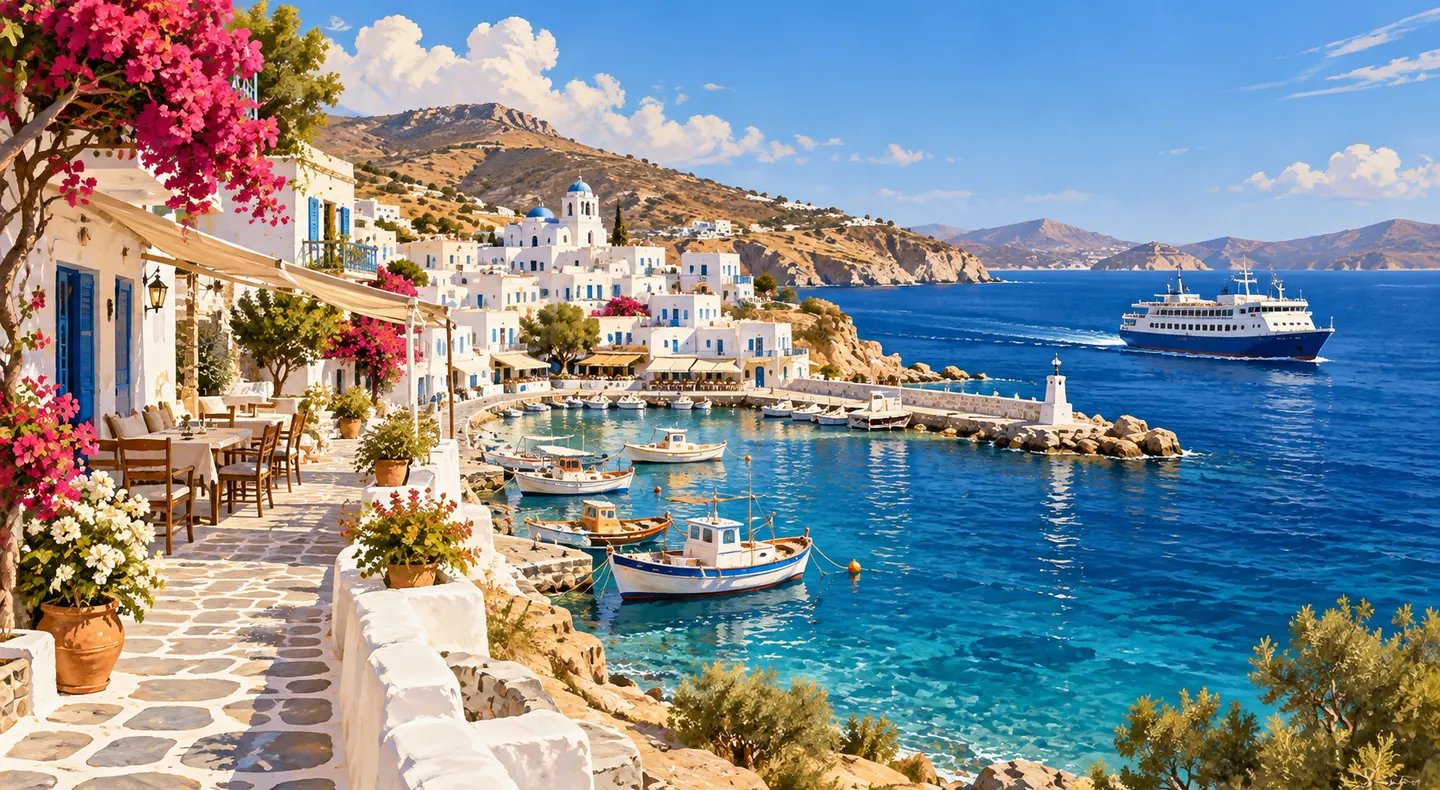
A budget-friendly Greek island holiday does not have to mean sleeping somewhere inconvenient or skipping every memorable experience. Often the biggest savings come from a handful of decisions made before departure: choosing the right island, staying near transport, cutting unnecessary ferry legs and travelling outside the busiest weeks.
This guide is about how to plan the whole trip, not simply naming islands with low-cost hotels. We'll walk through the expenses that matter most, show where it makes sense to spend a little extra, and give you a practical method to build a holiday budget that fits your priorities.
Begin with a total budget, not a cheap room
Start with the amount you can spend on the trip from door to door. Divide it into travel to Greece, island transport, accommodation, food, activities, local transport and a reserve for unexpected costs. If you only compare hotel prices, it's easy to overlook ferry transfers, baggage fees, taxis to isolated properties, beach-club minimum spends or extra nights between flight and ferry connections.
A useful starting approach is to price two or three realistic itineraries instead of building one elaborate plan and hoping it fits. For example: a week on Naxos; three nights in Paros plus four in Naxos; or a week in one area of Crete. Add every major cost for your dates. The lowest overall total—not the lowest advertised hotel nightly rate—is your starting point.
Choose the right island for your travel style
If you want lots of beaches and restaurants without repeated transfers, Naxos can offer good overall value. If you want a short island escape after Athens, Aegina or Agistri can reduce time and transport costs. Syros appeals to visitors who like a lively working town; Crete suits longer regional stays and offers a wide range of accommodation, although road transport is part of the decision. Smaller islands such as Kythnos or Amorgos can be rewarding but require careful checks of ferry routes and room availability.
An island marketed as quiet or authentic isn't necessarily cheap. Limited hotel supply may drive room prices up, and a long crossing may add cost. Compare choices through our cheapest Greek islands guide, which looks at destinations through the lens of total trip value.
Save money by travelling at the right time
July and August attract high demand across many islands. Travelling in late May, early June or part of September can change the accommodation choice available, but every island has its own season and no specific week is guaranteed cheap. Early spring and late autumn may have lower prices but fewer open businesses or sailing options.
The question to ask is not just “is the room cheaper?” but “will the services I need still be there?” If you love swimming, September may be more attractive than May because the sea has had more time to warm. If you mainly want hiking, towns and food, spring can be a better match. Compare calendar trade-offs in our cheapest time to visit the Greek islands guide.

Build an itinerary with fewer moves
Changing islands costs more than the ferry fare. There may be taxis to ports, luggage storage, hotel check-in gaps and lost time. For a week, one island can deliver more relaxation and better value than three. For ten days, two neighbouring islands often work well. Only add a third destination when it gives you a clearly different experience and the connections make sense.
Paros and Naxos are a practical pairing for many Cyclades trips, but you don't need both if your budget is limited. You can spend a full week on Naxos exploring beaches and villages, or focus on Paros with Antiparos as a possible day trip when schedules permit. Our Athens island-hopping guide explains why port choice and transfer time matter.
Where to stay without spending more on transport
A central room can be worth paying slightly more for if it saves taxi journeys. On Naxos, staying around Chora or a bus-connected beach is practical. On Paros, Parikia is convenient for the port and bus station; Naoussa offers atmosphere but may come with different accommodation and transport costs. In Syros, Ermoupoli lets you enjoy the city on foot. On Crete, choose one region instead of moving daily between distant towns.
Before booking, check the actual walking distance to a bus stop, supermarket and restaurants. Look at the route after dark as well as by day. A beautiful hillside villa with no nearby services isn't a bargain if you must rent a car for the entire holiday. For more ideas, see Greek islands without a car.
Food: eat well without spending like a resort guest
One of the pleasures of Greece is that a memorable meal doesn't have to revolve around a luxury view. Bakeries, traditional grill shops, local markets and modest tavernas can be enjoyable parts of the trip. Look for places where the menu and setting appeal to you rather than assuming the busiest waterfront terrace offers the best value.
Accommodation with a kitchenette can help, particularly for families or longer stays. You might have breakfast at home, take fruit and snacks to the beach and spend the evening meal budget somewhere you really want to try. Watch for extras—bread, bottled water, desserts, drinks and beachside snacks—that can shift a daily total. Leave some room in your plan for spontaneous lunches: eating well is part of why you're there.
Beaches: you don't have to pay for a lounger
Greek beaches can be enjoyed without automatically buying a premium sunbed package. Many have public areas where you can lay a towel, although specific access arrangements and services vary. Bring water, sun protection and shade when appropriate, and follow local rules and environmental protections. Some beautiful, remote beaches have no services at all, so low spending should not come at the expense of safety.
If a beach club is important to you, choose one special afternoon rather than making it an everyday expense. Swimming, coastal walks and free village exploration can balance a paid boat excursion or cultural visit elsewhere in the trip. Also consider transport: a free remote beach might be less economical than a bus-accessible beach with paid facilities you don't have to use.
Ferry savings without risky connections
Compare conventional and high-speed ferries by total journey value, not just their scheduled crossing time. A faster ferry may save a hotel night or make an itinerary possible, but it may also cost more. Operators, schedules and fares vary by route and departure date. Book the route you actually need rather than adding islands just because the map makes them look close.
Build buffer time around flights and important onward connections. Wind and operational changes can affect ferries, and a missed international flight will erase a small ticket saving. Keep booking references available offline and verify the boarding port and terminal. Our ferries for beginners guide covers the practical details.
A simple budget planning worksheet
These are planning categories, not quoted prices or guarantees. Fill them with real amounts for your travel dates.
| Item | Your estimate | What to check |
|---|---|---|
| Return travel to Greece | _____ | Flight, bags, airport transfers |
| Ferry and inter-island transport | _____ | Tickets, port transfers, extra nights |
| Accommodation total | _____ | Taxes, cleaning, location, cancellation |
| Local mobility | _____ | Buses, taxis, rental vehicle, parking |
| Food and drinks | _____ | Breakfast, groceries, lunch, dinners |
| Experiences | _____ | Boat trips, museums, special activities |
| Contingency | _____ | Weather, changed connections, emergencies |
For two people travelling together, calculate the shared room cost once but include both ferry tickets. For a family, remember child ticket rules, baggage and a realistic allowance for taxis when everyone is tired. Don't underfund essentials simply to make the total look attractive.
Three trip ideas built around value
Athens + Aegina: choose a short island break with minimal transport complexity. Explore Aegina Town, a beach and local historic sites without chasing five different ferry tickets. Seven nights on Naxos: choose one base with good access to beaches and restaurants, then arrange a couple of inland day trips according to transport and weather. One-region Crete: stay in or near a regional centre and explore the local coast, food and culture rather than budgeting for an island-wide driving itinerary.
For a more active two-island holiday, compare Paros and Naxos using exact ferry dates, but remember that travel days are not full sightseeing days. A six-hour shift between hotels is an expense in holiday time even when the ferry isn't expensive.
Travel with children on a budget
A family holiday often benefits most from convenience. Book a base near an easy beach, supermarkets and evening food so you don't need to organise every outing. Consider apartments or family rooms where basic breakfasts and snacks are simple. One planned activity each day may be enough; swimming and an evening stroll can fill the rest.
Factor in shade, water and breaks during summer heat. A cheap but isolated hotel may be more tiring—and more expensive in taxis—than a central one. Our Naxos with kids guide gives more detailed family-specific advice.
Frequently asked questions
Can I visit Greece cheaply in August?
Yes, with careful choices, but peak-season accommodation and transport demand make it harder. Book sensibly, choose a connected base, and avoid adding unnecessary ferry legs.
Are apartments usually cheaper than hotels?
Not always. Compare final prices after cleaning fees and taxes, along with what breakfast, housekeeping or a kitchen means for your stay.
Is it cheaper to fly or take a ferry?
It depends on the island and date. Include airport or port transfers, baggage, overnight stays and the value of your time when comparing them.
Should I book every ferry in advance?
Important peak-season or time-sensitive connections deserve more planning. Flexibility can be useful on short, frequent routes, but don't assume tickets will be available at the last minute.
Is an all-inclusive resort the cheapest option?
Sometimes for a family seeking predictable meals, but not automatically. Compare the total with local accommodation, groceries and restaurants; also consider whether you'd enjoy exploring beyond the property.
What's the biggest budget mistake?
Choosing accommodation based solely on nightly price while ignoring its location. Local travel costs and lost time can quickly outweigh the saving.
The bottom line
The most effective way to spend less is to simplify the trip. Choose a destination that suits your interests, stay somewhere practical, compare shoulder-season dates, and spend deliberately on a few experiences you will remember. The best budget holiday is one that feels generous once you're there, not one that only looked inexpensive at checkout.