Psara Travel Guide: History, Beaches and a Quiet Harbour
Last updated: November 2026
Before you travel: fares and schedules change often, and the prices and times on this page may be out of date. Always confirm current prices and times with the operator, or locally at the port or bus station, before you travel.
The short version
Psara is a small North Aegean island west of Chios, with one harbour village and a history that shapes the place. In the Greek War of Independence it was a major naval centre; in June 1824 the island was destroyed. The monument on Mavri Rachi, the Black Ridge above the port, matters if you want to understand why people come here as well as to swim.
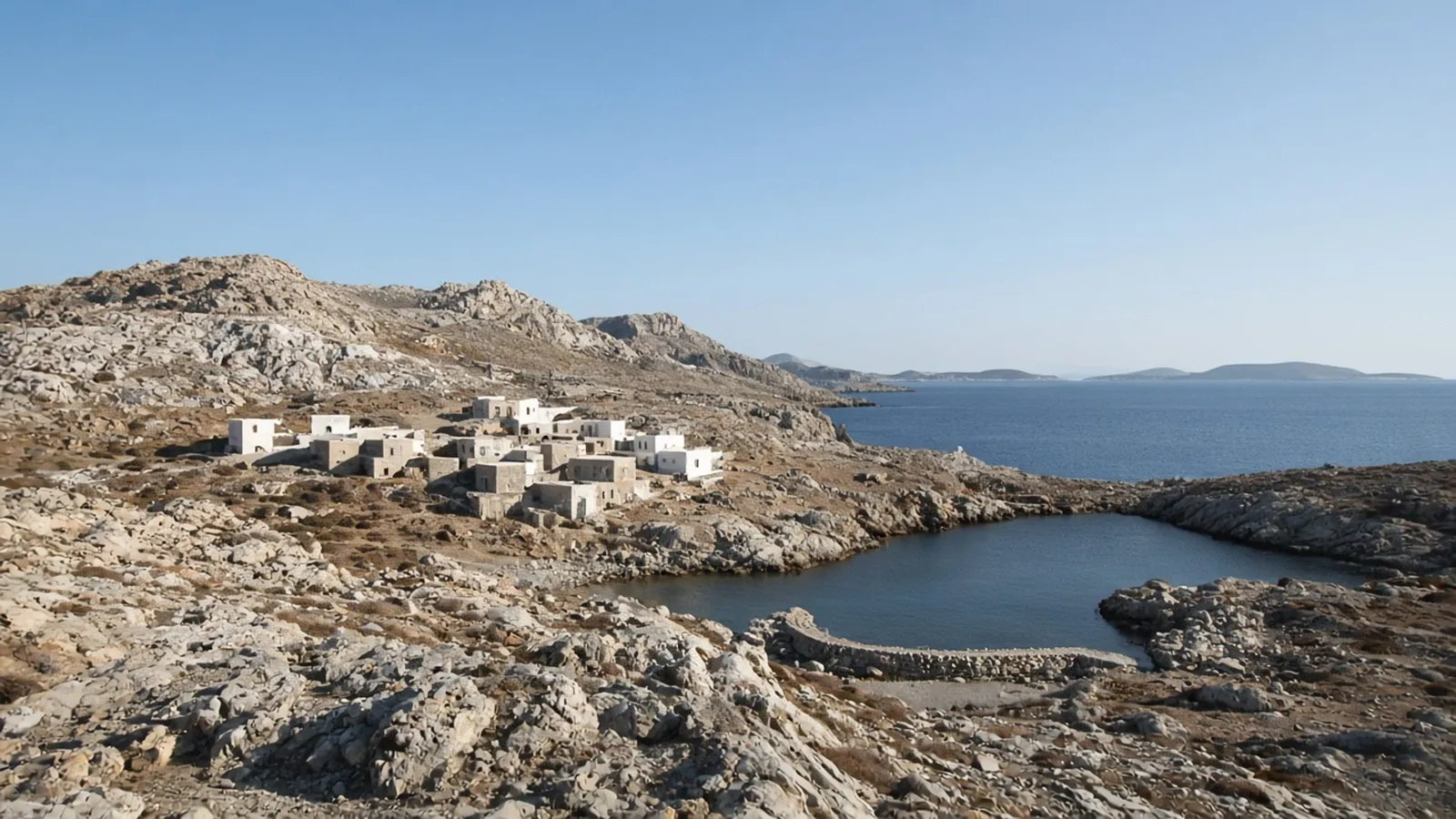
It is a simple holiday: a compact settlement around the quay, nearby beaches and evenings close to the water. A room described only as being “on Psara” almost always means the harbour village. Neighbouring Antipsara is a largely uninhabited islet for a boat outing when one is running, not a second place to book a stay.
Is Psara right for you?
| Your holiday style | How it fits | What to consider |
|---|---|---|
| Quiet-harbour swimmers and slow travellers | A compact village, nearby beaches and unhurried evenings | Limited services, nightlife and wet-weather alternatives |
| History-minded visitors | Mavri Rachi, Agios Nikolaos, the Kanaris site and the monastery give the visit weight | These are sober memorials and working religious sites, not a theme-park circuit |
| Travellers combining Chios with a smaller second island | A distinct overnight stay when the boat timings fit | Connections need a date-specific check; a same-day return is not automatic |
Choose Psara if a small maritime village, swimming and a serious historical landscape sound like enough. It is less suitable if you want a lush interior, many restaurants or a trip where missing one boat does not matter.
Where to stay
| Base | Why choose it | The trade-off |
|---|---|---|
| Harbour village around the port | Walkable rooms, boats, evenings and Katsouni close at hand | Ferry activity and a very small-settlement rhythm |
| Toward Kato Gialos / below Mavri Rachi | Quieter, with that pebble shore nearby | Check the walk with luggage and the return after dinner |
| Rooms toward Lazaretta or further beaches | A more beach-led setting a short way from the quay | More dependent on walking or a vehicle for meals and sailings |
For almost every first visit, start with the harbour village. That is where the boats arrive, where most rooms and kitchens are, and where you can walk to a swim without turning the day into logistics. Rooms toward Kato Gialos or Lazaretta can be calmer if you confirm the walk and how you will reach dinner.
Do not plan an overnight on Antipsara. Ask about steps, quay noise and whether a kitchen is open on your actual evenings, not only in high summer generally.
Beaches to put on your list
Katsouni is the sandy, shallower town beach, the straightforward choice after you drop your bags. It is popular with families in summer; do not choose it if you want guaranteed silence. Kato Gialos, also written Kato Yialos, is a pebble shore below Mavri Rachi, with a view toward Antipsara when the air is clear.
Lazaretta, often written Lazareta, lies a short way from the village and is described for finer sand, shells and shallower water. Lakka is a longer, paler pebble beach in a broader bay, while Limnos (also written Lemnos) is a south-coast stretch with coarser sand. Archontiki, Ftelio and Agia Kyriaki belong on a wider list if you have extra time.
Psili Ammos is on neighbouring Antipsara, noted in official visitor material as part of the Natura 2000 network. It is a boat outing, not a walk from your room, and only worth planning when an operator is actually running.
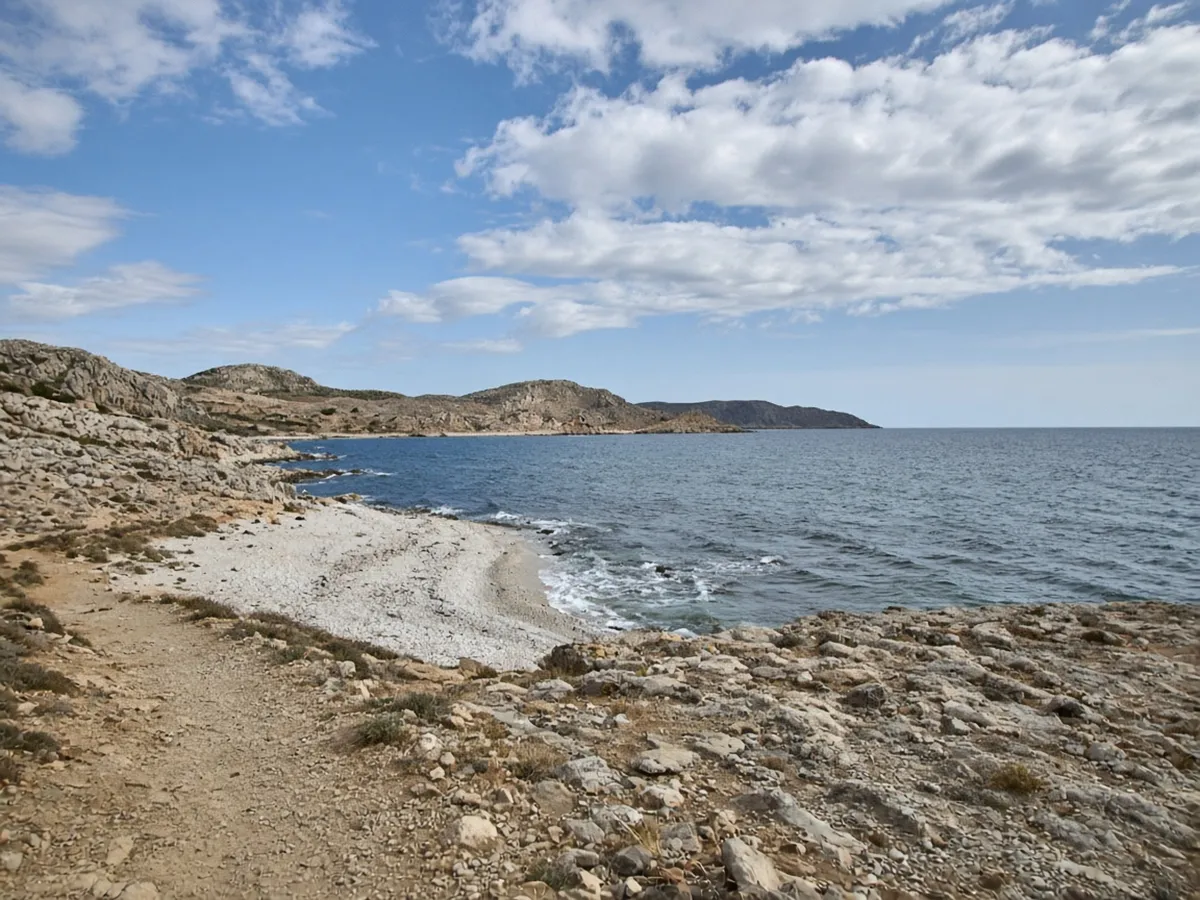
Treat beach descriptions as a starting point, not a promise about the sea on your day. Look at waves and the entry before swimming, keep children close and leave if the conditions feel wrong. Carry drinking water, shade and a bag for your rubbish. Do not assume a beach bar, lifeguard or boat back will be available simply because someone mentions one in an older holiday review.
Things to do beyond the beach
Walk the harbour village before you rush to a distant beach. The church of Agios Nikolaos, rebuilt after the 1824 destruction, stands above a long flight of steps; the site associated with Konstantinos Kanaris, later a prime minister of Greece, is marked nearby.
Mavri Rachi, the Black Ridge west of the port, holds the monument to the 1824 destruction; treat it as a memorial, not only a viewpoint. The Monastery of the Dormition stands inland to the north, and an important icon from it was taken to Syros in 1824. Confirm current visiting arrangements rather than assuming every interior is open.
Archontiki is a Mycenaean settlement and cemetery along the shore; parts of the site lie underwater, and finds are held in the Archaeological Museum of Chios. Check current access before promising yourself a formal visit.
What to eat
Seafood is the obvious thing to ask about, including lobster dishes when they are genuinely available that day. Ask the price by weight before ordering whole fish or lobster. Other leads include stuffed goat, cheeses such as mizithra and kopanisti, thyme honey and almond sweets. Check grocery hours if you stay beyond the quay. We do not list restaurant rankings or invented cafe prices.
How to get there
Psara has no airport. Most visitors arrive by sea, either on a longer sailing that lists Psara among North Aegean stops or on the local connection with Chios. Confirm the exact ports for your date; Chios town is the usual reference point.
For longer sailings from the Athens area, check Hellenic Seaways and Blue Star Ferries. For the local Chios connection, check Agia Marini I / Psara Glory. The two kinds of sailing are not interchangeable. Confirm the departure gate on your ticket. If you fly to Chios first, treat the airport-to-port transfer as a separate stage.
Build the trip around a service actually offered on your date, then arrange accommodation and transfers. Do not turn a summer route diagram into an assumption about a winter connection. On separate ferry and flight tickets, leave a sensible contingency before the flight home; an overnight buffer is often more useful than a faster boat. Confirm the port printed on the ticket and the luggage or vehicle conditions directly with the operator.
Getting around
The harbour village itself is walkable, which is why many visitors never hire anything. Farther beaches – Lazaretta, Lakka, Limnos, Archontiki – are easier with a small vehicle or a clearly understood walk in the heat. Do not assume a public bus will appear at the quay.
Antipsara is a boat trip, not an extension of the village beach. Arrange it only with a genuine outing and a weather eye. Away from the settlement, carry water; shade can be scarce. Our guide to the meltemi explains why North Aegean wind can change a boat day or an exposed shore.
When comparing transport, include the whole outing: getting to the start, getting back after dinner and what happens if the weather changes. A car-free base can work well even on an island where a vehicle helps with wider exploring. The important distinction is between choosing a limited, enjoyable radius and expecting to reach every cove without planning. Our car-free island guide explains that trade-off.
When to visit
Early summer and early autumn are useful starting points if you want swimming and village time without assuming every kitchen is running at midsummer pitch. High summer gives the fullest, though still modest, atmosphere and more competition for the easiest rooms. Outside the main season, confirm both sailings and whether a kitchen will be open after you arrive.
| Season | Plan around | Main caution |
|---|---|---|
| Spring | Village walks and historical sites rather than a guaranteed swimming holiday | Check open businesses and transport before committing |
| Early summer | A balance of beach time and exploring | Sun exposure and availability still need planning |
| High summer | Book the base and essential journeys ahead | Heat, a busier town beach and weather disruption to boats |
| Early autumn | Flexible beach days and walks | Seasonal services may finish before your holiday ends |
These are planning judgements, not a forecast. Spring swimming can feel cool, autumn rain is possible and the wind can change a beach day at any point in the season. We deliberately avoid neat air-temperature averages or promises of warm seas. Choose dates around the activities you care about, then check the forecast and current services shortly before travelling.
A realistic three-day plan
| Day | A manageable plan | Keep it flexible |
|---|---|---|
| 1 | Arrive, settle in the harbour village and swim locally | Keep the first evening local |
| 2 | Walk to Agios Nikolaos and Mavri Rachi, then swim at Lazaretta | Treat the ridge as a memorial, not only a viewpoint |
| 3 | Choose Lakka, Limnos or an Antipsara boat if one is running | Do not count on a same-day return to Chios |
This is a suggestion for three usable days, not three dates with a late arrival and an early departure squeezed into them. If the first ferry gets in late, make the first evening only about checking in and finding dinner. Swap the coast day with the village day if the weather turns. Leave one unallocated half-day rather than treating every chapel and distant beach as compulsory.
The honest downsides
Psara is small in a way that some people love and others find limiting. Evenings revolve around one village, services thin out outside summer, and a cancelled boat matters more than on a large island with many daily sailings.
The 1824 story is central and sombre. Some beaches need more effort than the town shore, and Antipsara is not a fallback if no boat is running. Come for the harbour, the history and a few chosen swims, then give the connections real attention.
For the wider journey, use our ferries for beginners guide and guide to less touristy islands. This page is an individual island hub, not a timetable or a promise that every neighbouring island has a direct connection.
Frequently asked questions
Is Psara worth visiting?
Yes, if you want a quiet harbour village, nearby swimming and a serious historical landscape. It is less suited to visitors who need many restaurants or a lush interior.
Where should I stay on Psara?
Start in or beside the harbour village. Rooms toward Kato Gialos or Lazaretta can work if the walk and meals are clear. Antipsara is not an overnight base.
Do you need a car on Psara?
Not for a harbour-village stay with swims at Katsouni or Kato Gialos. A vehicle or lift helps for farther beaches. Do not assume a regular bus service.
How many days should I spend on Psara?
Allow three usable days for a first look, plus travel time. A rushed same-day visit from Chios only makes sense if the current boat timings actually give you hours ashore.
How do you get to Psara?
There is no airport. Check longer sailings on Hellenic Seaways and Blue Star Ferries, and the local Chios connection with Agia Marini I / Psara Glory. Read the exact ports for your date.
When is a good time to visit Psara?
Early summer or early autumn can balance swimming and a quieter village. High summer is the fullest season, still on a small-island scale. Outside summer, verify boats and kitchens with extra care.
Sources and useful links
- Visit Greece: Psara
- Municipality of Psara
- Chios tourism: Psara
- Blue Star Ferries: Psara
- Hellenic Seaways
- Psara Glory local ferry
Independent planning guide. Transport, visitor access and seasonal businesses can change; confirm current arrangements directly before travelling.