Kythnos Travel Guide: Kolona, Loutra and Village Life
Last updated: November 2026
Before you travel: fares and schedules change often, and the prices and times on this page may be out of date. Always confirm current prices and times with the operator, or locally at the port or bus station, before you travel.
The short version
Kythnos is an unshowy Cycladic island for beaches, village lanes and a slow lunch rather than a packed sightseeing circuit. The sandbar at Kolona and the thermal springs at Loutra are the best-known names, but Chora and Dryopida give a stay more substance than a quick beach excursion. The landscape is dry and hilly, with plenty of coast to explore.
The honest planning point is transport. Merichas is the ferry port; Chora and Dryopida are inland, while Loutra and Kanala offer different coastal bases. A short visit can be satisfying, but a room in one settlement does not put the whole island on your doorstep. Choose a base around the part of Kythnos you want to enjoy each day.
Is Kythnos right for you?
| Your holiday style | How it fits | What to consider |
|---|---|---|
| Quiet beach holidays | A varied coastline without a big-resort focus | Remote bays need access planning |
| Village evenings | Chora and Dryopida have distinct character | An inland room means travelling for a swim |
| Short Athens-area breaks | Lavrio is a standard ferry starting point | Mainland transfers and date-specific sailings still matter |
Kythnos is worth choosing for its own low-key rhythm, not because an old guide calls it the closest island to Athens or promises a particular crossing time. Kea is another nearby Cycladic option, and distance alone should not decide your holiday.
Where to stay
| Base | Why choose it | The trade-off |
|---|---|---|
| Merichas | Ferry convenience, food and a practical base | Port activity and less inland-village atmosphere |
| Chora / Messaria | Lanes, squares and village evenings | No beach on the doorstep |
| Loutra | Small harbour, beach and thermal-spring setting | Check onward transport for wider exploring |
| Dryopida | Tiled-roof village and quiet surroundings | Inland, with fewer immediate visitor services |
| Kanala | A beach-oriented coastal stay | Less convenient for island-wide car-free exploring |
Merichas makes the simplest arrival. Chora is attractive when the evening wander matters more than an immediate swim, while Loutra makes sense if you prefer a small harbour setting. Dryopida is not simply a smaller version of Chora: its tiled houses and tucked-away position give it a different feel.
Do not book a distant beach room on the assumption that taxis will always be waiting. Ask your host how guests reach the port, buy groceries and return from dinner. If you want to avoid driving, design a more local holiday instead of expecting an island-wide bus circuit.
Beaches to put on your list
Kolona is the distinctive sandbar with water on both sides. Go for the setting, not for a promise of solitude. Check the final approach locally and confirm whether your rental agreement permits it; if considering a boat transfer, verify that a service is operating and arrange the return. No sea-taxi fare or timetable is assumed here.
Martinakia, Episkopi and Apokrousi are the western beach names to compare around the Merichas side. The municipality identifies Episkopi and Apokrousi as serviced options, but check what is actually operating on your dates. Loutra offers a straightforward swim close to the harbour; spring water reaches the sea at the beach edge.
On the eastern side, consider Agios Stefanos or Kalo Livadi if you have transport. Around Kanala, the bays give you another beach-led base. Choose according to the day’s wind and local advice, not a blanket claim that every east- or south-facing beach is sheltered.
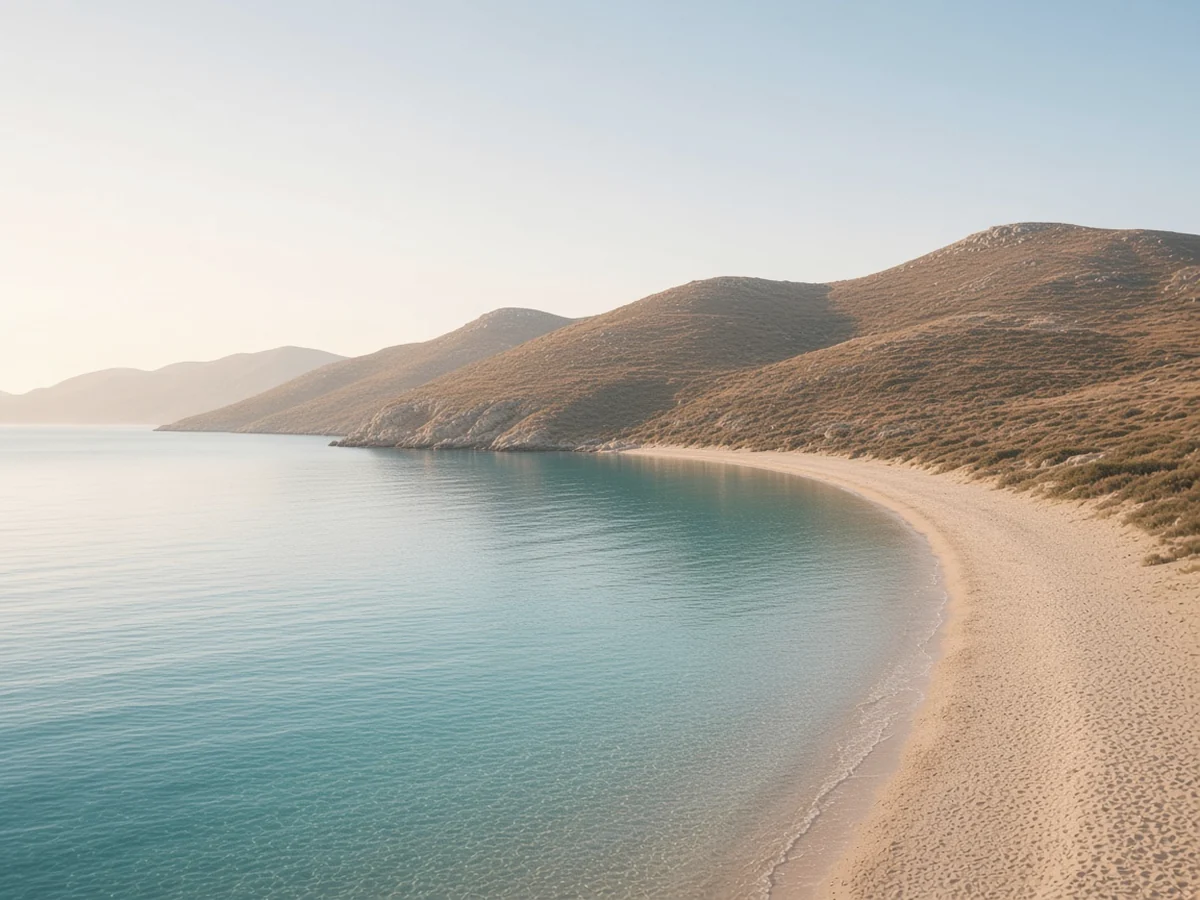
Treat beach descriptions as a starting point, not a promise about the sea on your day. Look at waves and the entry before swimming, keep children close and leave if the conditions feel wrong. Carry drinking water, shade and a bag for your rubbish. Do not assume a beach bar, lifeguard or boat back will be available simply because someone mentions one in an older holiday review.
Things to do beyond the beach
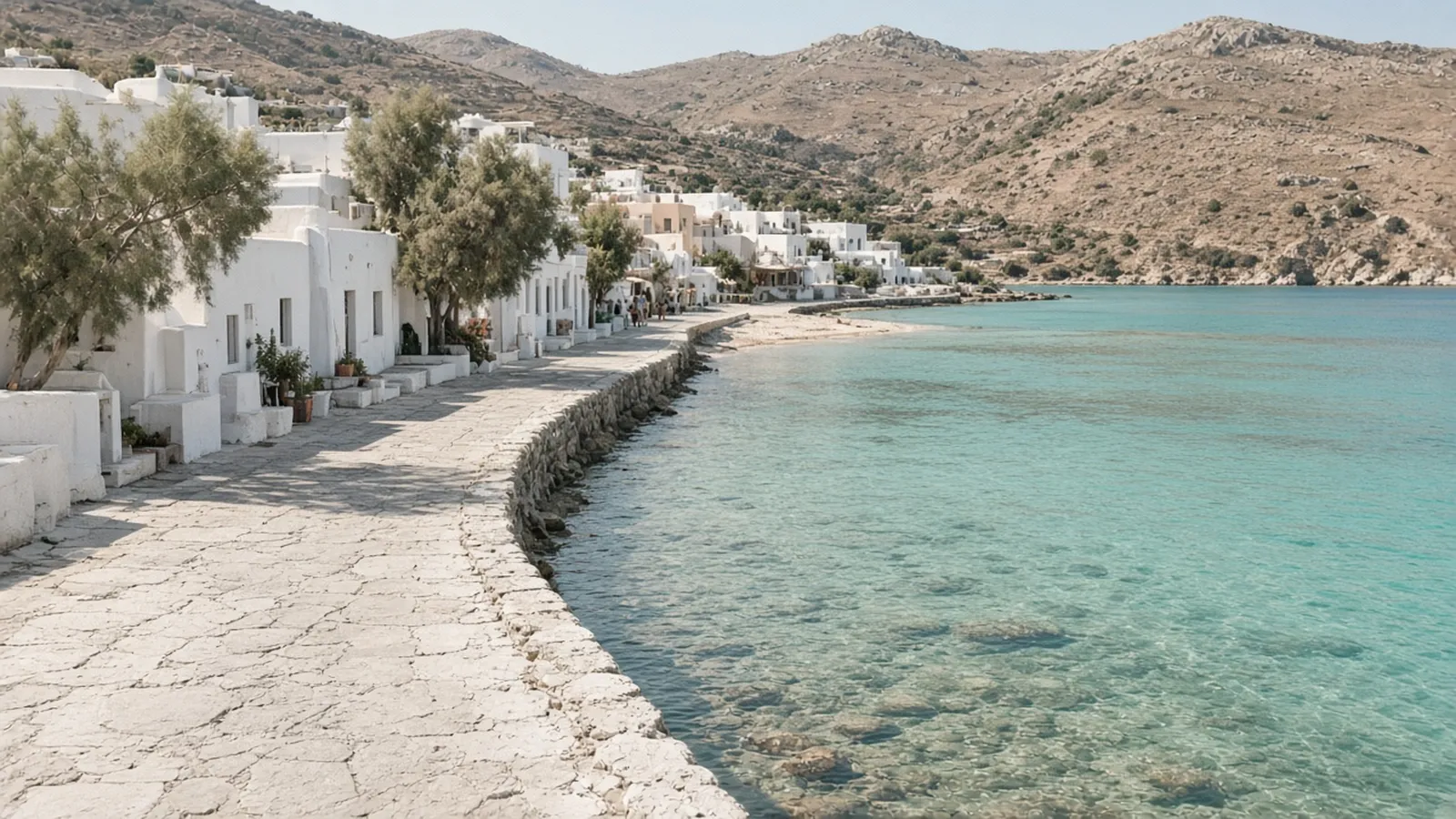
Give Chora an unhurried evening: small squares, white houses and lanes are the point. Dryopida is a good contrasting stop, with tiled roofs, arches and a pottery tradition described by the municipality. Combining the two villages is more rewarding than spending the whole holiday ticking off bays.
Katafyki cave is associated with Dryopida, but do not promise yourself an interior visit without confirming access. If closed, the village remains worth visiting. The same caution applies to small museum collections: a listing is not an opening guarantee.
At Loutra, enjoy the thermal-spring setting without turning it into a medical recommendation. Confirm any organised bathing facilities directly and be cautious around hot outflows. We do not repeat therapeutic claims, water-temperature figures or a supposed annual spa season. A shoreline stop and a booked spa treatment are different activities.
What to eat
Let the villages be part of the food plan. A meal in Chora or Dryopida gives an inland outing a natural centre, while Merichas and Loutra work for an easy waterside evening. Ask about the day’s pies, vegetable dishes and cooked food rather than assuming fish is the only island option. No named restaurant is vetted in this guide, and no old cafe or meal-price estimates are carried forward.
How to get there
Kythnos has no airport. Ferries arrive at Merichas. Lavrio is a standard mainland approach; verify the current route and travel date on Goutos Lines. Other advertised connections should be checked individually rather than treated as an all-season network.
Some tourism summaries show different indicative journey times. We have dropped those figures rather than choosing the most convenient one. Use the actual sailing offered by the operator, and include the transfer to Lavrio in your plan. If your trip involves Piraeus or another island, confirm that exact departure instead of assuming it exists daily.
Build the trip around a service actually offered on your date, then arrange accommodation and transfers. Do not turn a summer route diagram into an assumption about a winter connection. On separate ferry and flight tickets, leave a sensible contingency before the flight home; an overnight buffer is often more useful than a faster boat. Confirm the port printed on the ticket and the luggage or vehicle conditions directly with the operator.
Getting around
A car is helpful for a beach-hopping stay, especially when combining inland villages and different coasts. For a car-free visit, stay somewhere with food and a useful nearby beach, then arrange a small number of excursions. Do not assume a posted bus route means a frequent service or a late return after dinner.
Ask locally for current bus information and reserve essential port transfers. Rough beach approaches are a separate issue from the main village roads; avoid them if your vehicle agreement or confidence does not support the drive. Walking between remote places in summer heat is not an automatic substitute for transport.
When comparing transport, include the whole outing: getting to the start, getting back after dinner and what happens if the weather changes. A car-free base can work well even on an island where a car helps with wider exploring. The important distinction is between choosing a limited, enjoyable radius and expecting to reach every cove without planning. Our car-free island guide explains that trade-off.
When to visit
Early summer and early autumn are useful starting points for beaches plus villages. Spring can suit walking, while high summer needs more advance planning around the base and ferry space. On short breaks, compare quieter weekdays with busy holiday periods rather than assuming a low-profile island is empty. Outside the main season, verify restaurants, transport and any organised spa facilities before travelling.
| Season | Plan around | Main caution |
|---|---|---|
| Spring | Village walks and countryside rather than a guaranteed swimming holiday | Check open businesses and transport before committing |
| Early summer | A balance of beach time and exploring | Sun exposure and availability still need planning |
| High summer | Book the base and essential journeys ahead | Heat, crowding at popular spots and weather disruption |
| Early autumn | Flexible beach days and walks | Seasonal services may finish before your holiday ends |
These are planning judgements, not a forecast. Spring swimming can feel cool, autumn rain is possible and the wind can change a beach day at any point in the season. We deliberately avoid neat air-temperature averages or promises of warm seas. Choose dates around the activities you care about, then check the forecast and current services shortly before travelling.
A realistic three-day plan
| Day | A manageable plan | Keep it flexible |
|---|---|---|
| 1 | Arrive at Merichas, swim nearby and explore Chora later | Make the evening transfer explicit |
| 2 | Visit Kolona if access and weather suit, or use an easier western beach | Do not rely on an unconfirmed return boat |
| 3 | Explore Dryopida and then Loutra | Treat cave or organised bathing access as optional |
This is a suggestion for three usable days, not three dates with a late arrival and an early departure squeezed into them. If the first ferry gets in late, make the first evening only about checking in and finding dinner. Swap the coast day with the village day if the weather turns. Leave one unallocated half-day rather than treating every beach and viewpoint as compulsory.
The honest downsides
Kythnos can be awkward if you want a different beach daily but dislike driving. Local transport must be checked rather than assumed, and remote roads may be rough. Holiday periods can feel much busier than the island’s quiet reputation suggests.
There is no single landmark that justifies an exhausting dash around the whole island. If the cave is closed or boat conditions rule out Kolona, the holiday should still work. Base it on villages, convenient swims and a comfortable place to stay, not one fragile excursion.
For the wider journey, use our ferries for beginners guide and Western Cyclades island hopping. This page is an individual island hub, not a timetable or a promise that every neighbouring island has a direct connection.
Frequently asked questions
Is Kythnos worth visiting?
Yes, for a low-key beach-and-village break with Kolona and Loutra as possible outings. It is less suited to nightlife or effortless car-free exploration of every coast.
Where should I stay on Kythnos?
Merichas suits ferry convenience; Chora suits village evenings; Loutra suits a small harbour stay. Kanala is another coastal option when you have a transport plan.
Do you need a car on Kythnos?
A car helps with beach hopping. You can stay without one if you choose a practical base and confirm transfers, but do not assume frequent buses reach every beach.
How many days should I spend on Kythnos?
Allow three usable days for a first look, plus travel time. Stay longer if you want unhurried beach days or walks; the right length depends more on your pace and connections than on a checklist.
How do you get to Kythnos?
Travel by ferry to Merichas, commonly from Lavrio. Check the actual sailing with the operator. Kythnos has no airport.
When is a good time to visit Kythnos?
Consider early summer or early autumn for beaches and villages. Spring can suit walking; confirm seasonal businesses and transport outside the main summer period.
Sources and useful links
- Municipality: beaches
- Municipality: settlements
- Visit Greece: Kythnos
- Visit Greece: Loutra
- Goutos: itineraries
Independent planning guide. Transport, visitor access and seasonal businesses can change; confirm current arrangements directly before travelling.