Kimolos Travel Guide: Chorio, Beaches and a Longer Stay
Last updated: November 2026
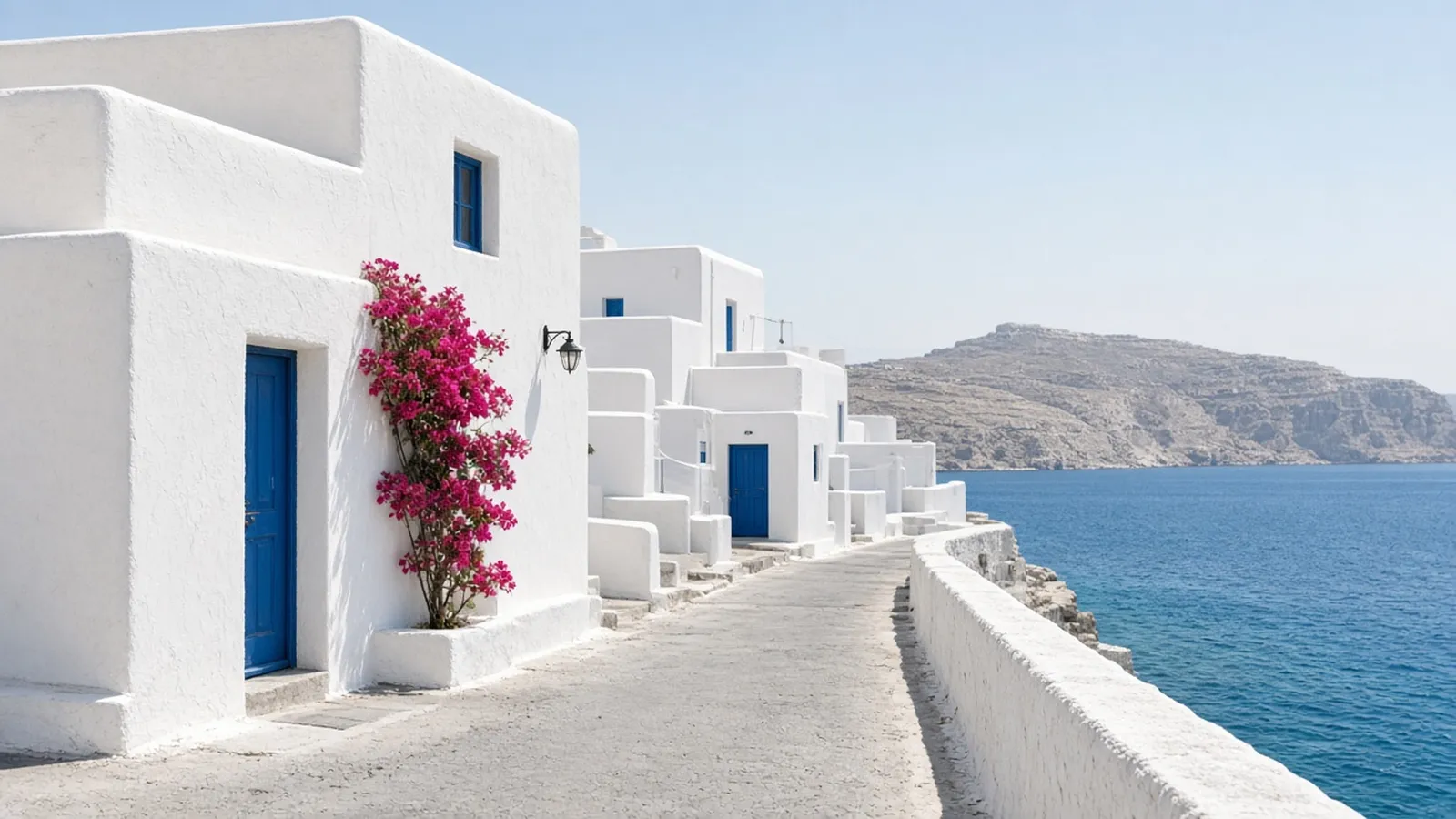
Before you travel: fares and schedules change often, and the prices and times on this page may be out of date. Always confirm current prices and times with the operator, or locally at the port or bus station, before you travel.
The short version
Kimolos deserves more than a hurried gap between two Milos ferry crossings. Staying over lets you enjoy Chorio in the evening, return to a favourite beach and leave time for the island’s distinctive rock landscape. It is small and low-key, but not so tiny that every cove and walking route fits comfortably into an afternoon.
The key distinction is between Psathi, the port, and Chorio, the main village above it. Coastal accommodation gives you another version of the holiday. Choose whether you want easy arrivals, village evenings or a beach on the doorstep. You are not obliged to treat the whole island as a continuous sightseeing circuit.
Is Kimolos right for you?
| Your holiday style | How it fits | What to consider |
|---|---|---|
| Slow-travel couples and independent visitors | Village evenings and repeated beach days | Limited range of large-resort facilities |
| Milos visitors wanting a quieter second base | A neighbouring island with a distinct atmosphere | Connections and port transfers need checking |
| Walkers and geology interests | Skiadi and varied coastal rock formations | Exposed paths and rough approaches require care |
Kimolos suits people who enjoy a compact village and simple daily choices. A family can make an easy beach base work, but access matters more than the island name. For a short excursion rather than a stay, use the separate live day-trip guide.
Where to stay
| Base | Why choose it | The trade-off |
|---|---|---|
| Chorio | Village atmosphere and evenings on foot | No immediate beach; check luggage access |
| Psathi | Port convenience and an easy local swim | Ferry activity and a different feel from the village |
| Aliki / Bonatsa / Kalamitsi area | A coastal holiday around southern beaches | Check the route to meals and the port |
| Other scattered coastal rooms | Quiet and a specific beach setting | More dependent on transfers and open nearby businesses |
Chorio is a strong first comparison if the village is why you are coming. Psathi makes sense for awkward ferry arrivals and for visitors who want fewer luggage transfers. A beach address around the southern bays may be more relaxing if you intend to swim locally most days.
Do not assume a room near a beach has an easy footpath to Chorio or a restaurant open late. Ask about the exact walk, gradients and transport. For three usable days, one good base is enough; moving between port, village and coast with bags usually complicates a holiday that should feel simple.
Beaches to put on your list
Psathi is both port and beach, useful for an easy swim when arrival or departure shapes the day. For a more beach-centred outing, compare Aliki, Bonatsa and Kalamitsi. The municipality describes sandy or mixed shores, trees and relatively shallow water; check the actual sea conditions instead of treating that as a guarantee for children.
Prassa, also written Prasa, is known for white sand and striking water colour. Its appearance is a good reason to visit, not a reason to ignore the journey, wind or the availability of shade. Ask about current access rather than assuming an old road description still applies.
Rema and Goupa offer a different coast, with rock formations and boat-storage caves known as syrmata. Treat these as working and residential spaces, not a free-access photography set. For the western shores around Mavrospilia, check the dirt-road approach and your rental conditions before deciding to drive.
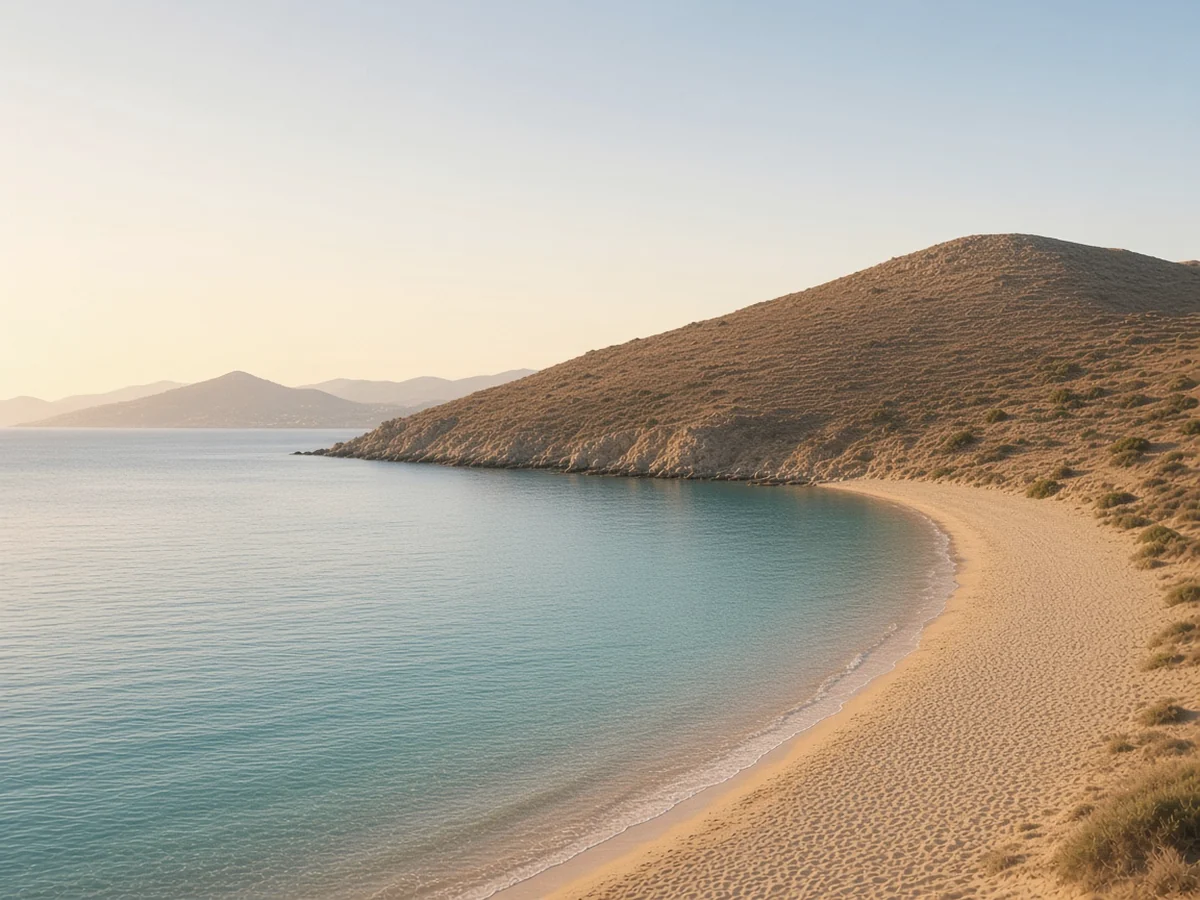
Treat beach descriptions as a starting point, not a promise about the sea on your day. Look at waves and the entry before swimming, keep children close and leave if the conditions feel wrong. Carry drinking water, shade and a bag for your rubbish. Do not assume a beach bar, lifeguard or boat back will be available simply because someone mentions one in an older holiday review.
Things to do beyond the beach
Chorio is more than a place to pass through on the way to a beach. Explore the old Kastro area and its lanes without rushing, and respect the homes within the settlement. The distinction between the village’s older and newer parts adds interest without requiring a detailed historical lecture to enjoy it.
Skiadi, the mushroom-like rock formation, is the main geological walking outing to investigate. Use the municipality’s route material and a current map, take water and avoid the hottest part of the day. Do not climb on delicate formations for a photograph. The walk is optional if heat, wind or your fitness makes it a poor choice.
The archaeological and folk-maritime collections are additional leads for a village day, but confirm current access before promising an interior visit. A boat excursion toward more remote coast or Polyaigos is another possible outing when a genuine operator is running and the weather allows it. It is not part of a guaranteed public transport network.
What to eat
Ladenia is the local speciality to ask about: a baked flatbread associated with the island. Availability varies, so treat it as something to seek rather than a menu promise. Chorio suits an evening meal followed by a village walk, while Psathi offers a more immediate port-side routine.
If staying near a quieter beach, check nearby groceries and kitchen opening days before arrival. Island simplicity is much more enjoyable when you have breakfast supplies and do not need an unplanned transfer for every meal. We do not list restaurant rankings or invented cafe prices.
How to get there
Kimolos has no airport. Ferries arrive at Psathi. The local Milos connection uses Pollonia, not automatically the main Milos port of Adamas. The municipality links to the Osia Methodia schedule; check the exact sailing, fare and vehicle arrangements directly.
For mainland approaches, the municipality’s current ferry information points to Fast Ferries and other operators. Confirm the precise service on your date. If flying to Milos first, plan the airport-to-Pollonia transfer as a separate stage and avoid a tight connection based only on the apparent closeness of the islands.
Build the trip around a service actually offered on your date, then arrange accommodation and transfers. Do not turn a summer route diagram into an assumption about a winter connection. On separate ferry and flight tickets, leave a sensible contingency before the flight home; an overnight buffer is often more useful than a faster boat. Confirm the port printed on the ticket and the luggage or vehicle conditions directly with the operator.
Getting around
A deliberately local stay in Chorio or Psathi can work with walking and a few arranged outings. Wider beach exploration benefits from more transport planning. Ask about current local services for the period you are visiting; this page does not assume a bus frequency or a waiting taxi at every arrival.
Some coastal approaches are unpaved. A rental car is not permission to take every track shown on a map, and walking a road in heat is not automatically a pleasant alternative. For Skiadi or a longer route, carry an offline map and sufficient water for the return.
When comparing transport, include the whole outing: getting to the start, getting back after dinner and what happens if the weather changes. A car-free base can work well even on an island where a car helps with wider exploring. The important distinction is between choosing a limited, enjoyable radius and expecting to reach every cove without planning. Our car-free island guide explains that trade-off.
When to visit
Early summer and early autumn are useful starting points for beaches and village time. Spring is more naturally a walking-led visit if the ferries and open businesses fit. High summer can bring more visitors to the easiest beaches and the Milos link. Outside the main season, confirm the entire stay’s meal and transfer options, not just whether a room is available.
| Season | Plan around | Main caution |
|---|---|---|
| Spring | Village walks and countryside rather than a guaranteed swimming holiday | Check open businesses and transport before committing |
| Early summer | A balance of beach time and exploring | Sun exposure and availability still need planning |
| High summer | Book the base and essential journeys ahead | Heat, crowding at popular spots and weather disruption |
| Early autumn | Flexible beach days and walks | Seasonal services may finish before your holiday ends |
These are planning judgements, not a forecast. Spring swimming can feel cool, autumn rain is possible and the wind can change a beach day at any point in the season. We deliberately avoid neat air-temperature averages or promises of warm seas. Choose dates around the activities you care about, then check the forecast and current services shortly before travelling.
A realistic three-day plan
| Day | A manageable plan | Keep it flexible |
|---|---|---|
| 1 | Arrive at Psathi, settle in and spend the evening in Chorio | Keep the first swim close to the base |
| 2 | Choose Bonatsa or Aliki for a beach day, with a modest coastal wander | Do not make every southern bay compulsory |
| 3 | Walk toward Skiadi if suitable, or visit Prassa with confirmed access | Avoid an ambitious remote outing before departure |
This is a suggestion for three usable days, not three dates with a late arrival and an early departure squeezed into them. If the first ferry gets in late, make the first evening only about checking in and finding dinner. Swap the coast day with the village day if the weather turns. Leave one unallocated half-day rather than treating every beach and viewpoint as compulsory.
The honest downsides
Kimolos has fewer easy transport choices than a larger island, and a room outside the main settlements can feel isolated if you have not planned meals. Remote beach roads and walking routes deserve respect. It is not simply a miniature Milos with every sight conveniently linked.
The Milos crossing is a real ferry journey, subject to weather and timetable changes, not a bridge. If you would be anxious about an onward flight, build in a buffer rather than leaving the return to the final possible sailing. Stay for the island’s rhythm, not a race to complete its beaches.
For the wider journey, use our ferries for beginners guide and Kimolos day-trip guide. This page is an individual island hub, not a timetable or a promise that every neighbouring island has a direct connection.
Frequently asked questions
Is Kimolos worth visiting?
Yes, especially if you want village evenings, beaches and time to enjoy the rock landscape rather than a hurried day trip from Milos.
Where should I stay on Kimolos?
Chorio suits village life; Psathi suits port convenience. The southern beach areas suit a more coastal holiday if meals and transfers are planned.
Do you need a car on Kimolos?
Not essential for a modest Chorio or Psathi stay, but helpful for wider exploring. Confirm local transport and unpaved-road restrictions before planning beach hopping.
How many days should I spend on Kimolos?
Allow three usable days for a first look, plus travel time. Stay longer if you want unhurried beach days or walks; the right length depends more on your pace and connections than on a checklist.
How do you get to Kimolos?
Take a ferry to Psathi. The local Milos connection normally uses Pollonia; check the current Osia Methodia service. Mainland options also need date-specific confirmation.
When is a good time to visit Kimolos?
Early summer or early autumn can balance beaches and village time. Spring can suit walking; outside summer, verify businesses and transport carefully.
Sources and useful links
- Municipality: beaches
- Visit Greece: Kimolos
- Municipality: ferry links
- Municipality: Skiadi
- Municipality: island site
- Municipality: maritime museum
Independent planning guide. Transport, visitor access and seasonal businesses can change; confirm current arrangements directly before travelling.