Money on the Greek Islands: Cards, Cash and ATMs
Last updated: November 2026
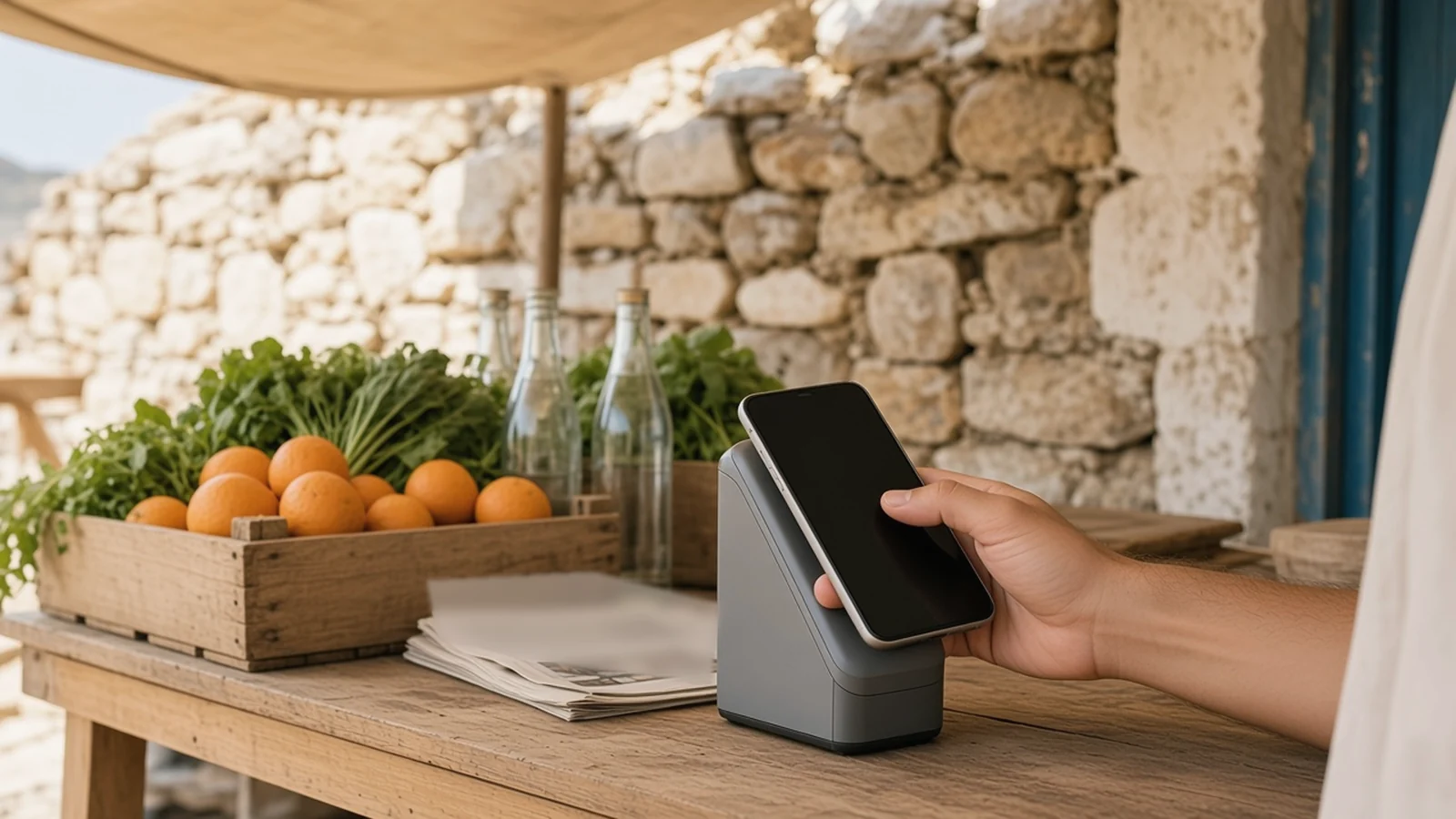
Short version: you can pay by card almost everywhere on the Greek islands, and businesses that sell to consumers, taxis included, are required to accept cards. But carry some cash for small kiosks and bakeries, tips, some island buses and beach sunbeds, and for the day the only ATM in the village runs dry. Use a bank ATM rather than a standalone machine, read the fee on screen, and always choose to be charged in euros.
Money advice for Greece goes out of date quickly: card rules were tightened in 2024 and ATM fees for Greek bank customers changed in August 2025. This page sets out what we could check in November 2026, and is honest about what we could not. For budgets, see what a Greek island trip costs and Greek islands on a budget.
No card or bank recommendations. We do not promote any card, bank or money app, and nothing on this page is sponsored.
Before you travel: fares, schedules, opening hours, tax rates and seasonal rules change often, and the details on this page may be out of date. Always confirm current prices, times and rules with the operator or the official site, or locally, before you travel.
Quick answer
| Question | Answer |
|---|---|
| Are cards accepted? | Widely, including contactless and phone payments. Businesses selling to consumers must accept them |
| Do taxis take cards? | They must, and must display a sticker saying so in Greek and English |
| Do I need cash? | Some: for tips, kiosks, some buses, sunbeds, small boats and back-up |
| Which ATMs? | Machines at bank branches. Read the on-screen fee; standalone private machines often cost more |
| Euros or home currency? | Always euros |
| Big bills in cash? | No: payments to a business of 500 euros or more must be made electronically |
Cards: what the law says
Greek rules require businesses that sell goods or services to consumers to accept payment by card (credit, debit or prepaid) and to have a working card terminal. The development ministry’s guidance says non-compliance is fined. In practice that covers almost everyone a visitor pays: shops, cafes, tavernas, hotels, car-hire desks, tour operators and ticket offices. See the development ministry FAQ (Greek).
Taxis are covered too. Taxis must display a bilingual sticker stating that the driver must accept card payment and issue a receipt, and that the passenger is not obliged to pay in cash. If a driver says the machine is broken, point to the sticker. The finance ministry’s notice is here (Greek); Greek courts upheld the sticker rule in 2025, as reported by dikastiko.gr.
The honest reality: on a busy island in August you will still meet a beach bar, kiosk or small bakery whose card machine is “not working”, or a room owner who would prefer cash. You are within your rights to pay by card, but having some cash avoids an argument over a coffee.
Paying for the big things
- Car and scooter hire: most firms take a card deposit or a block on your card when you collect the vehicle, and many want a credit card in the driver’s name. Ask before you book if you only carry debit cards.
- Rooms: hotels take cards; some small family-run rooms ask for a bank transfer deposit. Keep the receipt and the booking messages.
- Ferries: tickets are sold online and at port agencies, both by card.
- Receipts: every business should give you a receipt. If you are not offered one, ask; issuing one is a legal duty for Greek businesses.
When you still need cash
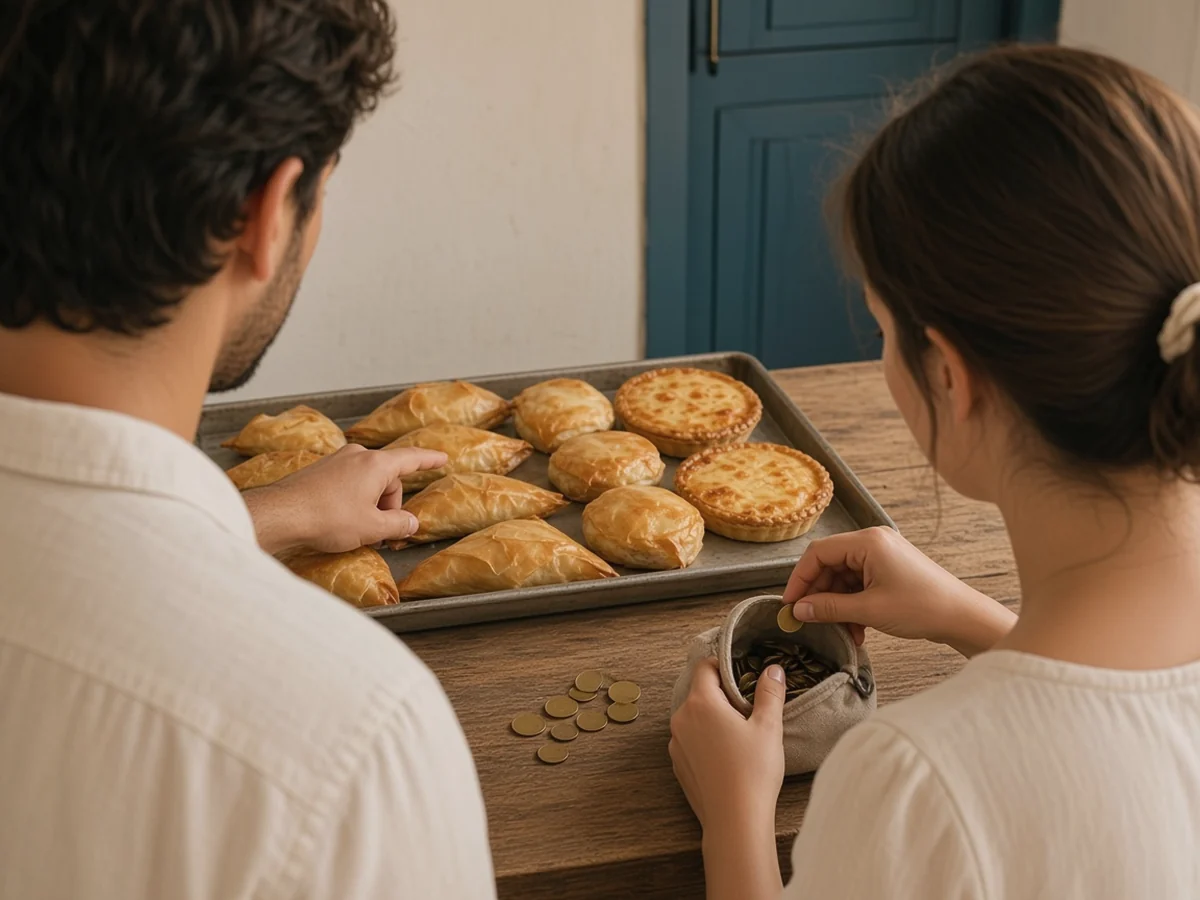
- Small purchases at kiosks (periptero), bakeries and village shops, where a card for a very small amount is legal but often unwelcome.
- Tips for taverna staff, cleaners and drivers; there is usually no way to add a tip on the card machine.
- Some island buses, where you pay the conductor or driver on board.
- Beach sunbeds and small canteens on quieter beaches.
- Local boats and water taxis to beaches, especially on small islands.
- A back-up for when card networks or the island’s only ATM go down, which does happen in high season.
Large payments are the opposite case. Under Greek tax law, a consumer’s payment to a business of 500 euros or more, VAT included, must be made by card or another electronic method; cash is not allowed. Expect to pay larger hotel or car-hire bills by card or bank transfer, as explained by Taxheaven (Greek).
ATMs and fees
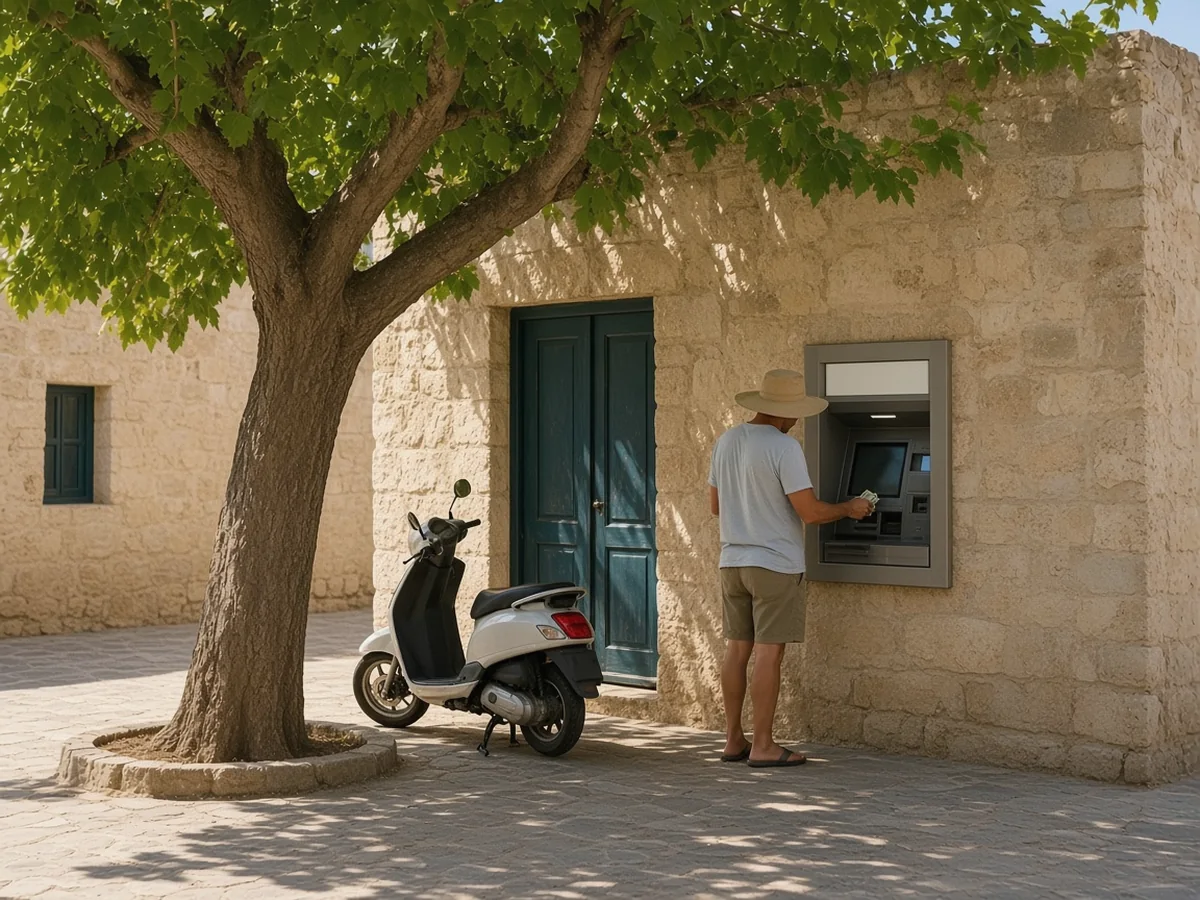
There are two kinds of ATM in Greece: those run by banks (National Bank of Greece, Alpha Bank, Eurobank, Piraeus Bank and others) and those run by private operators such as Euronet and Cashflex, often found in shops, ports and tourist streets.
| Bank ATMs | Private-operator ATMs | |
|---|---|---|
| Greek bank cards (since 11 August 2025) | No withdrawal fee at bank ATMs in the interbank network | Fee capped by law; free where it is the only ATM in the community |
| Foreign cards | The machine operator sets the fee; some charge nothing, others a fixed fee. It is shown on screen before you confirm | Operator sets the fee; often higher, plus a push to convert to your home currency |
| Where | Bank branches in main towns and ports | Everywhere visitors go, including ports and small villages |
Greek rules: finance ministry announcement (August 2025). Foreign cards: ministry sources quoted by Parapolitika said the cap does not apply to tourists with foreign cards.
Two other costs come from your own bank, not the ATM: a foreign-transaction or withdrawal fee, and its exchange rate. Check both before you travel; some cards charge nothing abroad, others charge per withdrawal. Withdraw larger amounts less often. Sources: finance ministry (Greek) and Parapolitika.
Euros or home currency? Always euros
Card machines and ATMs often offer to charge you in your home currency (dynamic currency conversion). It looks helpful, but the rate is set by the machine’s operator and is usually worse than your own bank’s. Choose euros every time and decline the “guaranteed rate”. If a waiter hands you a machine already set to your currency, ask them to change it.
How much cash to carry
| Trip style | Cash approach (rule of thumb) |
|---|---|
| Mostly cards, big islands | A small float for tips and kiosks, topped up at a bank ATM |
| Small islands, local buses, beach days | A larger float: buses, sunbeds, kiosks and water taxis add up |
| Remote islands with one ATM | Enough for several days, withdrawn on a bigger island before you sail |
Our editorial rule of thumb, not survey data.
Keep cash in two places and do not carry a lot to the beach. Pickpocketing is not a big problem on most islands, but it does happen in crowded places in Athens, such as the metro. Our ferry prices and trip cost guides help you size a daily budget.
Tipping
Tipping is not compulsory in Greece, and service is not usually added to the bill. In tavernas, many visitors round up or leave about 5 to 10 percent for good service, in cash on the table. For taxis, rounding up is usual. Hotel cleaners appreciate a little at the end of a stay. None of this is a rule; it is a thank-you.
Small islands: plan ahead
On the smallest islands, such as the Small Cyclades, Kimolos or Anafi, there may be only one or two ATMs, sometimes just one in the main village, and they can run out of cash at the end of a busy August weekend. Cards are accepted in most tavernas and rooms there too, but local boats, small shops and some rooms prefer cash. Withdraw what you need on a bigger island such as Naxos, Paros or Milos before you sail. See our Small Cyclades, Kimolos and Anafi guides.
Before-you-go checklist
- Check your card’s foreign-transaction and ATM fees, and bring two cards on different networks.
- Set up a phone wallet as a back-up, and tell your bank you are travelling if it asks you to.
- Arrive with a small amount of euros, or withdraw at a bank ATM in town rather than the arrivals hall.
- Pay in euros, always.
- Use bank ATMs at branches; read the fee screen and cancel if you do not like it.
- Keep small notes and coins for buses, kiosks and tips.
Ferry tickets can be paid by card online or at port offices; see Greek island ferries for beginners, and for local transport, Greek islands without a car.
Frequently asked questions
Do I need cash on the Greek islands?
Some, yes. Cards work almost everywhere, but carry a small float for tips, kiosks, some buses, sunbeds and small boats.
Are cards widely accepted on the Greek islands?
Yes. Greek rules require businesses that sell to consumers to accept card payments, and contactless and phone payments are common.
Do Greek taxis take cards?
They must. Taxis are required to accept card payment and to display a sticker saying so in Greek and English.
Which ATMs should I use in Greece?
Bank ATMs at bank branches. Read the fee on screen before you confirm; standalone private machines often charge more and push a poor exchange rate.
Should I pay in euros or my home currency?
Always euros. The home-currency option uses the machine operator’s rate, which is usually worse.
Can I pay a large hotel bill in cash in Greece?
Not if it is 500 euros or more: consumer payments to a business of that size must be made by card or another electronic method.
Do you tip in Greece?
It is not compulsory. Rounding up, or leaving about 5 to 10 percent in cash for good service, is common in tavernas.
Sources and useful links
- Ministry of Development: card-payment rules FAQ (Greek)
- Finance Ministry: card-payment sticker in taxis (Greek)
- Finance Ministry: ATM fee changes from 11 August 2025 (Greek)
- Parapolitika: how ATM providers reacted to the new rules
- Taxheaven: the 500-euro electronic payment rule (Greek)
- European Central Bank: euro banknotes and coins
Bank fees and payment rules change. Facts here were checked on the dates shown in our sources; check your own bank’s fees for use abroad before you travel. We do not recommend or promote any card, bank or money app.