Where to Stay in Rethymno: Old Town, Fortress and the Town Beach
Last updated: 17 November 2026
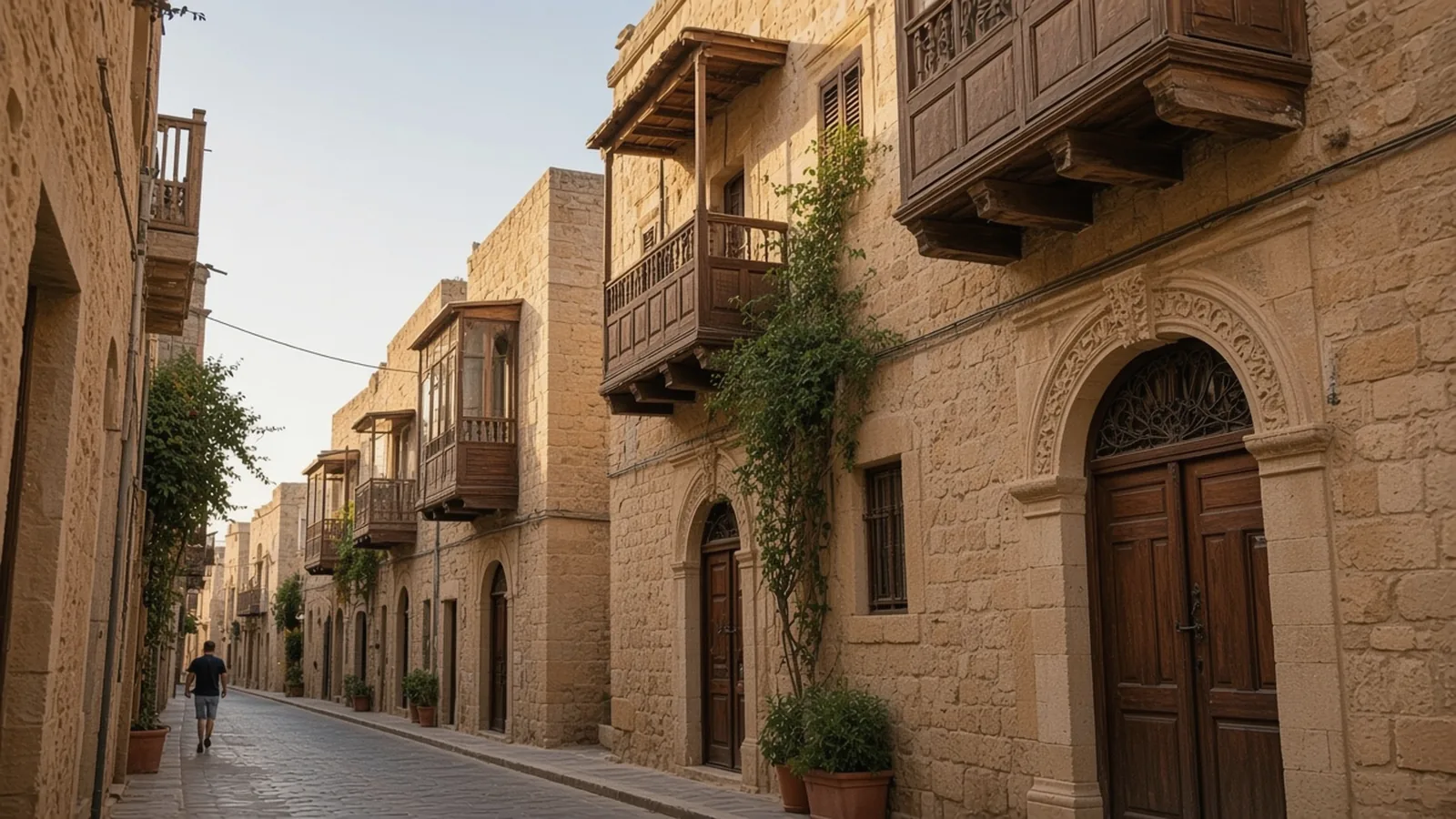
Short version: stay in the old town if you want lanes, an evening harbour and a compact centre on foot. Stay at the near end of the town beach if you want sand without giving up a walk into those lanes. Stay further east, towards Missiria and Platanes, only if a resort-style beach base matters more than wandering out to dinner in the old town. Rethymno is the easiest one-base town on Crete’s north coast, as long as you are honest about the beach (long and open, sometimes windy) and about the south coast (much easier with a car).
Rethymno sits roughly halfway between Chania and Heraklion, with a smaller, slightly calmer Venetian and Ottoman old town than Chania, a big fortress on the headland, and a long sandy beach that starts at the edge of the centre and runs east. That combination is why people use it as a single base for a week. This page goes into the neighbourhoods inside and just beyond the town. For the island-wide choice between Chania, Rethymno, Heraklion and the resort coasts, use where to stay in Crete. For the wider island, see the Crete travel guide.
There is not a live dedicated things-to-do page for Rethymno on this site yet. We do not name hotels here: pick the area first, then compare places on their own sites, and read recent reviews for stairs, noise and how far you will walk with bags.
Before you travel: fares, schedules, opening hours, tax rates and seasonal rules change often, and the details on this page may be out of date. Always confirm current prices, times and rules with the operator or the official site, or locally, before you travel.
The areas at a glance
Think of Rethymno as four bands. The old town is the tight knot of lanes between the small Venetian harbour and the fortress, mostly pedestrian, with cobbles and a lot of character. The fortress side, on the western headland, puts you closer to the Fortezza itself and to the main KTEL station on Kefalogiannidon Street. The town beach begins at the eastern edge of the centre and follows a long promenade; the nearer stretch is still an easy walk back to the lanes. Further east, the coast becomes a beach-hotel strip through Missiria and Platanes: more sand at the door, more reliance on a bus or car for an old-town evening. Inland village rooms only make sense if you have a car.
This map shows places to stay from our partner Stay22; we may earn a commission if you book, at no cost to you.
Which area suits you
| Area | Best for | Watch-outs | Without a car? |
|---|---|---|---|
| Old town | Couples, first-timers, evenings on foot | Cobbles, stairs, some lane noise, no parking at the door | Excellent |
| Fortress side | A practical arrival, walks up to the Fortezza, closer to the bus station | Some uphill stretches; less of a lane atmosphere than the centre | Excellent |
| Town beach (near end) | Families, a sandy walk from the centre | Open and can be windy; the further east you go, the longer the walk back | Excellent at the near end |
| Missiria and Platanes | A resort-style beach week, more hotel space | Less old-town life on the doorstep; you will bus or drive into the centre | Good (buses along the coast) |
| Inland villages | Quiet nights, with a car, close to both coasts | Not walkable to the beach or the buses; evenings are very quiet | Poor |
The town beach is one long stretch, not a set of coves. Rooms a few blocks back from the sand can be quieter than the front line.
The old town
This is the part of Rethymno people remember. The lanes are compact, with Venetian stone doorways and Ottoman wooden balconies side by side, and they are a genuine pleasure in the evening, when you can walk without a plan and find a courtyard table a street back from the harbour. The small Venetian harbour, with its stone lighthouse, is lovely at dusk; it is also the place where you pay for the setting, and touts can be persistent. Eat inland for better value.
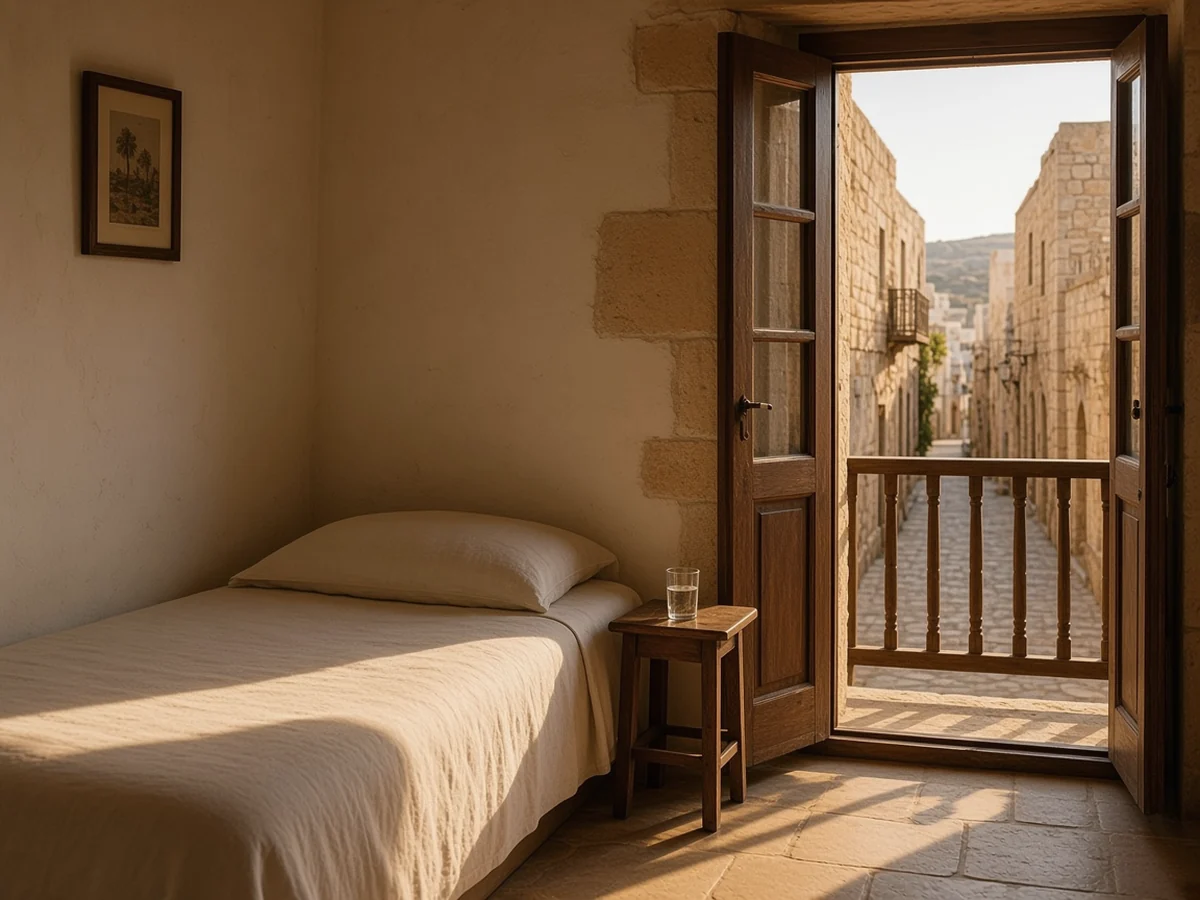
Compared with Chania’s harbour, Rethymno’s old town is usually a little quieter, but it is still a tourist centre in summer. Rooms in old houses often mean stairs, low ceilings and no lift, and you will carry bags from the edge of the pedestrian area. Street-level rooms near bars can be noisy late. It suits couples, short stays and anyone who wants to be able to walk out for dinner without thinking about a bus. It is less ideal with a large buggy, with limited mobility, or if a morning swim from the door is the main point of the trip.
The fortress side
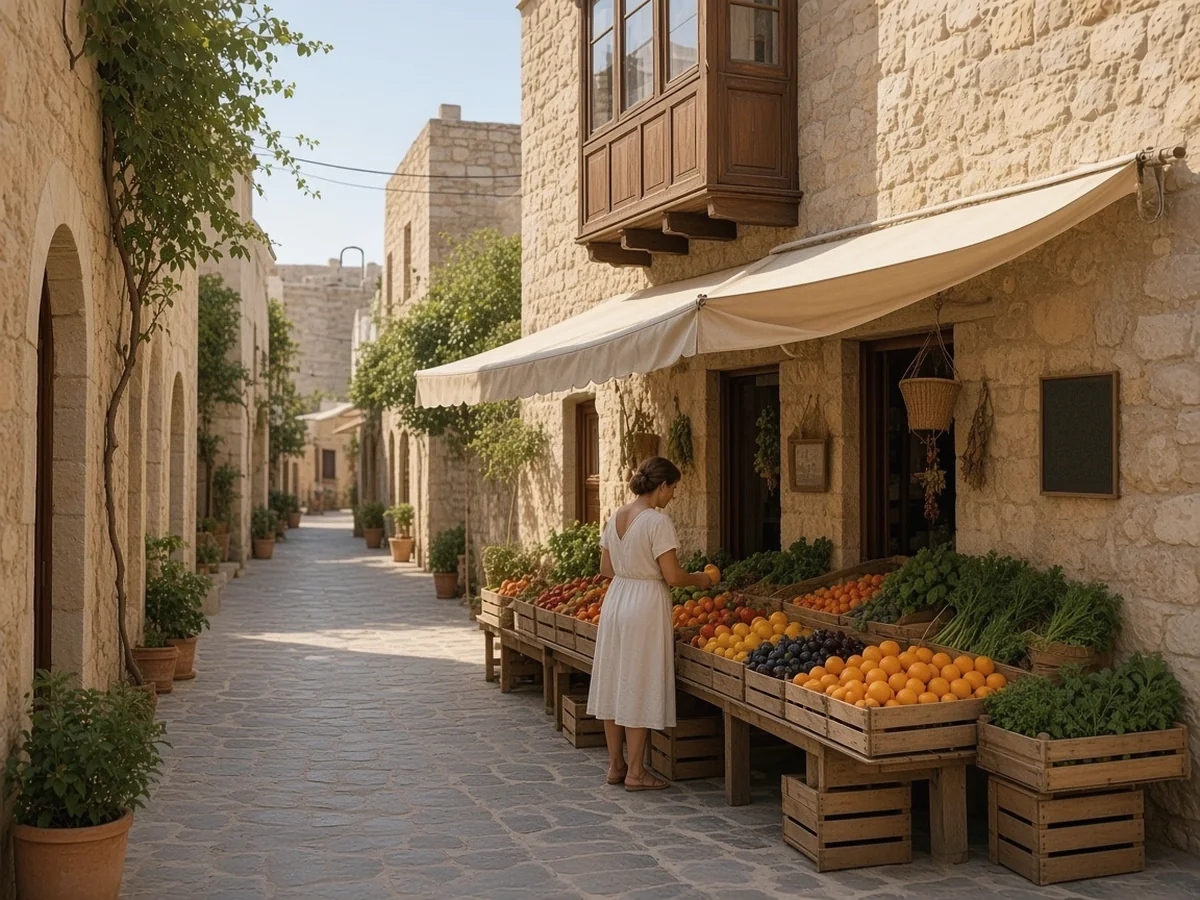
The Fortezza sits on the headland at the west of the old town, an open stone fortress with wide views and little shade. Staying on this side, towards the walls and along the western approach, is a practical choice: you are close to the climb for an early visit, and the main KTEL Chania-Rethymno station is on Kefalogiannidon Street, just west of the centre, which makes arrivals from Chania or Heraklion straightforward.
The atmosphere is less intimate than the inner lanes. Some streets are uphill, and you may hear more passing traffic than you would in a courtyard off the harbour. Choose it if you want a slightly easier arrival with luggage, or if the fortress and the buses matter as much as the postcard lanes. You can still walk into the old town in a few minutes from most addresses here.
The town beach
Rethymno’s sandy beach starts at the eastern edge of the old town and runs for a long way east, with a promenade, sunbeds and cafes near the centre and more space as you walk. It is an open, north-facing stretch rather than a cove, so it catches wind and waves on some days. When it is rough, the south coast is often calmer, but that is a trip, not a stroll.
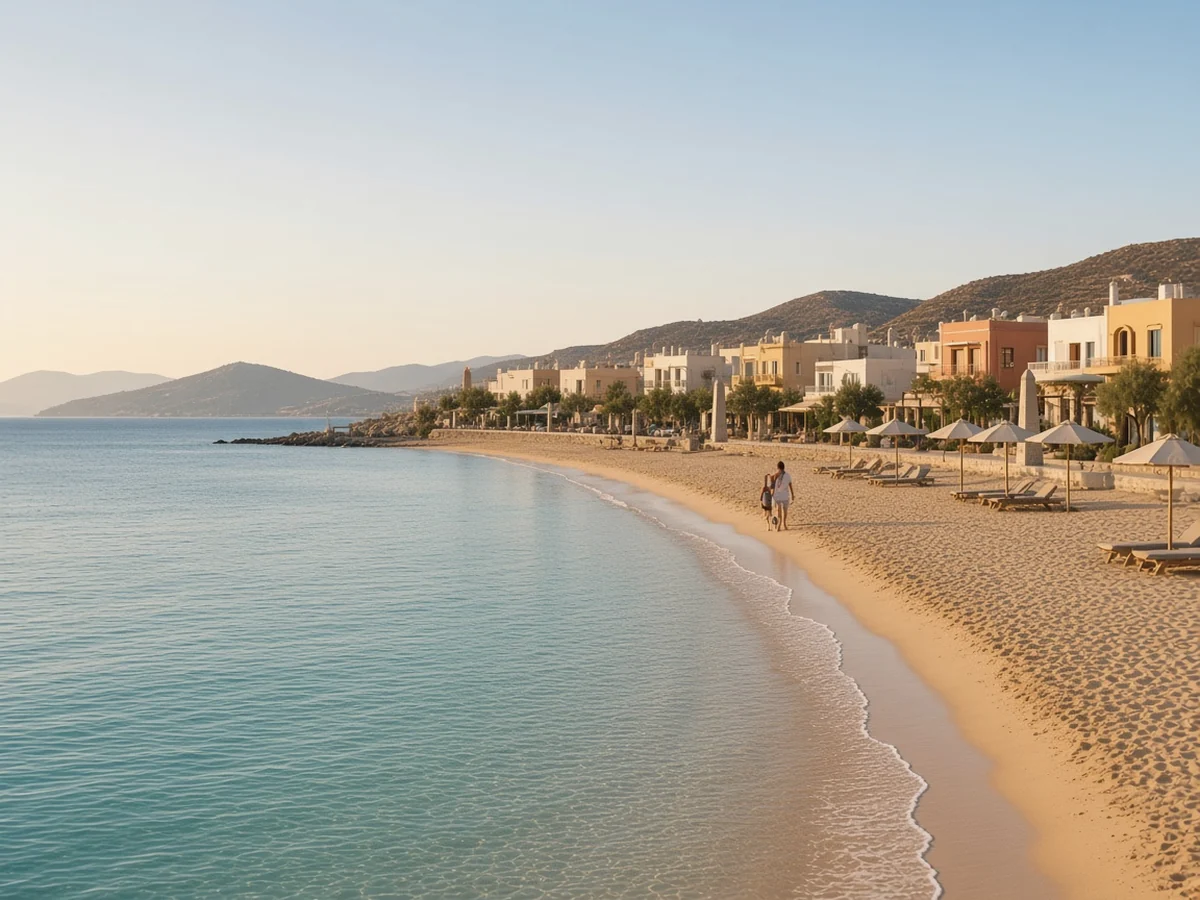
The near end is the sweet spot for many families: you can swim, shower off and still walk into the old town for dinner. The further east you stay, the more the rhythm becomes a beach-hotel one, and the more you will rely on a bus, a taxi or a bike to get back into the lanes. Loggerhead turtles nest on parts of this coast in summer. ARCHELON runs a conservation project here; respect any marked nests and do not dig holes in the sand.
Choose the town beach if sand matters and you still want Rethymno as a town, not only as a resort. Ask how long the walk to the old town really is from the specific address, not from a loosely used area name.
East of town: Missiria and Platanes
Beyond the first stretch of town beach, the coast continues through Missiria and Platanes, a looser line of hotels, apartments and beach facilities. This is the place to look if you want more room, a pool and the sand in front of you, and you are willing to treat the old town as an outing. Buses run along this coast; check current times, especially for the last bus back after dinner.
The trade-off is character. Evenings are quieter or more hotel-based, and you will not get the same accidental pleasure of turning a corner into a packed lane. If your group is split between beach people and town people, the near end of the town beach is usually a better compromise than staying a long way down the strip.
Inland village rooms in the hills behind Rethymno can be lovely and quiet if you have a car, and they put both coasts within a drive. They are a poor idea without one.
Getting around
The old town is walked. Much of it is pedestrian, and a hire car is a nuisance inside the centre. If you bring a car into Rethymno, leave it in a public or paid lot at the edge of the old town or along the seafront and walk in. Do not plan to park at your door in the lanes.
Rethymno has no airport. You fly to Chania or Heraklion and continue along the north coast. KTEL Chania-Rethymno buses link the town with both cities and stop at the station on Kefalogiannidon Street, west of the centre. Check current fares and times on the operator’s site; the north-coast service is frequent in season, but we are not quoting a timetable here. Our Crete by bus guide explains how the line works as a car-free spine.
A car is not required for the old town, the town beach or day trips to Chania and Heraklion. It makes a real difference for Arkadi Monastery, the pottery village of Margarites, the Amari valley and the south coast around Preveli and Plakias, where buses exist but are thinner. Many visitors hire a car for two or three days rather than the whole stay. Taxis cover airport runs and evenings when the bus is awkward.
Nearby beaches and sights
In town, the Fortezza is the main sight and is best early or late in summer, when the stone is not at its hottest. The old town itself is the other half of the visit: the harbour at dusk, and a slow walk through the lanes. The town beach is the everyday swim; it will not be everyone’s favourite beach in Crete, but it is unusually convenient.
With a car or a well-timed outing, Arkadi Monastery is the classic half-day from Rethymno. The south coast, through the gorges towards Preveli and Plakias, is the usual full day, and often the better swim when the north wind is up. Chania’s old harbour and the Minoan palace at Knossos, with the Heraklion archaeological museum, are both realistic as north-coast day trips. If you want several days in the far west, including Balos and Gramvousa, it is kinder to spend a night or two in Chania rather than drive it all from here. See also how many days in Crete and, for families, Crete with kids.
The Samaria Gorge is not a Rethymno-doorstep walk in any case, and it has been closed since 1 October 2026 after storm damage. When we checked the official ticket site on 17 November 2026, it showed the park closed from 1 November 2026 to 9 April 2027 for the off-season. 2027 reopening is not confirmed.
Frequently asked questions
Where should I stay in Rethymno?
For a first visit, the old town is the most satisfying base, or the near end of the town beach if you want a swim and a walk back to the lanes. Choose Missiria or Platanes if you want a more resort-like beach stay and are happy to bus or drive into the centre for the evening.
Is it better to stay in the old town or on the town beach?
The old town is better for atmosphere, food and evenings on foot. The town beach is better if sand and a promenade are the priority. The near end of the beach is the usual compromise; the further east you go, the more you trade town life for a hotel-and-sand rhythm.
Do you need a car in Rethymno?
Not for the town, the town beach, or bus trips along the north coast to Chania and Heraklion. A car helps a great deal for Arkadi, the inland villages and the south coast. If you hire one, park outside the old town. Check current bus times before you decide to go without.
Is Rethymno a better base than Chania?
It is a better single base if you want to reach both ends of the north coast without changing hotels, and if a long town beach matters. Chania has the prettier harbour and is closer to the far-west beaches and gorges. Neither is a good only base if you are set on Knossos and the east; in that case, split the stay. See where to stay in Crete.
How do I get to Rethymno from the airport?
Fly into Chania or Heraklion. KTEL buses run along the north coast to the station on Kefalogiannidon Street, west of the old town. A taxi or pre-booked transfer is simpler with luggage, children or a late arrival. There is no airport in Rethymno itself. Check current times with the bus operator.
Is the town beach good for families?
Yes, especially at the near end, where you have sand, a promenade and a walk into town for dinner. It is a long open beach, so it can be windy, and it is not a shallow enclosed cove. Check conditions on the day, and respect any marked turtle nests in summer.
Sources and useful links
- KTEL Chania-Rethymno (north-coast and regional buses; station on Kefalogiannidon Street)
- ARCHELON (sea turtle conservation)
- Samaria National Park official ticket site (NECCA)
Bus timetables, ferry schedules, parking rules and hotel opening seasons change through the year. We have not quoted prices or times; check current rates and times with the official source before you go. This is a draft and has not been published.