Paxos Travel Guide: Harbours, Olive Groves and an Antipaxos Day
Last updated: November 2026
Before you travel: fares and schedules change often, and the prices and times on this page may be out of date. Always confirm current prices and times with the operator, or locally at the port or bus station, before you travel.
The short version
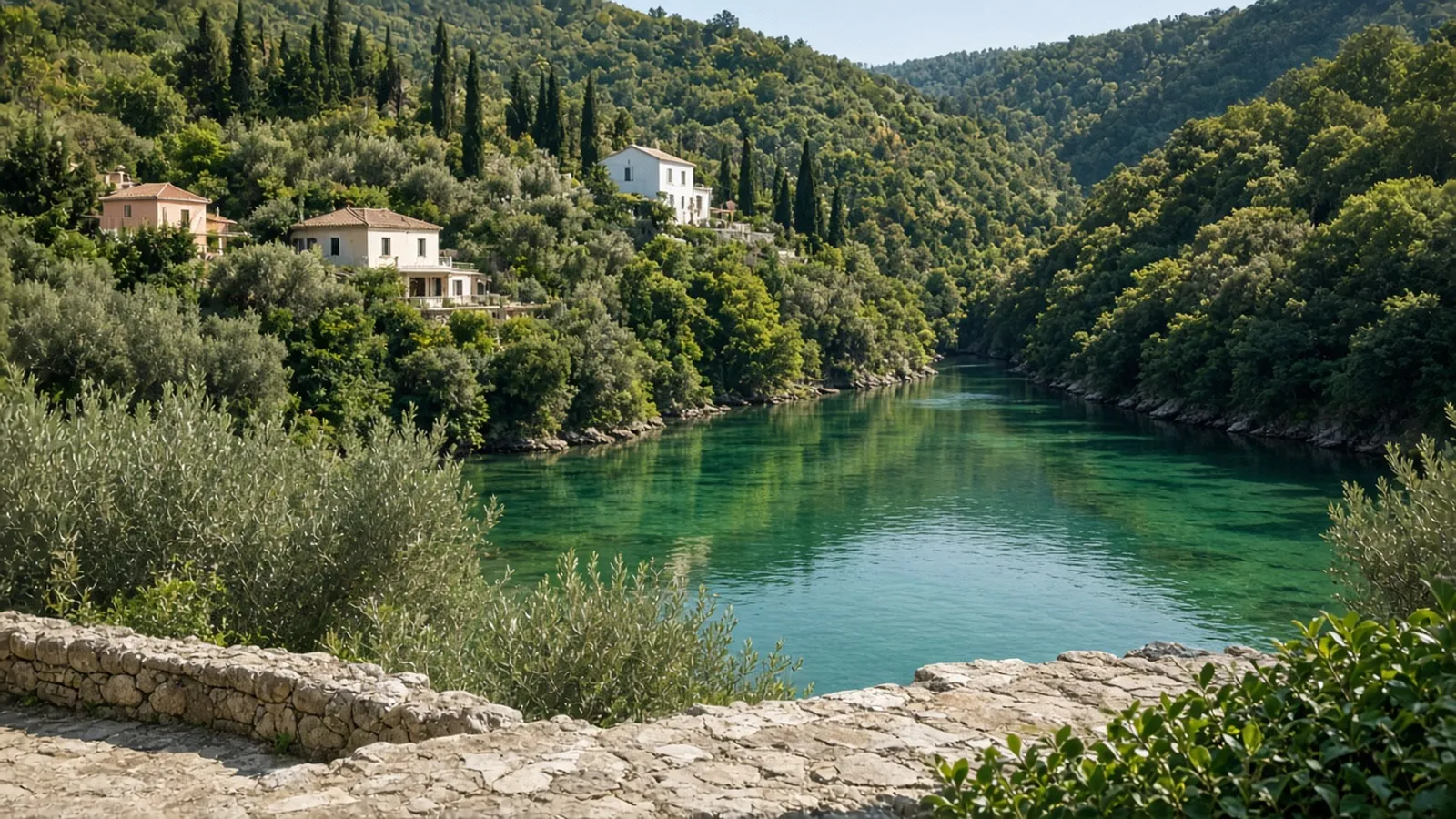
Paxos, also known by the Greek name Paxi, is a small Ionian island south of Corfu. It is covered in olive groves that go back to the Venetian period, with three harbour settlements rather than a single resort strip: Gaios, the capital and main port; Lakka, set in a sheltered northern bay; and Loggos, a smaller village on the east coast. The west side is a different world of cliffs, sea caves and sudden coves.
It pairs naturally with a stay on Corfu if you want a short island add-on after a larger base; start with our Corfu travel guide and treat the Paxos boat as a separate ticket. Paxos also sits in the same wider Ionian picture as Lefkada further south. It is not a substitute for Corfu’s range of services, and it is not road-linked in the way Lefkada is.
Is Paxos right for you?
| Your holiday style | How it fits | What to consider |
|---|---|---|
| Slow harbour holidays | Gaios, Lakka and Loggos reward unhurried evenings | Summer arrivals can make the waterfronts busier than photographs suggest |
| Boat and beach days | Eastern pebble coves, a western cave coast and Antipaxos | Several of the best swims depend on sea conditions and boats |
| A compact first Ionian island | Manageable distances once you have arrived | You still have a ferry transfer after flying into Corfu |
Paxos suits travellers who enjoy small harbours and cove swimming. It is less satisfying if you want nightlife or a holiday that never depends on a boat.
Where to stay
| Base | Why choose it | The trade-off |
|---|---|---|
| Gaios | The main port, the widest choice of services and the usual start for Antipaxos boats | The waterfront is the liveliest part of the island in high summer |
| Lakka | A sheltered northern bay, with Harami nearby for an easier family swim | A different atmosphere from the capital; check evening options near your room |
| Loggos | A smaller east-coast village with a harbour-village pace | Fewer services than Gaios; you will travel for some outings |
| Near Moggonisi | A southern base close to a more sheltered shore | Confirm the walk to the water and how you will reach Gaios |
Gaios is the practical default if ferries, boat trips and tavernas matter most. Two small islets, Agios Nikolaos and Panagia, enclose the harbour; treat them as part of the view unless you have a confirmed landing. Lakka makes sense for a calmer bay and a beach within easier reach. Loggos suits a quieter stay organised around one village.
Ask about the last stretch with luggage: some rooms sit above the harbour on stepped lanes. A sea view is not the same as a flat walk to dinner.
Beaches to put on your list
Most eastern shores on Paxos are white pebble. Harami, in the Lakka area, is the family starting point, with a sandier seabed and shallower water. Moggonisi, at the southern end, is useful for easier access and more shelter. Orkos is reached by a short footpath and is one of the island’s most beautiful coves. Monodendri has a more organised character; Levrechio, Marmari and Kaki Lagada suit people looking for fewer facilities.
The west is more dramatic. Erimitis formed after a cliff landslide and is known for evening light on pale rock; look at the entry before swimming beneath cliffs.
Antipaxos is the classic day trip from Gaios. Vrika is the more approachable landing, with fine sand and shallower water. Voutoumi is the famous pebble shore, where the water deepens more quickly and suits confident swimming rather than a casual paddle. Mesovrika and Sarakiniko are quieter if your boat can include them. July and August are busier; shoulder months feel calmer if boats are running.

Treat beach descriptions as a starting point, not a promise about the sea on your day. Look at waves and the entry before swimming, keep children close and leave if the conditions feel wrong. Carry drinking water, shade and a bag for your rubbish. Do not assume a beach bar, lifeguard or boat back will be available simply because someone mentions one in an older holiday review.
Things to do beyond the beach
Give Gaios an evening walk rather than treating it only as the ferry dock. Lakka and Loggos deserve the same unhurried pass: a swim, a long lunch and time beside the bay.
The western sea caves can be visited only by boat, typically from Gaios, and they are sensitive to westerly wind. Names you may hear include Ypapanti, Ortholithos and the natural arch of Trypitos. Confirm what the trip includes and what happens if the sea is rough.
Olive-grove paths tie the settlements together. In Loggos you can look for traces of older working life such as the Anemogiannis soap factory. Carry water and do not treat a published walking time as a promise about the path.
What to eat
Visit Greece highlights extra virgin olive oil, small-scale wine and seafood as local strengths. Ask what fish arrived that day and how it is priced before you order by weight. Keep dinner close to your base: harbour villages are short on late transport.
How to get there
There is no airport on Paxos. The usual air gateway is Corfu, followed by a ferry to Gaios. Read our Corfu travel guide while planning the connection, then check the boat separately rather than assuming every Corfu holiday package includes Paxos.
Compare current passenger and vehicle sailings with Kerkyra Lines and any other operator serving the route on your dates. Igoumenitsa is the mainland port to investigate if you are arriving by road through Epirus. Confirm the exact departure harbour and the arrival in Gaios printed on the ticket. Older summaries of crossing times and weekly frequencies are not repeated here.
Build the trip around a service actually offered on your date, then arrange accommodation and transfers. Do not turn a summer route diagram into an assumption about a winter connection. On separate ferry and flight tickets, leave a sensible contingency before the flight home; an overnight buffer is often more useful than a faster boat. Confirm the port printed on the ticket and the luggage or vehicle conditions directly with the operator.
Getting around
A car or scooter helps if you want several beaches, but the island is small and some shores still end in a path. A largely car-free stay can work from Gaios or Lakka if you are content with local swims, walks and one or two boat days. If you hire a small boat, agree landings and weather limits first.
When comparing transport, include the whole outing: getting to the start, getting back after dinner and what happens if the weather changes. A car-free base can work well even on an island where a car helps with wider exploring. The important distinction is between choosing a limited, enjoyable radius and expecting to reach every cove without planning. Our car-free island guide explains that trade-off.
When to visit
Late spring and early autumn suit harbour walks and swimming without the fullest boat crowds. High summer has more excursions and more pressure on Gaios and Antipaxos. Later in autumn, verify ferries and opening hours.
| Season | Plan around | Main caution |
|---|---|---|
| Spring | Village walks and countryside rather than a guaranteed swimming holiday | Check open businesses and transport before committing |
| Early summer | A balance of beach time and exploring | Sun exposure and availability still need planning |
| High summer | Book the base and essential journeys ahead | Heat, crowding at popular spots and weather disruption |
| Early autumn | Flexible beach days and walks | Seasonal services may finish before your holiday ends |
These are planning judgements, not a forecast. Spring swimming can feel cool, autumn rain is possible and the wind can change a beach day at any point in the season. We deliberately avoid neat air-temperature averages or promises of warm seas. Choose dates around the activities you care about, then check the forecast and current services shortly before travelling.
A realistic three-day plan
| Day | A manageable plan | Keep it flexible |
|---|---|---|
| 1 | Arrive in Gaios, settle in and swim at a nearby eastern cove or around the harbour | Do not add Antipaxos or a cave trip to a late ferry afternoon |
| 2 | Choose either Harami and Lakka, or a footpath beach such as Orkos, matching the wind | Substitute a more sheltered southern option such as Moggonisi if the sea is rough |
| 3 | Cross to Antipaxos if boats are running; otherwise take a western cave trip or an olive-grove walk between villages | Have a harbour evening as the fallback, not a fourth transfer |
This is a suggestion for three usable days, not three dates with a late arrival and an early departure squeezed into them. If the first ferry gets in late, make the first evening only about checking in and finding dinner. Swap the coast day with the village day if the weather turns. Leave one unallocated half-day rather than treating every beach and viewpoint as compulsory.
The honest downsides
Paxos is small, which is the pleasure and the limitation. High summer can feel busy around Gaios and Antipaxos, while out of season boats and tables thin out. Many shores are pebble, and the western caves are useless in the wrong wind. Almost everyone arrives via Corfu or a mainland port, so a tight last-day flight is a poor idea.
For the wider journey, use our ferries for beginners guide and Corfu travel guide. This page is an individual island hub, not a timetable or a promise that every neighbouring island has a direct connection.
Frequently asked questions
Is Paxos worth visiting?
Yes, if you want small Ionian harbours, pebble coves and a possible Antipaxos day. It is less ideal as a sandy resort with no ferry after your flight.
Where should I stay on Paxos?
Gaios is the practical port base; Lakka suits a northern bay and easier family swimming at Harami; Loggos is the quieter east-coast village. Choose by evening atmosphere and how you will reach the water, not by a photograph alone.
Do you need a car on Paxos?
Useful for sampling several beaches, but not essential if you stay in Gaios or Lakka and use walking, taxis and boats. Some of the best swims are still path- or boat-dependent.
How many days should I spend on Paxos?
Allow three usable days for a first look, plus travel time. Stay longer if you want unhurried beach days or walks; the right length depends more on your pace and connections than on a checklist.
How do you get to Paxos?
There is no airport. Fly to Corfu or travel via Igoumenitsa, then take a current ferry to Gaios. Check the operator for your date rather than copying an old crossing time.
When is a good time to visit Paxos?
Early summer and early autumn balance swimming with fewer boat crowds. High summer has more excursions and more pressure on Gaios and Antipaxos. Always re-check ferries outside the core season.
Sources and useful links
- Visit Greece: Paxi
- Visit Greece: beaches of Paxi
- Visit Greece: Antipaxos beaches
- Visit Greece: Antipaxi
- Visit Greece: sea caves of Paxi
- Visit Greece: hiking on Paxi
- Kerkyra Lines: Paxos
- Municipality material: About Paxos
Independent planning guide. Transport, visitor access and seasonal businesses can change; confirm current arrangements directly before travelling.