Corfu Travel Guide: Old Town, Beaches and Where to Stay
Last updated: October 2026
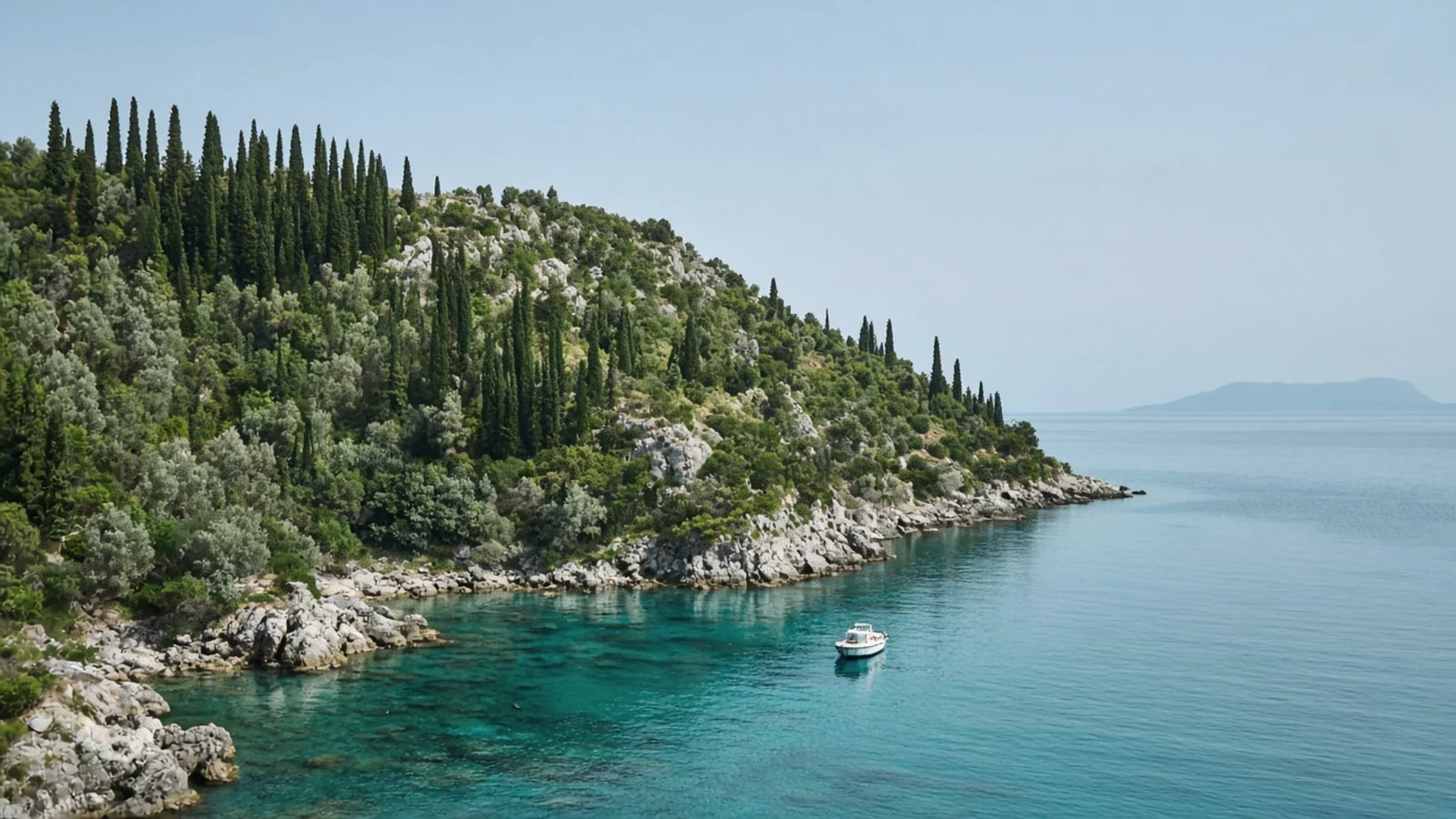
Corfu is green, big and Venetian rather than white and Cycladic. Pick the right coast and it’s one of the most rewarding islands in Greece.
Corfu (Kerkyra in Greek) sits in the Ionian Sea off the north-west coast of Greece, a short hop from the mainland port of Igoumenitsa and within sight of Albania. It looks and feels different from the Aegean islands most people picture. The hills are covered in olive groves and cypress trees, the old town is a maze of tall Venetian-era buildings and arcades, and the food leans towards slow-cooked, Italian-influenced dishes. If you want to hop to Paxos or further south, see our Ionian island hopping guide. Choosing between Corfu and Zakynthos? See our Corfu vs Zakynthos guide.
It’s also a large and busy island with a long package-holiday history. Some resorts on the north-east and south coasts are built-up, a few are loud, and Corfu Town gets crowded on cruise-ship days. The good news is that the quiet Corfu still exists: hill villages, olive-grove walks, small coves and long sunset beaches on the west coast. Where you stay decides which Corfu you get.
This guide covers where to base yourself, the beaches, the old town, getting there by air or ferry, buses versus a hire car, the best time to go and a realistic five-day plan. No booking links, no commissions: we link to official sites only.
Corfu at a glance
| Corfu | |
|---|---|
| Where | Northern Ionian Sea, off Epirus (mainland Greece) and Albania |
| Main town | Corfu Town (Kerkyra), whose Old Town is a UNESCO World Heritage Site (inscribed 2007) |
| Airport | Corfu “Ioannis Kapodistrias” (CFU), on the edge of Corfu Town |
| Main ferry links | Igoumenitsa (all year, about 1¼ hrs), Paxos, Saranda in Albania, and seasonal ferries from Italy |
| Best for | Old-town wandering, green scenery, walking, varied beaches, families |
| Not ideal for | Cycladic white-and-blue scenery; car-free beach-hopping across the whole island |
| Car needed? | Not for Corfu Town or a resort stay; yes if you want to explore widely |
| Ideal stay | 5–7 days, or longer for a slow trip |
Is Corfu right for you?
You’ll probably love Corfu if you like history you can walk through, greenery, long lunches and variety. In a week you can mix an elegant old town, a mountain village, a walk through olive groves, a boat day and a sunset beach. It works well for families, because flights are direct from many European cities, the drive from the airport to most resorts is short, and there are plenty of shallow, sandy beaches.
You might be disappointed if you want the whitewashed Cyclades look, or a small island you can see in a couple of days. Corfu is the second-largest of the Ionian islands and the roads are slow and winding, so getting from the north to the south can take well over an hour: Kassiopi to Kavos is about 80 km, roughly 1¾ hours by road. Some resorts were built quickly for mass tourism and aren’t pretty. Kavos, at the southern tip, is a party resort aimed at young holidaymakers, and Sidari in the north is busy and commercial in summer. Corfu also gets more rain than the Aegean islands, which is exactly why it’s so green. For a closer look at the old town, villages and beaches, see our things to do in Corfu guide.
The honest summary: Corfu rewards people who choose their base carefully and hire a car for at least part of the trip. Treat it like a small country, not a small island.

Where to stay in Corfu
Corfu divides neatly into areas with very different personalities. We don’t name hotels in this guide. Use the area guide below, then compare properties on their own websites.
| Area | Best for | Honest downsides | Car needed? |
|---|---|---|---|
| Corfu Town | First-timers, no-car trips, culture, food, evenings out | No beach in town; busy on cruise days; some street noise | No |
| North-east coast (Barbati, Nisaki, Kalami, Agios Stefanos Sinion, Kassiopi) | Couples and families who want clear pebbly coves and green hills; views to Albania | Coves are small and fill up; narrow coast road; hilly | Useful |
| West coast (Paleokastritsa, Glyfada, Agios Gordios, Pelekas) | Sunsets, sandy beaches, dramatic scenery | Further from town; some steep access roads; waves on windy days | Yes, realistically |
| North coast (Sidari, Roda, Acharavi) | Long, shallow beaches for young children; budget package stays | Flat and commercial; Sidari is very busy in summer | Useful |
| Mid-east coast (Dassia, Ipsos, Gouvia) | Close to town and the airport; lots of choice | Built-up strip along the main road; narrow beaches | No |
| South (Agios Georgios Argyradon, Issos, Kavos, Lefkimmi) | Long sandy beaches and dunes; Kavos for nightlife | Far from town; Kavos is a loud party resort | Yes, unless you stay put |
Corfu Town: the best base without a car
Staying in town means you can walk the Old Town in the evening after the day-trippers leave, eat well every night, and use the town as the hub of the bus network. You’ll take a bus or taxi to a beach. It’s the best choice for a short trip, a culture-first trip or anyone who doesn’t drive.
North-east coast: green hills and clear coves
This is the Corfu many repeat visitors love: steep, wooded hills running down to small pebble coves with very clear water, and the Albanian mountains across the strait. Kalami is linked to the Durrell family’s time on the island, and Kassiopi is a pleasant harbour village with a castle ruin. Expect small beaches, a winding coast road and plenty of hills between your room and the sea.
West coast: sunsets and sand
The west coast has the big sunset beaches, such as Glyfada and Agios Gordios, and the famous bays and monastery at Paleokastritsa. Pelekas, a hill village above the coast, is a good base if you want views and tavernas with a beach a short drive away. Bring a car: the beaches are spread out and the roads down to them are steep.
North and south: big beaches and package resorts
The north coast around Roda and Acharavi has long, shallow, sandy beaches that suit small children, and Sidari is known for its eroded sandstone coves (the “Canal d’Amour”). In the south, Issos and Agios Georgios have long sandy beaches and dunes, and Kavos is the island’s party resort. These areas are the furthest from Corfu Town.
Best beaches in Corfu

| Beach | Coast | Type | Good for | Watch out for |
|---|---|---|---|---|
| Paleokastritsa bays | West | Several small coves, pebble and sand | Boat trips to sea caves, scenery | Busy car parks in summer; cool water |
| Glyfada | West | Long sand | Sunsets, a full beach day | Waves on windy days; steep road down |
| Agios Gordios | West | Long sand under cliffs | Families, sunsets | Resort-style beach |
| Myrtiotissa | West | Sand cove | A quieter, wilder beach | Steep walk down; few facilities |
| Barbati, Kalami, Agni | North-east | Pebble coves | Clear water, snorkelling, tavernas | Small; fill up quickly in August |
| Sidari / Canal d’Amour | North | Sandstone coves | Photos, swimming in shallow coves | Crowded in high season |
| Issos and Halikounas | South-west | Long sand and dunes | Space, windsurfing, walks | Exposed to wind; few facilities |
Two honest notes. First, the north-east coves are pebbly, so pack water shoes. Second, the most famous beaches are packed in July and August. Go early in the morning or late in the afternoon, or pick the long beaches in the south-west, where there’s room to spread out.
Things to do beyond the beaches

- Walk the Old Town. The UNESCO listing covers the Old Town and its forts, which Venetian engineers designed to defend the town for four centuries. Wander the narrow lanes (the kantounia), the arcaded Liston promenade and the huge Spianada square. Visit early or in the evening on cruise-ship days.
- The Old and New Fortresses. Both sit on the edge of the Old Town and give you the best views over the rooftops and harbour.
- The Achilleion. The palace built for Empress Elisabeth of Austria (Sisi), south of town. In October 2026 its official site said that because of restoration work, only the outdoor areas and the imperial gardens were open to visitors, so check before you go.
- Walk the Corfu Trail, or part of it. A waymarked route of about 200 km from near Kavos in the south to the island’s northern tip. You don’t need to do it all: a single section through olive groves and villages makes a great half-day.
- Hill villages. Old Perithia, a partly abandoned Venetian-era village on the slopes of Mount Pantokrator, and the views from the top of Pantokrator itself, Corfu’s highest mountain.
- A boat day. Small boats run along the coasts, and from Corfu Town or Lefkimmi you can take a day trip to Paxos. Day trips to Saranda in Albania also run from Corfu Town.
What to eat in Corfu
Corfiot food has its own character, with Venetian and Italian influences you won’t find in the Cyclades. Look out for pastitsada (spiced, slow-cooked meat with pasta), sofrito (veal in a garlic-and-vinegar sauce), bourdeto (a peppery fish stew) and bianco (fish cooked with garlic and lemon). Kumquats grow on the island, and you’ll see kumquat liqueur and sweets everywhere.
Corfu Town has the widest choice. Away from town, the honest tip is the same as anywhere: the tavernas with laminated photo menus on the busiest resort strips are rarely the best. Head inland, or to villages where Greek families eat.
How to get to Corfu
By air
Corfu airport (CFU) is on the edge of Corfu Town, only a few kilometres from the Old Town, so arrival is easy. In season there are direct flights from many European cities, and there are domestic flights from Athens all year. Aegean and Sky Express both fly the route. City bus line 15 links the airport with the port and the town centre (San Rocco/Sarocco square), and there’s a taxi rank outside the terminal.
By ferry
| Route | Operators (2026) | Typical time | Runs |
|---|---|---|---|
| Igoumenitsa – Corfu Town | Kerkyra Lines, Kerkyra Seaways | About 1h10–1h30 | All year, many daily sailings |
| Igoumenitsa – Lefkimmi (south Corfu) | Several local operators | About 50 min | All year |
| Corfu – Paxos | Kerkyra Lines, Ionian Blue Wave, Kamelia Lines | About 45 min–1h45 | All year, more in summer |
| Corfu – Saranda (Albania) | Finikas Lines, Ionian Seaways, Albania Luxury Ferries | About 30 min–1h15 | All year |
| Italy (Bari, Brindisi, Ancona, Venice) – Corfu | Superfast, Ventouris, Grimaldi | About 5½ hrs (Brindisi) to about 25 hrs (Venice) | Mainly spring to autumn |
Source: Ferryhopper route pages, checked October 2026. Operators, frequencies and seasons change every year.
From Athens by land and sea: drive or take the bus to Igoumenitsa, then the ferry. KTEL Corfu (the green buses) lists through routes from Corfu to Athens and Thessaloniki. It’s a long day, and for most people a flight is far easier.
Going to Albania for the day? Albania is outside the EU, so bring your passport and check the entry rules for your nationality before you book.
Getting around Corfu

| Option | Good for | Downsides |
|---|---|---|
| Blue city buses (Astiko KTEL Kerkyras) | Corfu Town, the airport, the port and nearby villages and beaches | Limited reach beyond the town area |
| Green intercity buses (KTEL Kerkyras) | Resorts and villages all over the island, from Kassiopi to Kavos | Most routes run into and out of Corfu Town, so crossing the island takes time |
| Hire car | Exploring several coasts, west-coast beaches, villages | Narrow, winding roads; hard parking in town and at popular beaches in August |
| Scooter / quad | Short hops near your base | Not a good idea on busy, winding roads if you’re inexperienced |
| Taxi | Airport transfers, evenings | Adds up over a week |
| Boats | Coastal day trips, Paxos, Albania | Weather-dependent |
Corfu has two separate bus companies, which confuses many visitors. The blue buses (Astiko KTEL Kerkyras) cover the town and its suburbs, including line 15 to the airport. The green buses (KTEL Kerkyras) run to the resorts and villages around the island, including Paleokastritsa, Sidari, Kassiopi, Glyfada and Kavos, and sell e-tickets online. Check both timetables before you choose a base, because a resort with a good bus service makes a car-free week realistic.
Driving is the easiest way to see a lot of the island, but it’s slower than the map suggests. If you’re staying in Corfu Town, you might hire a car for two or three days rather than the whole week. See Greek islands without a car for more on car-free trips.
When to visit Corfu
| When | What to expect | Best for |
|---|---|---|
| April–May | Green, flowering countryside; Easter is a big event in Corfu Town; the sea is still cool in April | Walking, Easter, villages |
| June | Warm, everything open, busier towards the end of the month | An all-round trip |
| July–August | Hottest and busiest; prices peak; crowded beaches and roads | Families tied to school holidays |
| September | Warm sea, fewer people after the first weeks | Beaches and couples |
| October | Mild, quieter, more chance of rain; resorts start closing | Town and walking, with some beach days |
| November–March | Corfu Town stays lively, but most resorts close; the wettest time of year | A city break |
Corfu gets far more rain than the Aegean islands, about 1,100 mm a year on long-term Greek weather service averages, roughly three times as much as Naxos, and most of it falls between autumn and spring, so a shoulder-season trip can include a wet day or two. Greek Orthodox Easter in Corfu Town is famous for its processions and the tradition of throwing clay pots from balconies on Holy Saturday. If you plan to go then, book early. Our Greek Easter on the islands guide covers Holy Week, what closes and how to book. For month-by-month planning, see our guides to the Greek islands in May, June, September and October. Those guides focus mainly on the Aegean, so allow for Corfu being greener and wetter.
A realistic five-day Corfu itinerary

- Day 1: Corfu Town. The Old Town lanes, Liston and Spianada, and the Old Fortress for the view. Dinner in town.
- Day 2: North-east coast. Swim at a pebbly cove such as Barbati or Agni, lunch at a waterside taverna, and finish in Kassiopi.
- Day 3: West coast. Paleokastritsa in the morning (take a small boat to the sea caves), then on to a sunset beach such as Glyfada.
- Day 4: Hills and villages. Drive up towards Mount Pantokrator and Old Perithia, or walk a section of the Corfu Trail.
- Day 5: Choose. A boat day to Paxos, the Achilleion’s gardens, or a lazy day on a long southern beach.
Without a car, base yourself in Corfu Town and use the green buses for days 2 and 3, and an organised boat trip for day 5.
Common mistakes to avoid
- Underestimating the size of the island. Don’t plan to see the north, west and south in one day.
- Booking a resort without checking what it’s like. Kavos and parts of Sidari and Ipsos are very different from Kalami or Pelekas.
- Visiting the Old Town at midday on a busy cruise day. Go early or in the evening.
- Expecting the Cyclades. Corfu’s beauty is green and Venetian, not white and blue.
- Forgetting your passport for Albania. You’ll need it for a day trip to Saranda.
Comparing islands? Our best islands for first-time visitors and best islands for couples guides cover the main options, and our Rhodes and Crete guides cover two other big islands with direct flights from much of Europe.
Frequently asked questions
Is Corfu worth visiting?
Yes, if you like green scenery, history and variety. Corfu has a UNESCO-listed Venetian-era old town, mountain villages, walking trails and very different beaches on each coast. It’s less suited to people looking for the white-and-blue Cyclades look.
Where is the best place to stay in Corfu?
Corfu Town is best without a car and for culture and food. The north-east coast suits couples and families who like clear pebble coves, the west coast suits sunsets and sandy beaches, and the north coast has long shallow beaches for small children.
Do you need a car in Corfu?
Not if you stay in Corfu Town or a resort with good bus links. A car makes it much easier to explore the west coast beaches and hill villages, even if you only hire one for two or three days.
How do you get to Corfu?
Most visitors fly into Corfu airport, which is on the edge of Corfu Town. By sea, ferries run all year from Igoumenitsa on the mainland in about an hour and a quarter, and there are seasonal ferries from Italy.
What is the party resort in Corfu?
Kavos, at the southern tip of the island, is Corfu’s main party resort. Sidari in the north is also busy and commercial in summer. Most of the rest of the island is much quieter.
Can you visit Albania from Corfu?
Yes. Ferries run from Corfu Town to Saranda in Albania all year, taking about 30 minutes to an hour and a quarter. Albania is outside the EU, so bring your passport and check the entry rules for your nationality.
What is the best month to visit Corfu?
June and September are the best all-round months, with warm sea and fewer crowds than July and August. May is lovely for walking and flowers, and Easter in Corfu Town is famous but busy.
Is the Achilleion open?
In October 2026 the Achilleion’s official website said that only the outdoor areas and the imperial gardens were open, because of restoration work. Check the official site before you go.
Sources and useful links
- UNESCO: Old Town of Corfu
- Corfu Airport (Fraport Greece)
- Astiko KTEL Kerkyras (blue city buses): airport line 15
- KTEL Kerkyras (green intercity buses)
- Ferryhopper: Igoumenitsa–Corfu
- Ferryhopper: Corfu–Paxos
- Ferryhopper: Corfu–Saranda
- Ferryhopper: Bari–Corfu
- Kerkyra Lines
- Achilleion Palace (official site)
- The Corfu Trail (official guide)
- Sky Express: Athens–Corfu flights
Timetables, opening hours and transport change every season. This independent guide is for research and planning; always check current details with the operator or site before you travel.