Rhodes Travel Guide
A medieval city, a whitewashed acropolis village and a long coastline of beaches. Just don’t expect it to feel like the Cyclades.
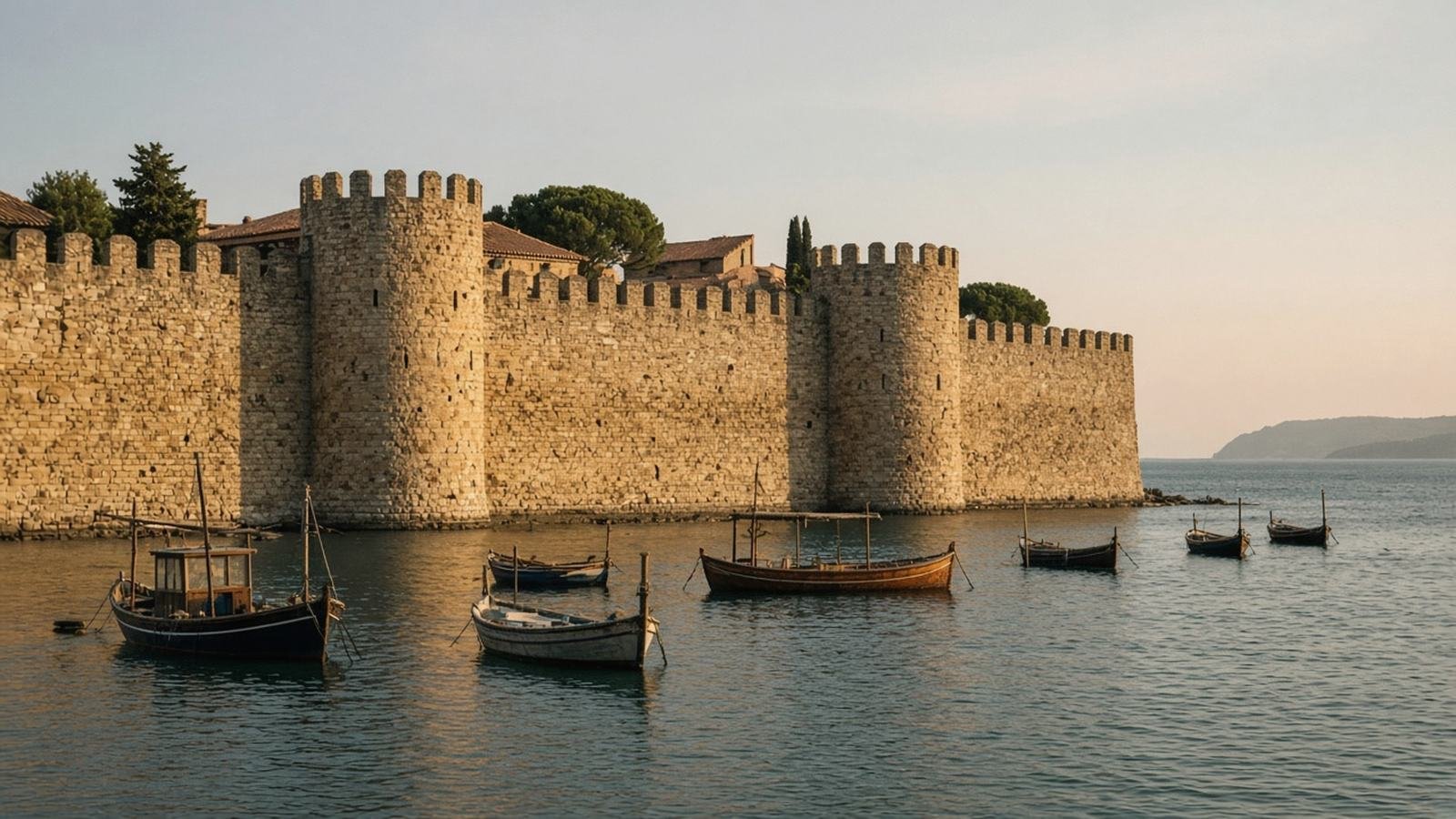
Rhodes is the largest island in the Dodecanese, out in the south-east Aegean much closer to Turkey than to Athens. Its headline sight is extraordinary: the walled Old Town of Rhodes, built up by the Knights of St John from the early 1300s and still lived in today, is one of the best-preserved medieval cities in Europe. Add the acropolis and white village of Lindos, a coastline long enough for very different beach days, and inland villages and wineries, and you have an island that can easily fill a week or more.
It is also a big, established holiday island. Parts of the east coast are classic resort strips, the Old Town is busy when cruise ships are in, and Lindos at midday in August is a crowd, not a village. Rhodes works best when you choose your base carefully and plan around the heat and the day-trippers rather than against them.
Best for: History lovers, families, couples, long beach holidays, travellers who want direct flights and a long season. Allow: Five nights for a satisfying first visit; a week or more if you want beach time as well as sightseeing. Less ideal for: Classic Cycladic island hopping, a quiet August, or seeing the whole island without a car.
Rhodes at a glance
| Question | Quick answer |
|---|---|
| Island group | Dodecanese (south-east Aegean), not the Cyclades |
| Best first base | Rhodes Town (Old Town or New Town) for history and transport; an east-coast village for beaches |
| Must-sees | The Old Town and Palace of the Grand Master, Lindos acropolis, one great east-coast beach |
| Do you need a car? | Not for Rhodes Town and Lindos; yes for the west coast, the south and inland villages |
| How to get there | Fly (from Athens or direct from many European airports in season). The ferry from Athens is a long overnight trip |
| Island hopping | Easy to nearby Dodecanese islands such as Symi; long and infrequent to the Cyclades |
| Ideal stay | 5–7 nights |
Is Rhodes right for you?
Choose Rhodes if you like the idea of mornings in a medieval city and afternoons on a beach, or if you want one island with enough variety for a full week without packing your bags again. It’s also one of the easiest Greek islands to reach directly from much of Europe in season, which makes it a strong choice for families and for anyone who doesn’t want to spend a day travelling through Athens.
Be honest with yourself about a few things, though:
- It isn’t a Cycladic island. There are no clusters of white cube villages and blue domes around every bay. Lindos comes closest; Rhodes Town is stone, Gothic and Ottoman.
- It’s big. Lindos is roughly an hour’s drive south of Rhodes Town, and the far south and west feel a long way from the airport. Where you stay shapes your whole trip.
- Some areas are very resort-like. If you want local village life, choose your base deliberately rather than booking the cheapest package hotel.
- Summer is hot. Midday in the Old Town or on the Lindos acropolis in July and August can be punishing. Plan sightseeing for mornings and evenings.
- It’s a long way from the Cyclades. If your dream trip is Santorini plus a couple of Cycladic islands, Rhodes is usually better as its own holiday, or linked by a flight via Athens.
Where to stay in Rhodes
Rhodes has two coasts with different personalities. The east coast is calmer and sandier, with most of the big beaches and resorts. The west coast is usually breezier, closer to the airport and more popular with windsurfers. The north tip is Rhodes Town. Choose by what you’ll do after dinner, and how often you want to visit the Old Town.
| Area | Best for | Honest downsides | Without a car? |
|---|---|---|---|
| Rhodes Old Town | Atmosphere, history, evening walks | Cobbles, steps and luggage logistics; can be noisy near bars | Excellent |
| Rhodes New Town | Transport, restaurants, Elli beach, practical stays | Busier, more urban | Excellent |
| Ixia / Ialysos | Long west-coast seafront, windsurfing, near the airport | Often windy; pebbly beaches; hotel strip feel | Good (frequent town buses) |
| Faliraki | Lively resort, long sandy beach, families and groups | Resort atmosphere; nightlife reputation in parts | Good |
| Kolymbia / Afantou / Archangelos | Quieter east-coast beach bases between Town and Lindos | Spread out; fewer evening options on foot | Fair |
| Lindos | The prettiest village base, St Paul’s Bay | Very busy by day in summer; steep lanes; limited parking | Fair (buses to Town) |
| Pefkos / Lardos | Relaxed beach holidays south of Lindos | Quieter evenings; further from Town | Fair |
| Kiotari / Gennadi and the south | Space, long beaches, peace | Far from Rhodes Town; you’ll want a car | Limited |
Rhodes Old Town: for atmosphere and history
Sleeping inside the medieval walls is a special experience. You get the lanes after the day-trippers have gone, with dinner in a small square and the Street of the Knights almost to yourself early in the morning. Many places to stay are in restored old houses.
Choose it if: History and evening atmosphere matter more than a beach on your doorstep. Before booking: Check how close a taxi can get, as much of the Old Town is pedestrian, and whether you’ll be carrying bags over cobbles and steps. Read recent reviews for late-night noise if the property is near a bar street.
Rhodes New Town: for convenience
The modern town around Mandraki harbour and Elli beach is less romantic but very practical. Bus stations, restaurants, shops and the beach are all close, and the Old Town is a short walk away.
Choose it if: You’re not renting a car, you want lots of choice for eating out, or you’re staying only a few nights. Before booking: Check the street, because some main roads are busy and noisy.
Ixia and Ialysos: for the west coast
Just south-west of town, this long seafront is lined with hotels and is close to the airport. It’s popular with windsurfers because the west coast often catches the wind. Frequent town buses make it workable without a car.
Choose it if: You want a hotel by the sea with easy access to Rhodes Town. Before booking: Expect pebbles and breeze rather than calm sand; if swimming matters most, compare an east-coast base.
Faliraki and the east coast resorts: for beach holidays
Faliraki has a long sandy beach and plenty of facilities, and it’s a common family base. Further south, Kolymbia, Afantou and Archangelos are quieter, with good beaches nearby, including Tsambika.
Choose it if: Beach days are the priority. Before booking: Look at what’s within walking distance in the evening. Some east-coast hotels are isolated, which is lovely by the pool and limiting if you want to wander out to dinner.
Lindos: for the prettiest village stay
Lindos is beautiful: white houses, pebble-mosaic courtyards and the acropolis above. Staying there means you see it early and late, when it’s at its best.
Choose it if: You want a village atmosphere and don’t mind summer crowds by day. Before booking: Ask about luggage access (lanes are narrow and steep), parking and noise. Some rooms sit right above busy lanes or bars.
Pefkos, Lardos, Kiotari and the south: for space
South of Lindos the island gets quieter, with long beaches and a slower pace. It’s a good choice for a relaxed week if you have a car.
Choose it if: You want peace and space more than nightlife or easy day trips to Rhodes Town. Before booking: Factor in the drive back to the airport and to the Old Town.
Best beaches in Rhodes
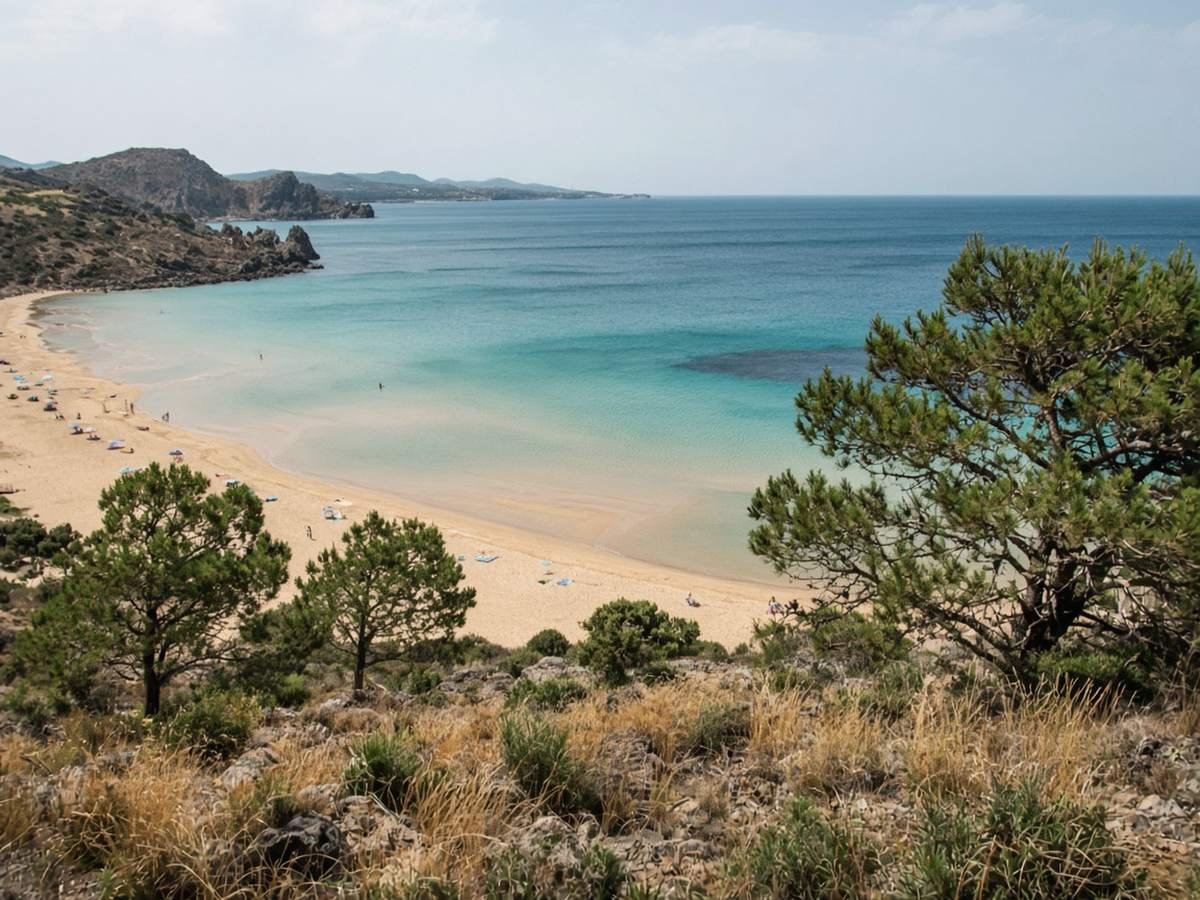
The east coast has most of the sandy, sheltered beaches; the west coast is often windier. Conditions change daily with the wind, so have a second option in mind.
Tsambika
A wide sandy bay on the east coast with shallow water, often counted among the island’s best beaches. It’s popular and has facilities, but there’s room to spread out. The monastery on the hill above is a hot climb with a big view.
St Paul’s Bay, Lindos
A small, almost enclosed bay below the Lindos acropolis, with calm, clear water and a postcard setting. It gets busy, so come early or late.
Anthony Quinn Bay
A small rocky cove with very clear water, good for swimming and snorkelling. Space is limited and it fills up in summer, so go early.
Faliraki
A long sandy beach with every facility, good for families and an easy bus ride from Rhodes Town. Not the place for solitude.
Elli beach, Rhodes Town
The town beach on the northern tip: busy, organised and handy if you’re staying in town and want a swim between sightseeing.
Prasonisi
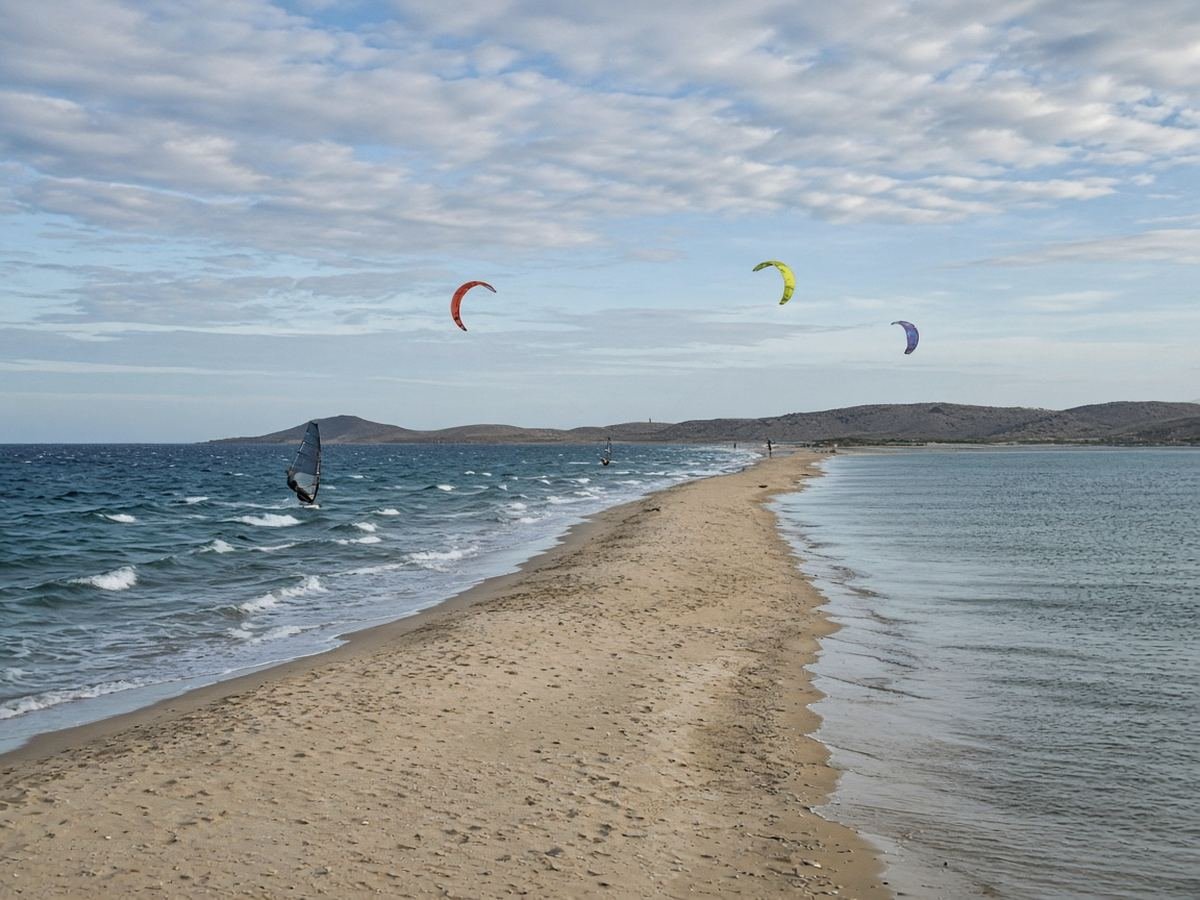
At the island’s southern tip, a sandy spit links Rhodes to a small islet, with water on both sides. It’s one of the island’s best-known spots for windsurfing and kitesurfing. It’s a long drive from Rhodes Town, and it’s usually windy, which is the point.
Kiotari, Glystra and the south-east
Quieter beaches south of Lindos, better if you have a car and want more space.
Things to do beyond the beaches
Walk the Old Town early and late
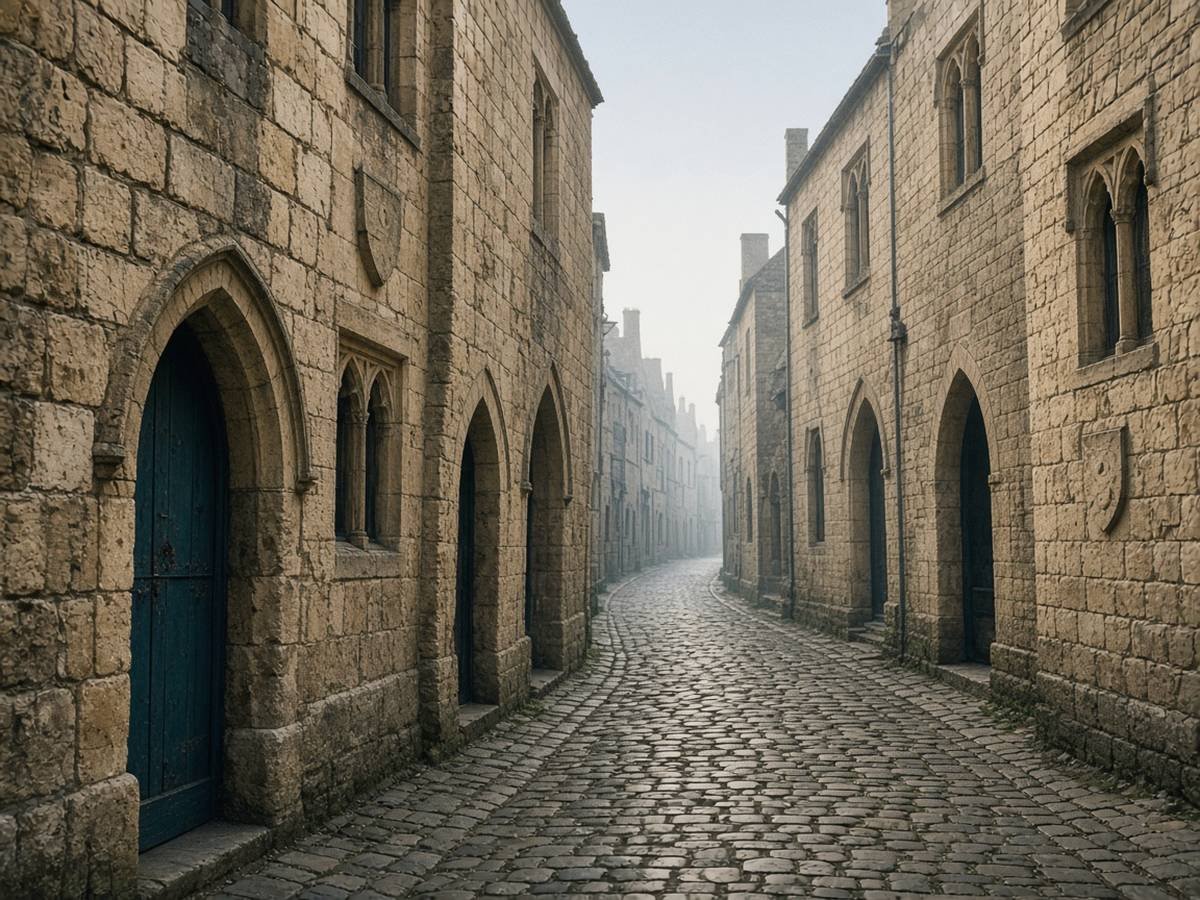
The Old Town of Rhodes has been a UNESCO World Heritage Site since 1988. The Knights of St John held the island from 1309 to 1523 and turned the city into a fortress. Later Ottoman additions such as mosques and baths sit alongside the Gothic buildings. Walk the Street of the Knights, then lose yourself in the lanes of the lower town. Go early in the morning or in the evening; by mid-morning in summer, the main streets fill with day visitors.
Visit the Palace of the Grand Master
The Knights’ palace at the top of the Old Town is the city’s grandest building. Tickets are €20; from April to October it’s open daily 8am–8pm, and in winter 8:30am–3:30pm (closed Tuesdays). Check the Ministry of Culture page before you go, as hours can change.
Climb to the acropolis of Lindos
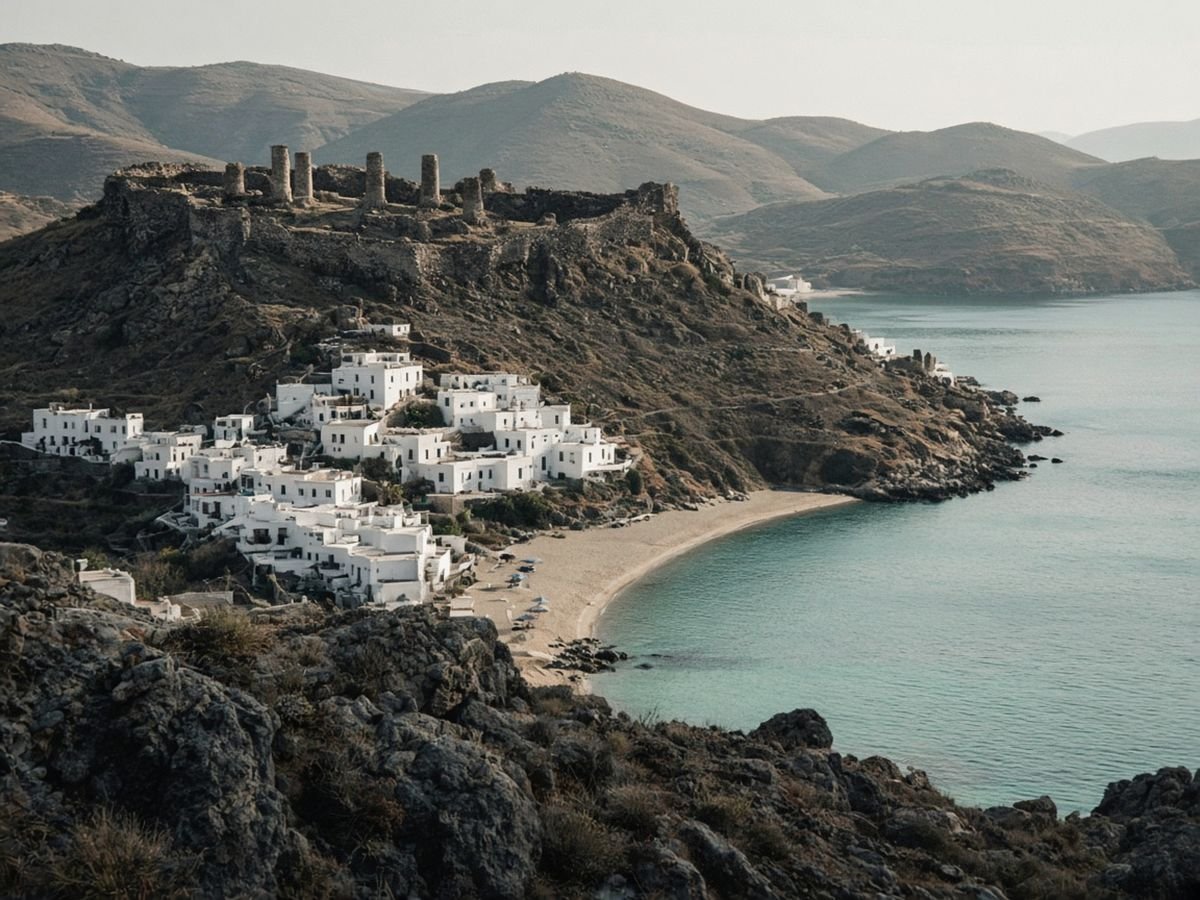
Above Lindos village, the acropolis combines the Doric Temple of Athena Lindia with a castle built by the Knights, plus views straight down to St Paul’s Bay. The climb is steep, uneven and fully exposed, so go first thing in the morning or late in the afternoon, wear proper shoes and carry water. It’s not suitable for anyone with limited mobility.
See the Valley of the Butterflies (in season)
In this green, shady valley near Petaloudes, thousands of Jersey tiger moths gather in summer, roughly from early June to mid-September. A path with bridges climbs gently through the valley. Outside that window it’s a pleasant walk, but without the spectacle. Keep quiet and don’t disturb them.
Take a day trip to Symi
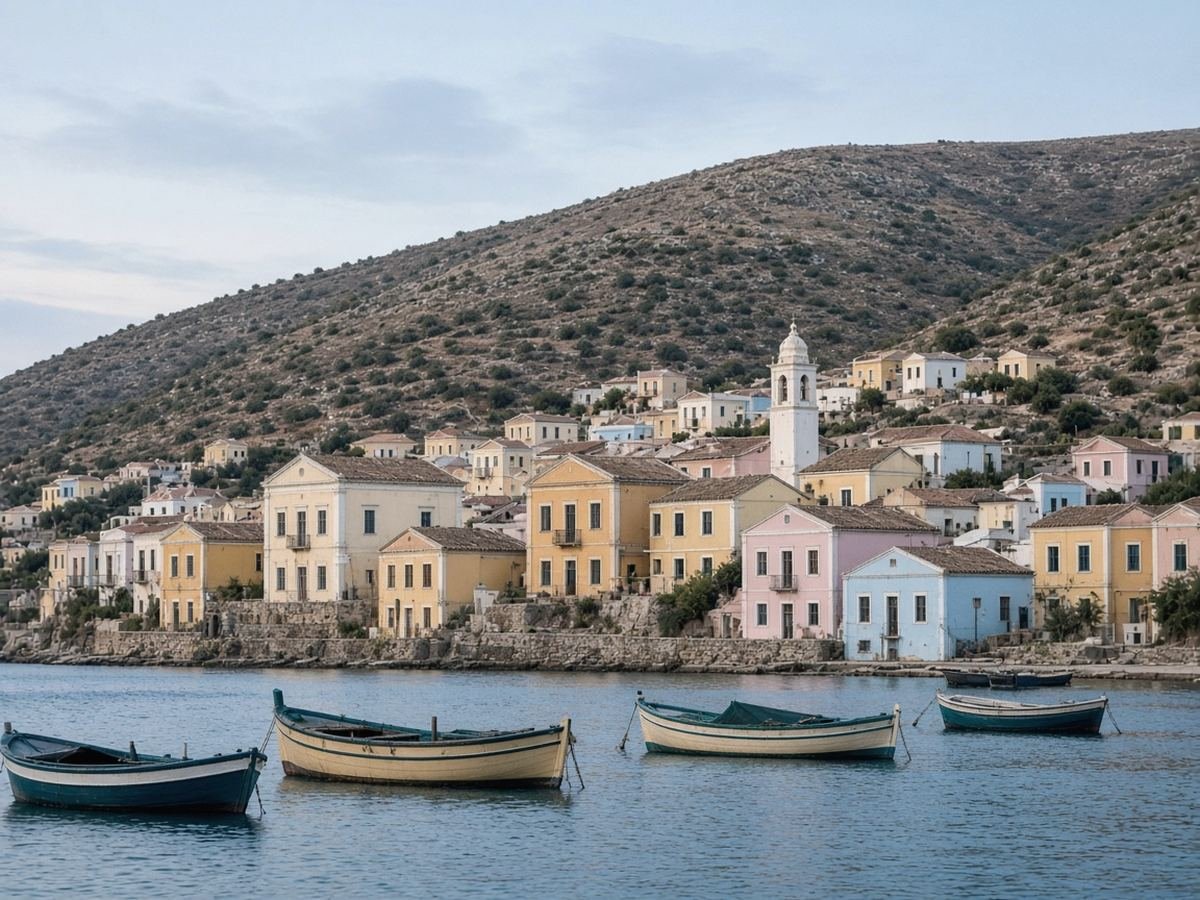
Symi’s harbour, lined with pastel neoclassical houses, is one of the prettiest arrivals in the Dodecanese. Boats run daily, and the fastest crossings take under an hour. It’s an easy day trip, but staying a night lets you see it once the day boats leave.
Explore ancient Kamiros and the west coast
Ancient Kamiros, on the west coast, is one of the island’s three ancient city-states, along with Lindos and Ialysos. It is much quieter than Lindos and gives a clear sense of an ancient town’s layout. Combine it with the west-coast villages and the castle at Monolithos for a road-trip day.
Head inland: Filerimos, Embonas and Seven Springs
Filerimos hill near Ialysos has a monastery and views over the west coast. Embonas, on the slopes of the island’s highest mountain, is known for wine and for souma, the local grape spirit. Seven Springs (Epta Piges) is a shady spot with streams and a short, narrow tunnel walk through ankle-deep water (bring shoes you don’t mind getting wet), nice on a hot day.
Kallithea Springs
A restored 1920s Italian-era spa by the sea south of Rhodes Town, popular for photos and a swim from the rocks (entry €5 in summer).
What to eat in Rhodes
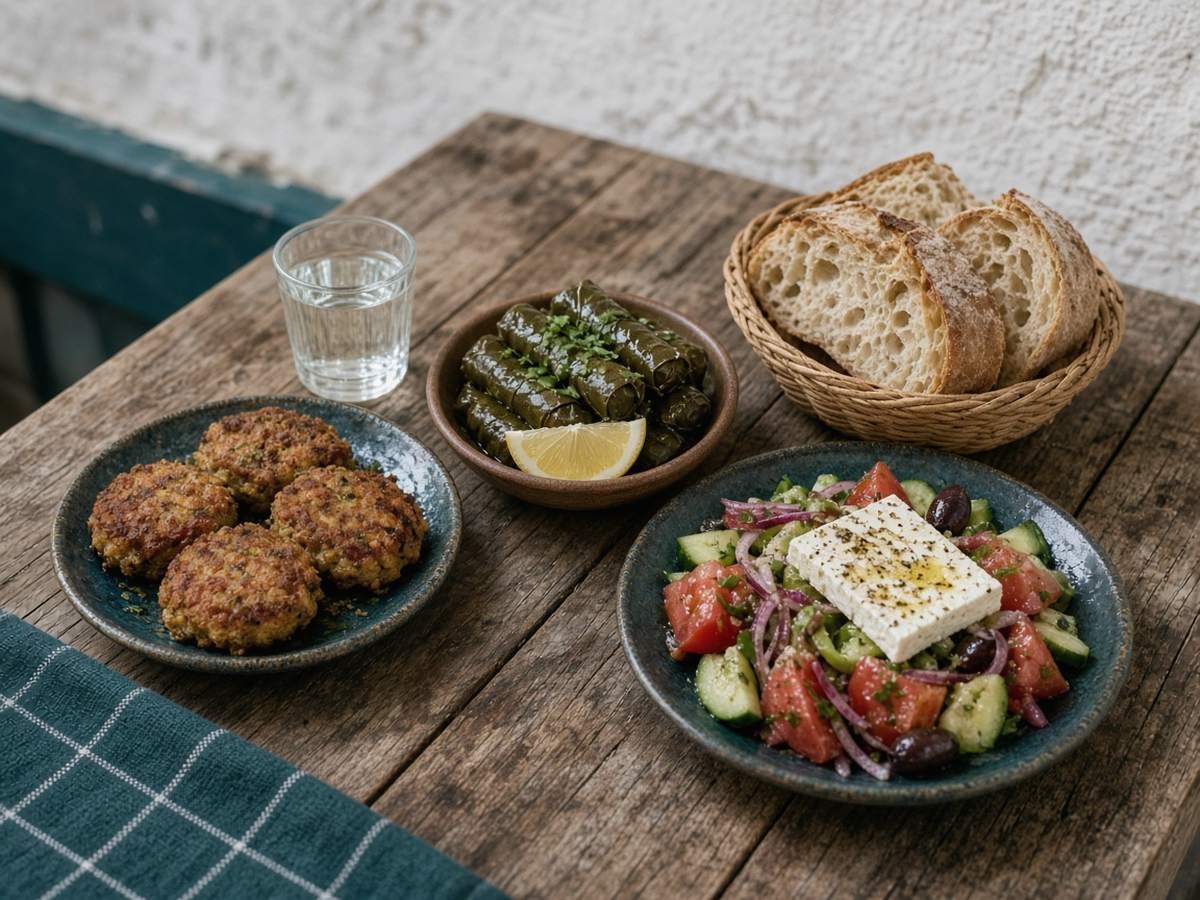
Rhodian food reflects centuries of different rulers, with local wheat, olive oil, wild greens and mountain cheeses at its base. Look out for:
- Pitaroudia: chickpea fritters with herbs, a classic meze.
- Kamilakia: vine-leaf-style dolmades made with cyclamen leaves, an unusual local speciality.
- Melekouni: a sesame-and-honey sweet with spices and almonds, traditionally served at celebrations. It has protected (PGI) status, so the name is reserved for melekouni made on Rhodes.
- Souma: the local grape spirit, made mainly around Embonas.
- Local wine: the Embonas and Mount Attavyros area has several wineries you can visit.
For a more local meal, eat away from the busiest Old Town streets and resort strips: in the New Town, in villages, or wherever Rhodians themselves are eating.
A realistic five-day Rhodes itinerary
This assumes a base in or near Rhodes Town, with a car for one or two days. It’s a framework, not a timetable: swap days around the weather, cruise-ship days and opening hours.
Day 1: Arrive and walk the Old Town
Settle in, then walk the Old Town in the late afternoon and evening, with dinner inside the walls. Keep it simple after a flight.
Day 2: Palace and the lower town, then the beach
Visit the Palace of the Grand Master and the Street of the Knights early, explore the lower town, then spend the afternoon at Elli beach or take the bus to Faliraki.
Day 3: Lindos
Get to Lindos early, climb the acropolis before the heat, swim at St Paul’s Bay, and stop at Tsambika on the way back if you have a car.
Day 4: Symi day trip
Take a boat to Symi for the harbour, a swim and lunch. Check the weather and return times the day before.
Day 5: West coast or inland
With a car: the Valley of the Butterflies (in season), ancient Kamiros and a winery lunch at Embonas. Without one: a slow beach day and a final Old Town evening.
Only three days? Do the Old Town, Lindos and one beach day. Save Symi and the west coast for next time.
How to get to Rhodes
By plane (usually the best option)
Rhodes International Airport (Diagoras) is on the west coast, south-west of Rhodes Town. Flights from Athens take about an hour, and Aegean and Sky Express fly the route. In season, Rhodes also has many direct flights from the UK and Europe, which is one of the island’s big advantages.
By ferry from Athens (long, but possible)
Blue Star Ferries runs conventional ferries from Piraeus to Rhodes all year, usually leaving in the afternoon or evening and arriving the next morning. There are no high-speed boats on this route. Depending on how many islands the ship calls at, the crossing takes roughly 11–12 hours at the very quickest and often 14 to 18 hours on current timetables. It can be an experience with a cabin, and it’s useful if you’re bringing a car, but for most visitors flying saves a day. Rhodes boats usually leave from Piraeus gate E1, at the far end of the port. Our Greek island ferries for beginners guide explains Piraeus.
Rhodes and the rest of Greece
| Route | Typical time | How often | Our take |
|---|---|---|---|
| Rhodes – Symi | under an hour on the fastest boats | Daily | Easy day trip or short stay |
| Rhodes – Kos | from about 2 hrs | Daily | The main Dodecanese hop north |
| Piraeus – Rhodes | roughly 11–18+ hrs, overnight | Most days, year-round | Fly unless you want the sea journey |
| Rhodes – Santorini | about 11 hrs or more | A few days a week | Long; flying via Athens is often simpler |
| Rhodes – Syros | roughly 8½–10 hrs | A few days a week | The most direct sea link to the central Cyclades |
| Rhodes – Heraklion (Crete) | about 10 hrs | A few days a week | Possible, but plan around the schedule |
| Rhodes – Marmaris (Turkey) | from about 1 hr | Several days a week | International crossing: bring your passport and check entry rules |
Combining Rhodes with the Cyclades: sea links do exist, but they’re long, infrequent overnight-style crossings. For most travellers, the practical way to pair Rhodes with Santorini, Naxos or Paros is a flight via Athens, or two separate trips. Our Greek island hopping from Athens guide covers Cycladic routes.
Getting around Rhodes
Buses: Rhodes has two bus networks. The municipal buses (RODA) cover Rhodes Town, the west coast (Ixia, Ialysos, Kremasti) and the airport, about a 40-minute ride to town. KTEL Rodou runs the east and south coast, including Faliraki, Kolymbia and Lindos. They leave from different stops in Rhodes Town, and services to remote villages can be very limited, so check return times before you go.
Car hire: Not needed if you’re staying in Rhodes Town and doing Lindos by bus or tour. Very useful for the west coast, the south, inland villages and quieter beaches. Many visitors hire one for just two or three days. Parking in Lindos and around the Old Town is tight in summer.
Taxis and boats: Taxis are useful for airport runs and evenings. Boats from Mandraki harbour run day trips to Symi and along the coast in season.
For more car-free strategies, see Greek islands without a car.
When to visit Rhodes
Rhodes has one of the longest seasons in Greece, and it’s one of the warmest of the popular islands, in both air and sea.
- May and June: warm, green and less crowded. Great for sightseeing; the sea is warming up.
- July and August: hot and busy, with peak prices. Sightsee early and late, and book well ahead.
- September: arguably the best month, with a very warm sea and calmer crowds. See our guide to the Greek islands in September.
- October: still warm, and a good choice late in the season, when smaller islands are closing. Some resort hotels close as the month goes on, but Rhodes Town stays lively. See Greek islands in October.
- November to April: quiet. The Old Town is lived in all year, but resorts largely close and beach weather isn’t guaranteed.
Watching your budget? See the cheapest time to visit the Greek islands.
Budget and booking advice
- Rhodes has a huge range of accommodation, from family-run rooms to large resorts, so there’s real choice at most budgets. Compare the total cost, including transfers and a car, rather than the room rate alone.
- All-inclusive resorts can be good value, but you’ll see less of the island. Mix in meals out in villages and Rhodes Town.
- Peak weeks in July and August book up; flexible dates in June or September usually give better value.
- For Lindos and Old Town rooms, check the luggage route and noise reviews as carefully as the photos.
More ideas: Greek islands on a budget.
Common mistakes to avoid
- Underestimating distances. Lindos, Prasonisi and the west coast are proper day trips from Rhodes Town.
- Doing Lindos at midday in August. Go early or late, and take water.
- Treating Rhodes as a Cycladic hop. Getting from Rhodes to Santorini or Paros is a long sea journey; fly via Athens instead.
- Taking the overnight ferry to “save money” without counting the lost day. Compare it with a flight, door to door.
- Booking a remote resort without a car and then finding dinner, beaches and sights all need taxis.
- Visiting the Valley of the Butterflies out of season and expecting the moths.
- Ignoring cruise days. If the Old Town feels packed, come back after the ships leave.
Frequently asked questions
Is Rhodes worth visiting?
Yes, especially if you love history. The medieval Old Town is one of the finest in Europe, Lindos is beautiful, and the east coast has excellent beaches. It’s a big, busy holiday island, so choose your base carefully and sightsee early and late in summer.
How many days do you need in Rhodes?
Five nights covers the Old Town, Lindos, a Symi day trip and some beach time. A week or more lets you explore the west coast and the south and slow down.
Where should I stay in Rhodes for a first visit?
Rhodes Town, in the Old Town for atmosphere or the New Town for convenience, is the best first base if you want history and buses. Choose an east-coast village like Faliraki, Kolymbia or Lindos if beach days are the priority.
Do you need a car in Rhodes?
Not if you stay in Rhodes Town and visit Lindos by bus or tour. A car is very useful for the west coast, the south, inland villages and quieter beaches. Many visitors rent one for just two or three days.
Should I take the ferry or fly from Athens to Rhodes?
For most people, fly. Flights take about an hour, while the ferry from Piraeus is an overnight trip that typically takes well over half a day. The ferry makes sense if you’re bringing a car or want the sea journey with a cabin.
Can you get from Rhodes to Santorini or the Cyclades by ferry?
Yes, but crossings are long, often around ten hours or more, and run only a few days a week. Unless the timing works perfectly, flying via Athens or planning Rhodes as a separate trip is usually easier.
Is Rhodes good in October?
Yes. It stays warmer than most popular islands, the sea is still pleasant, and Rhodes Town is lively all year. Some resort hotels close as the month goes on, so check before booking.
Is Lindos better than Rhodes Town as a base?
Lindos is prettier and lovely early and late, but busy by day and further from everything else. Rhodes Town is more practical for transport, restaurants and day trips. For a first visit, Rhodes Town is the easier base.
Keep exploring
Pairing Rhodes with a second big island? Our Crete travel guide covers another island that fills a whole holiday. Planning a first Greek trip? Start with the best Greek islands for first-time visitors or our guide to the best Greek islands for couples.
Sources and useful links
- UNESCO: Medieval City of Rhodes
- KTEL Rodou (east and south coast buses): timetables are posted at the bus station by Rimini Square and at hotel receptions
- Visit Greece: the cuisine of Rhodes
- Blue Star Ferries (Piraeus–Rhodes ferries)
Editorial note: Opening hours, bus timetables, ferry schedules and flight routes change by season. This independent guide is for research and inspiration; check current details before you travel.