Greek Islands in September: Weather, Sea Temperatures and Where to Go
September is the month a lot of people who know the Greek islands quietly choose for themselves. The sea has had all summer to warm up, the August crowds thin out, and the light turns softer. But it isn’t one uniform month. The first week can feel like peak summer, with summer prices to match, while the last week brings earlier sunsets, the odd grey day and the first ferry and beach-bar cutbacks.
This guide gives you the specifics: air and sea temperatures for early versus late September, what the wind and rain actually do, how ferries change, what starts closing, and which islands suit the month best. It also covers the downsides honestly.
Quick answer: is September a good month for the Greek islands?
Yes. For many travellers it’s the best-balanced month of the year. In the Cyclades, average highs sit around 25°C, the sea averages roughly 23.5–24°C, and rain is rare: HNMS long-term data show about two rain days in the whole month at Naxos. Almost all seasonal businesses are still open in the first half of the month, and ferries still run a busy timetable.
The trade-offs: early September is still busy on the famous islands, the meltemi wind hasn’t fully gone, days are noticeably shorter by the end of the month, and some operators start trimming timetables from mid-September. If you want the warmest water and most services, go in the first fortnight. If you’d rather have more space and are relaxed about an occasional breezy or cloudy day, aim for the 15th onwards. For the same decision a month later, see our Greek islands in October guide.
September weather: air and sea temperatures, early vs late month
The table below uses long-term station averages from the Hellenic National Meteorological Service (HNMS) for air temperature and rain days, and sea-surface data from seatemperature.info and seatemperature.org. The sea ranges for early and late September show the coolest and warmest daily readings recorded on those dates over roughly the last ten years, so they give a realistic spread rather than a single number.
| Island group (station) | Avg high / low (air) | Rain days (monthly rainfall) | Sea, early Sept (1–7) | Sea, late Sept (24–30) | Sea, monthly avg |
|---|---|---|---|---|---|
| Cyclades (Naxos) | 25.1°C / 20.1°C | 1.9 (7.7 mm) | about 23–25.8°C | about 21.8–24.8°C | 23.5–23.9°C |
| Crete (Heraklion) | 26.6°C / 19.5°C | 2.8 (16.7 mm) | about 25–27.5°C | about 23.1–25.7°C | 25.4°C |
| Dodecanese (Rhodes) | 28.1°C / 21.0°C | 1.7 (6.3 mm) | about 26.2–29.1°C | about 24.4–28°C | 27.1°C |
| Ionian (Corfu) | 27.5°C / 16.8°C | 7.4 (87.8 mm) | no early/late split collected | about 25°C (Corfu Town) | |
Sources: HNMS climatology by city (Naxos, Iraklio, Rodos, Kerkyra; 1955–2010 normals where stated); seatemperature.info daily September data for Naxos, Heraklion and Rhodes; seatemperature.org Naxos averages. Island stations are coastal, so hill villages will feel cooler, especially at night.
A few things the averages don’t show. First, the Cyclades are milder than the south-east: Naxos averages about three degrees cooler than Rhodes by day, and the wind makes it feel fresher still. Second, the sea barely drops in the first three weeks. At Naxos the daily readings for 2026 stayed around 23.5–24°C until about the 20th, before easing to about 22°C by the 30th. Third, heat is still possible. Long-term Naxos climate data published by meteo.gr record an absolute September maximum of 33°C, so pack for warm days as well as breezy ones.
If warm water is your priority late in the month, Rhodes and Crete keep the sea above about 24°C throughout September in most years. Those warmer southern islands are also the safest bet if your trip runs on into October.
Wind, rain and daylight
The meltemi: easing, not switched off
The meltemi, Greece’s summer north wind, is the main weather factor in the Cyclades. The meteo.gr / National Observatory of Athens explainer puts its peak strength between mid-June and early September, and their Mediterranean wind study found that average Aegean wind speeds in September drop to no more than about 7 m/s, down from over 8 m/s in June to August. The Hellenic Professional Yacht Owners Association notes it can keep appearing in spells until late October, blowing for two to four days at a time, strongest in the afternoon.
In practice: September usually has fewer days of high-summer gale than August, but don’t count on calm. HNMS’s own long-term averages for Naxos actually show September mean wind roughly level with August. Windy days mean choppy north-facing beaches, and occasionally cancelled small boats or high-speed catamarans. The fix is simple: stay somewhere with beaches on both sides of the island (Naxos, Paros and Milos are good for this), and don’t plan a tight same-day ferry connection to your flight.
Rain and the first autumn storms
Rain is uncommon in the Aegean in September (see the table), but September is also when the first autumn low-pressure systems can arrive. They’re rare but can be intense. Storm Daniel (4–7 September 2023) brought record rain to parts of central mainland Greece, and Medicane Ianos (16–20 September 2020) flooded parts of the Ionian islands. Both mainly hit the mainland and the west rather than the Cyclades, but they’re a good reason to buy travel insurance and keep an eye on the Greek forecast (meteo.gr or HNMS) the week before you go.
Daylight
Daylight shrinks quickly. In Athens, the sun sets at 7:54pm on 1 September and 7:09pm on 30 September; day length falls from about 13 hours to about 11 hours 50 minutes (timeanddate.com, 2026). Islands further east, such as Rhodes, see sunset a little earlier by the clock. That still leaves long beach afternoons, but in late September you’ll want to start hikes earlier and expect dinner after dark.
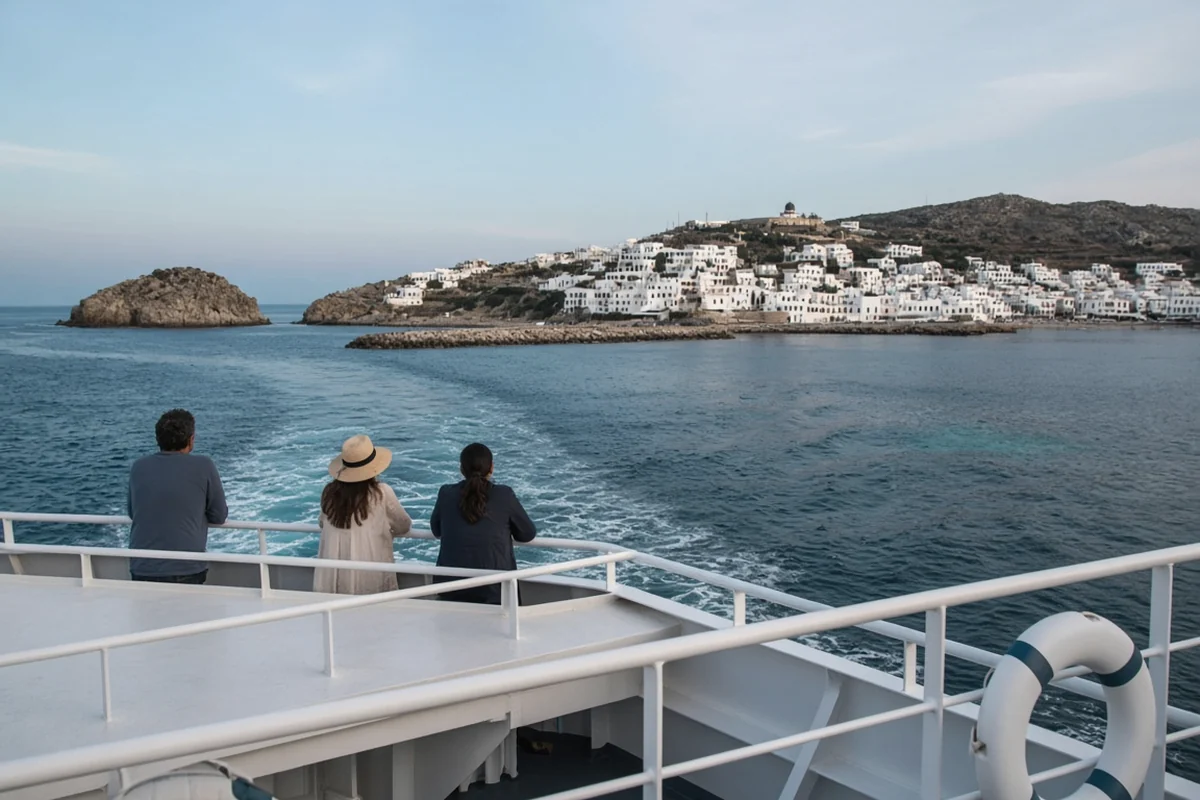
Crowds and prices: early vs late September
Early September is still high season on the best-known islands. Demand on Santorini, Mykonos, Paros and Milos stays strong. Don’t expect prices to drop on 1 September. Our month-by-month guide to the cheapest time to visit explains why.
From mid-September the islands feel noticeably calmer. Greek schools opened on 11 September in 2026 (lessons began on the 14th), so domestic family travel drops away, and beaches, tavernas and buses get easier. Room choice usually improves in the second half of the month. How much prices move varies a lot by island and property, so we won’t give you a made-up percentage. Compare the same room type and location for your actual dates. Islands with lots of accommodation, such as Naxos and Crete, usually give you the most choice. For more ways to save, see Greek islands on a budget.
One date worth knowing: Santorini’s Volcanoes celebration, with a re-enactment of the eruption, drones and fireworks, is now held on the third Saturday of September every year (19 September in 2026), according to the island’s mayor. It’s a highlight if you’re there, and a reason to book Santorini rooms early for that weekend.
Two tips. Book flights and the ferry legs that matter early, because September is a popular month and the good-value rooms and convenient sailings go first. And leave your last night in Athens rather than flying home on the same day as an island ferry.
Ferries in September: still busy, with the first cuts
For island hopping, September is still easy. Most routes keep their summer pattern into mid-month, and the main conventional ferries to Paros, Naxos, Santorini, Mykonos, Syros and Crete run all year anyway. Ferryhopper notes that Seajets, the biggest high-speed operator, runs its main season roughly April to November with the most departures from June to September.
What changes is the fine print. Using 2026 as an example (2027 timetables weren’t published when we wrote this):
- Seajets’ Piraeus – Western Cyclades – Santorini – Paros/Mykonos high-speed loop ran its peak timetable from 26 June to 13 September, then switched to reduced versions on 14 September and 28 September, before running a shorter route from 12 October to its 31 October end date (ferries.gr timetable).
- Express Skopelitis, the local lifeline between Naxos, the Small Cyclades (Iraklia, Schinoussa, Koufonisia, Donoussa) and Amorgos, moved to its autumn timetable on 11 September 2026: six days a week, with Donoussa and Aegiali served three days a week. Its Sunday Amorgos – Santorini – Ios link stopped after 17 September (Cyclades Live, 8 September 2026).
So September island hopping works well, but check the timetable for your exact dates and remember that schedules change mid-month. Direct hops between smaller islands are the first to lose frequency. Our guide to island hopping from Athens and the beginners’ guide to Greek island ferries explain conventional versus high-speed boats and how to build in a buffer.
What’s open, and what starts closing
For most of September almost everything is open: tavernas, beach bars, sunbed concessions, boat trips, car and scooter hire, and the summer bus networks. Closures build gradually from mid-month, and the order is roughly predictable:
- Party venues close first. On Mykonos in 2026, SantAnna held its closing party on 29 August, VOiD on 13 September, Cavo Paradiso on 26 September and Scorpios on 4 October (IslandsEvents; Mykonos Illustrated). If clubbing is the point of your trip, go in early September.
- Sunset and specialist boat trips shrink next. On Milos, full-day Kleftiko trips typically run until October, but some operators stop their afternoon or sunset sailings earlier. One operator lists its 2026 sunset trip as running only to 14 September, while its morning trips continue to the end of October.
- Remote beach bars and canteens on small or exposed beaches often wind down in the last week or two of September. Timing varies by business and by weather.
- Village tavernas, town restaurants and hotels in the main towns stay open through September and well into October on the larger islands.
If a particular restaurant, club or tour is a highlight of your trip, check its own website or social media for the season’s closing date before you book.
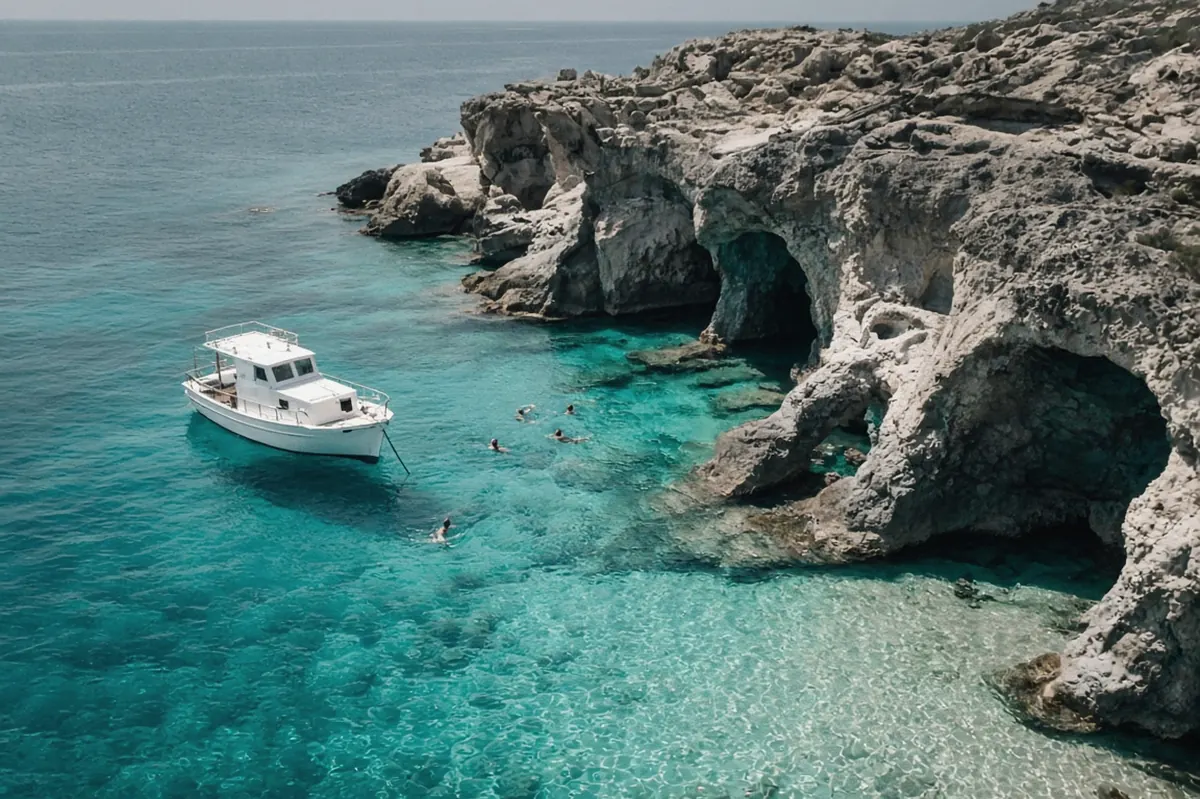
Best Greek islands to visit in September
Almost any island works in September. The question is which one fits your style and your half of the month. This is our honest shortlist, with the catch for each.
| Island | Why it works in September | Honest downside | Best half |
|---|---|---|---|
| Naxos | Long sandy west-coast beaches, good food, mountain villages, and a big enough bus network to manage without a car | Windy days on exposed beaches; the most remote beaches have few or no buses by late season | Either |
| Paros | Pretty towns, a lively evening scene that lasts all month, and a hub for ferries to everywhere | Early September is still busy and fairly expensive | Second half |
| Milos | Warm sea, extraordinary coastline, and boat trips still running | Boat trips depend on the wind; some sunset trips stop mid-month; popular, so book ahead | First half |
| Santorini | Caldera views without August’s heat; vineyards and walks are easier | Still one of the busiest islands; dark volcanic beaches; Oia sunsets stay crowded | Second half |
| Mykonos | Closing-party season and a beautiful town | The big clubs close from late September to early October; prices stay high early in the month | First half |
| Sifnos & Serifos | Walking weather, a strong food culture on Sifnos, and wild beaches on Serifos | Fewer high-speed connections after mid-September; check timetables | Either |
| Amorgos and the Small Cyclades | Hiking, clear water, a slower pace | Ferries become less frequent from 11 September; weather can cancel small boats | First half for Koufonisia; either for Amorgos |
| Crete | Warm sea (about 25°C average), year-round towns, and the Samaria Gorge normally open (season normally 1 May – 31 October) | Big distances, so you’ll want a car; slightly more rain risk than the Cyclades late in the month | Either |
| Rhodes | The warmest sea in this guide (about 27°C average), a medieval old town, and a long season | Far from the Cyclades by ferry | Second half |
| Syros | A real working town, with ferries and restaurants all year | Low-key beach scene compared with Paros or Naxos | Second half |
If you’d rather start with a car-free trip, our guide to Greek islands without a car shows which islands still work well on public transport.
First-timers, couples, quiet and cheaper picks
Best Greek islands for a first visit in September
Pair Paros and Naxos. They’re roughly 25–70 minutes apart by ferry depending on the boat (2026 timetables), both have frequent links to Piraeus, and between them you get lively towns, long sandy beaches, villages and easy day trips. Our Paros vs Naxos comparison helps you split your nights. If you have ten days or more and want the postcard views, add two nights on Santorini at the end rather than the start, when the second half of the month is quieter. There’s more on choosing in our best Greek islands for first-time visitors guide.
Best Greek islands for couples in September
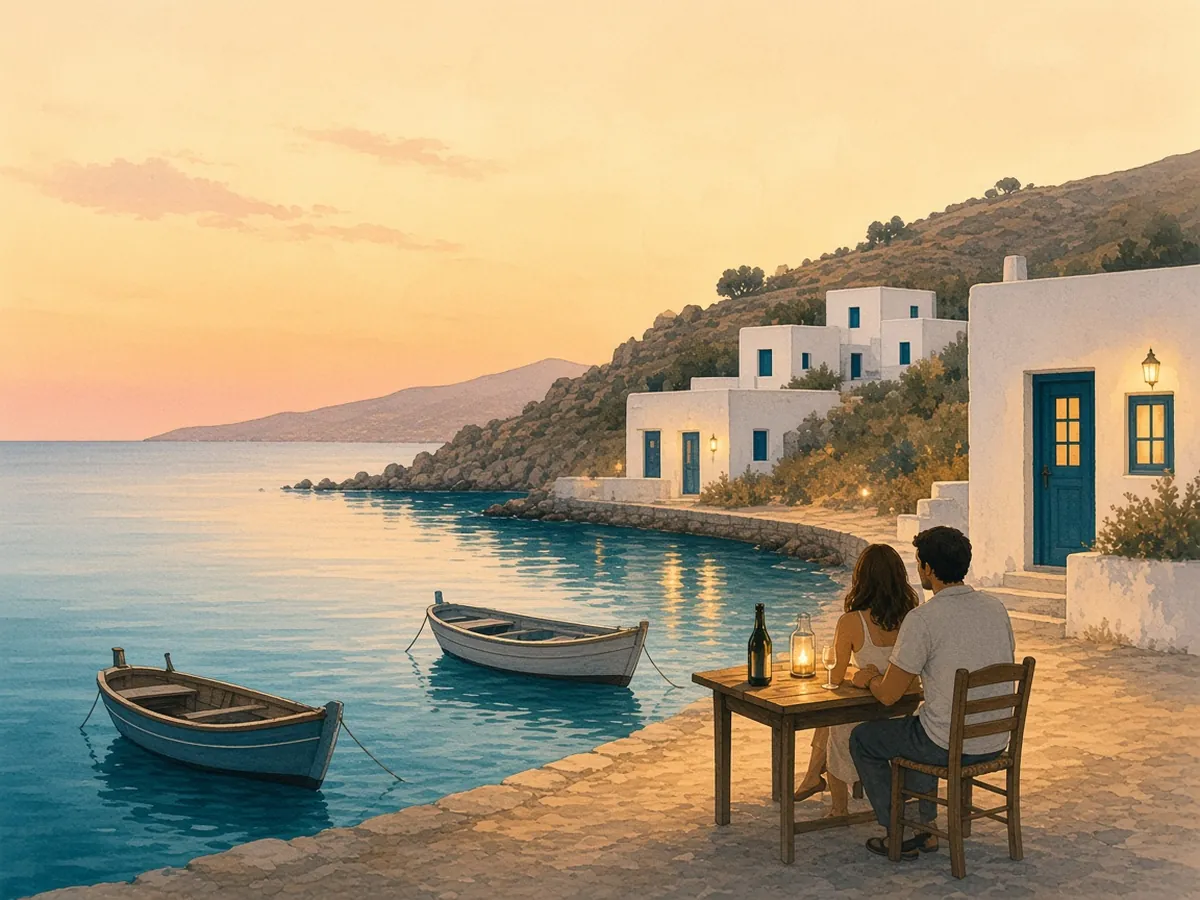
Late September suits couples who want calm evenings: Santorini for a special-occasion stay, Sifnos for long lunches, Milos for adventurous days on the water. See our best Greek islands for couples guide for where to stay on each.
Quietest Greek islands in September
For real quiet, choose islands with a small number of beds: Serifos, the Small Cyclades (Schinoussa and Iraklia are calmer than Koufonisia) or Astypalaia. The trade-off is fewer ferries, especially from mid-September, so allow a spare day either side.
Cheapest Greek islands in September
Syros, Naxos and Crete often give the best value because they have year-round communities and plenty of accommodation, while Aegina and Agistri are close to Athens, which keeps transport costs down. Our cheapest Greek islands guide compares them. The cheapest-looking room isn’t always cheapest overall once ferries and transfers are added.
Sample September itineraries
7 days: Paros and Naxos (works all month)
Fly to Athens, take a morning ferry to Paros, spend three nights between Naoussa and Parikia, then hop to Naxos for three nights on the west coast or in Naxos Town. Return to Piraeus or fly from Naxos. The day-by-day plan is in our 7-day Greek island itinerary, and the 10-day Paros and Naxos itinerary slows it down.
10 days, early September: Milos, Paros, Santorini
Start with three nights on Milos while the boat trips are in full swing, then three on Paros and three on Santorini, finishing with a night in Athens. Check the Milos–Paros and Paros–Santorini legs for your dates, because direct high-speed hops thin out after mid-month.
14 days, second half of September: Naxos, Small Cyclades, Amorgos
For walkers: Naxos (four nights), Koufonisia (three), Amorgos (four), then back via Naxos or direct to Piraeus. From 11 September the Small Cyclades ferry runs six days a week rather than daily, so build your nights around its days. Our 14-day Greek island itinerary covers a similar route.

What to pack for September
- Summer basics: swimwear, light clothes, sunglasses, a hat and high-factor sunscreen. The sun is still strong; seatemperature.info lists an average UV index of 7 for Naxos in September.
- One warm layer: a light jumper or fleece for windy evenings, hilltop villages and the open deck of a ferry.
- Proper footwear: walking sandals or trainers for village paths and hikes; water shoes for pebbly or rocky coves.
- A packable rain jacket if you’re travelling in the last week, or to Crete or the Ionian islands.
- Connectivity: an eSIM makes it easy to check live ferry updates and port alerts.
Frequently asked questions
Is the sea warm enough to swim in September?
Yes, for most people. Long-term averages put the Cyclades sea at roughly 23.5–24°C in September, Crete around 25°C and Rhodes around 27°C. It cools slowly through the month, so late September is a degree or two fresher than early September, but still comfortable for daily swimming on most days.
Is early or late September better for the Greek islands?
Early September has the warmest sea, the longest days and the most services, but it is still busy and priced close to summer on popular islands. The second half is calmer, with slightly cooler water, sunset around 7pm and a higher chance of an unsettled day. For a beach-and-hopping trip, mid-September is a good compromise.
Is the meltemi still blowing in September?
It can. The strongest Etesian (meltemi) winds usually blow from mid-June to early September and weaken through September, but windy days still happen, especially in the central Cyclades. Choose a base with a sheltered beach option and keep your ferry plans flexible.
Does it rain in the Greek islands in September?
Not much in the Aegean. Long-term HNMS averages show about 2 rain days in September at Naxos and Rhodes and about 3 at Heraklion. The Ionian islands are wetter (around 7 at Corfu). The real risk is an occasional autumn storm system, which is rare but can disrupt ferries for a day or two.
Which Greek islands are best in September?
For a first visit, Naxos and Paros are the easiest all-rounders. Milos is excellent while its boat trips are still running, Crete and Rhodes are the warmest, and Amorgos, Sifnos and Serifos suit walkers and food lovers. Mykonos works if you go early in the month before the big beach clubs close.
Are ferries still running normally in September?
Mostly, yes. September still has a busy timetable, but some operators switch to reduced shoulder-season schedules in mid-September. In 2026, for example, one Seajets route changed timetable on 14 and 28 September, and the Small Cyclades ferry moved to six days a week from 11 September. Book key legs once timetables are published.
Is September cheaper than August in the Greek islands?
Often, but not automatically. Early September on famous islands can still be priced like summer. Better value tends to appear in the second half of the month, and on islands with lots of accommodation, such as Naxos or Crete. Compare the same room type and location across your dates.
What should I pack for the Greek islands in September?
Summer clothes, swimwear and strong sun protection, plus one light layer for windy evenings and ferry decks, walking sandals or trainers for village paths, and a compact rain jacket if you travel in the last week or go to the Ionian islands.
Our recommendation
If you can choose your dates, aim for roughly 10–25 September. The sea is still at its late-summer best, the August crowds have gone, and nearly everything is still open. Base yourself on an island with variety and good ferries (Naxos, Paros or Crete), book the important ferry legs as soon as timetables appear, and keep a spare day in your plan for wind. If your dates fall later, or you’re tempted by even quieter islands, read our Greek islands in October guide before you book.