Patmos Travel Guide: Chora, Beaches and Where to Stay
Last updated: November 2026
Before you travel: fares and schedules change often, and the prices and times on this page may be out of date. Always confirm current prices and times with the operator, or locally at the port or bus station, before you travel.
The short version
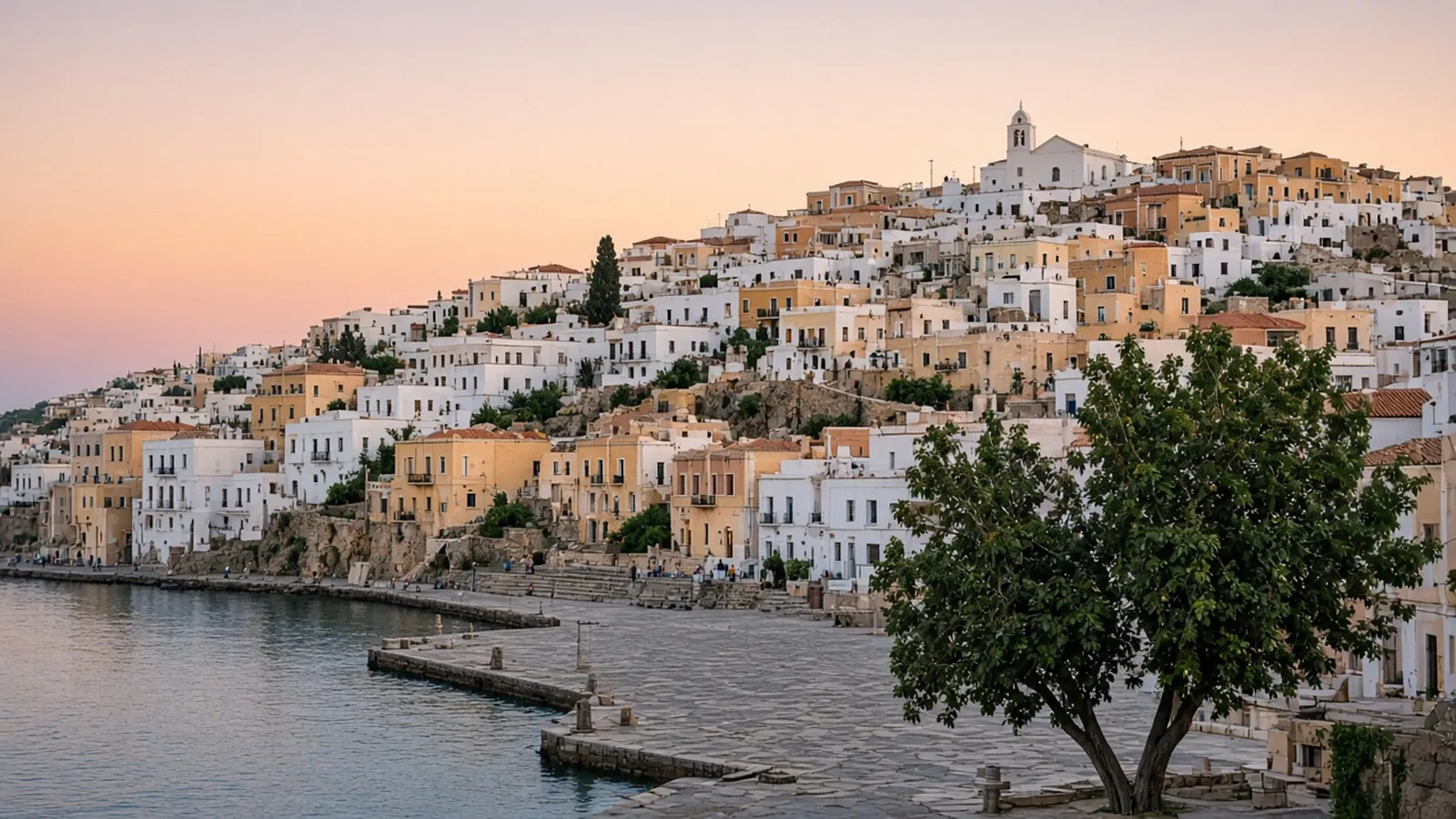
Patmos is a Dodecanese island for people who enjoy a proper village evening as much as a swim. Its identity comes from the Monastery of Saint John, the Cave of the Apocalypse and Chora, the old settlement wrapped around the monastery. But it is not only a pilgrimage destination: Skala is a working port with places to eat, and bays such as Grikos and Kampos give a holiday an easy seaside rhythm. There is no airport. That final boat journey is part of the decision, particularly if you have only a long weekend.
Choose Patmos for a combination of religious heritage, whitewashed lanes and a few unhurried beach days. Do not choose it because you imagine a deserted island. Visitors come for different reasons, including organised excursions, and the headline sites can feel busy even when a nearby lane is quiet. For a first trip, three or four full days is a sensible starting point; allow additional travel time rather than squeezing the sea crossing into a sightseeing day.
Is it right for you?
| Your holiday | Our take | The compromise |
|---|---|---|
| History and pilgrimage | A strong match for the monastery and sacred cave | Dress and visitor rules matter |
| Village evenings and swimming | Chora plus the coastal settlements offer both | Your beach and dinner base may differ |
| Fast airport-to-resort break | Less convenient than an island with an airport | The final leg is by sea |
Patmos works best when you want to stay rather than collect another port. Walk around Chora early or later in the day, and keep the central part of the afternoon for a shaded lunch or an easy swim. You need not be religious to appreciate the architecture, but active places of worship deserve more consideration than a quick photographic stop.
Where to stay
| Base | Why choose it | Before booking |
|---|---|---|
| Skala | Port access, shops and the simplest arrival | Harbour activity and street noise vary by room |
| Chora | Old lanes, architecture and atmospheric evenings | Hills, steps and no beach on the doorstep |
| Grikos | A seaside base and slower meals by the bay | Plan transport for Chora and port departures |
| Kampos | A holiday centred on the beach | Confirm the distance between upper village and shore |
For a car-free first visit, start by comparing Skala with a room near useful transport rather than a remote villa. Chora suits travellers who actively want village life and accept a journey to swim. At Kampos, the settlement and the beach are not interchangeable map labels: ask which one your accommodation actually faces.
Ask about steps, the walking route from the drop-off point and bedroom noise before booking. A sea view does not automatically mean easy access to the water.

Beaches
| Beach | Why go | Practical catch |
|---|---|---|
| Kampos | A popular beach-day choice | Do not expect solitude in the main visitor season |
| Grikos and Petra | Coastal scenery and a swim near the village | Check the actual entry surface before choosing your spot |
| Lampi | Colourful pebbles and a different coastal feel | Leave the pebbles on the beach |
| Psili Ammos | A more adventurous beach outing | Path or boat access needs local confirmation |
The municipal brochure also lists Meloi, Agriolivado and Livadi Geranou, so there is no reason to make one famous beach compulsory. Psili Ammos needs more thought than an easy village swim: ask about the path and current boat arrangements, and do not rely on a return boat without confirming it. With young children, favour the beach whose approach and facilities you have actually checked.
Choose a beach to suit the conditions, not an old photograph. Check waves and entry points, carry water and sun protection, and leave stones, shells and plants where they belong.
Things to do beyond the beach
Chora and the Monastery of Saint John
Chora, the monastery and the Cave of the Apocalypse form a UNESCO World Heritage property. Wander the lanes as well as visiting the monument itself: courtyards, small churches and substantial houses make the settlement rewarding beyond its main attraction. Keep covered clothing ready for religious visits. Confirm the visitor entrance and current opening arrangements rather than building the day around an old timetable.
The Cave of the Apocalypse
Christian tradition connects the cave with John and the Book of Revelation. Present that as religious tradition, not proof of every detail associated with the site. This is a small sacred space rather than a large museum, so allow for other visitors and worship. Combining it with Chora makes geographical sense, but check how you will get between the two before setting off in the heat.
Coastal villages and short walks
Give Skala, Grikos and Kampos time of their own instead of treating them as bus stops. The municipal brochure describes walking routes among chapels and viewpoints. Pick a modest route suited to the weather, ask about its current condition and carry proper footwear. A short walk followed by lunch is often a better introduction to Patmos than a full-day circuit with constant transport changes.
What to eat
The easiest food plan is to eat where you are spending the evening: Skala for choice, Chora after a village walk, or Grikos for a waterside meal. Discover Greece highlights cheese pies and seafood among the things to try. Ask which dishes are cooked that day and which fish is actually available. There is no need to hunt for an elaborate tasting itinerary when a simple lunch fits the island better.
Ask the price and approximate total before ordering fish by weight. Explain dietary restrictions clearly rather than assuming a familiar dish always follows the same recipe.
How to get there
Patmos has no airport. The municipal brochure names Piraeus ferries and fly-and-ferry approaches through Kos, Leros or Samos. For current sailings compare Blue Star Ferries and Dodekanisos Seaways. Check your exact date rather than assuming every nearby island has a convenient connection.
A flight into Kos can be practical, but the airport and ferry port are separate transfers. Leros may look closer on the map without offering the flight combination you need. Price and time the entire journey, including a possible overnight stay, before committing. Skala is the arrival settlement; tell your accommodation your confirmed boat details, especially if arrival is outside ordinary daytime hours.
| Part of the journey | What to confirm |
|---|---|
| Before paying | Exact departure and arrival ports, travel date and passenger or vehicle ticket |
| If changing from a flight | Airport-to-port transport and a realistic delay buffer |
| On departure day | Current operator notice, weather and the boarding point named on your ticket |
Do not build your last island night around a tight connection to an international flight. Separate tickets do not protect each other when a boat is delayed. Read our Greek island ferries for beginners guide for boarding, luggage and cancellations. The route suggestions here are planning options, not a promise of a sailing on your dates.
Getting around
Walking works within Skala and within Chora, not as a reason to ignore the hill between them. Local buses, taxis and hire vehicles are options to investigate against your actual dates. Avoid assuming that a summer beach service or a late return continues into the shoulder season. If you hire a vehicle, ask where to park before heading into the older settlement.
A car is helpful for a different bay each day, but unnecessary for every style of stay. A compact base plus prearranged transfers can be more pleasant than looking for parking. The live car-free islands guide explains the general trade-off: choosing the right room location matters more than ruling a vehicle in or out before planning the trip.
When to visit
Late spring and early autumn appeal for walking and a less hurried visit to the villages. High summer suits travellers who want the broadest beach-holiday atmosphere, with the corresponding pressure on popular areas. A religious holiday can change the feel of the island, so check the calendar as well as the weather. Winter should be planned around confirmed accommodation and transport, not a summer beach itinerary.
| Season | Good reason to go | What to check |
|---|---|---|
| Spring | Walking and village visits before the busiest beach weeks | Accommodation openings, transport and changeable weather |
| High summer | The widest choice of visitor services | Heat, crowding and wind before a long outdoor day |
| Early autumn | A slower mix of swimming and sightseeing | Return sailings and the seasonal closing dates of businesses |
| Winter | A visit centred on everyday island life | A confirmed place to stay, meals and workable transport |
These are seasonal planning patterns, not a forecast. For wider comparisons see the best time to visit the Greek islands. Book the season you actually want: a quiet walking holiday and a full-service beach holiday need different compromises.
A realistic three-day plan
- Day 1: Settle in at Skala, explore the waterfront and choose an easy nearby swim. Keep dinner close to your room if the journey has been long.
- Day 2: Visit the cave and Chora with confirmed opening arrangements. Leave time to wander the lanes, sit in a square and return without rushing.
- Day 3: Spend the day around Grikos or Kampos. Add a short walk only if conditions suit; save a remote beach for a longer stay.
Treat this as three full days on the island, not an arrival evening and two hurried mornings. If your boat comes in late, move the first outing to the following day. Keep one activity optional so the trip still works if the weather changes. Travelling with children or anyone who tires on steps is a good reason to remove a stop, not add a faster vehicle.

Honest downsides
The main compromises are access and terrain. A short holiday loses time to the boat journey, Chora is not an effortless beach base, and headline religious sites can attract concentrated visitor groups. Beach boats and onward ferries depend on conditions. Patmos rewards a calm schedule, but that should be a choice rather than the result of discovering too late that your planned connections do not fit.
Choose a base where you would enjoy an ordinary day even if an excursion were cancelled. The island should suit your habits, not only your photographs.
Frequently asked questions
Is Patmos worth visiting?
Yes for sacred heritage, village architecture and relaxed beach days. It is less convenient for a very short trip because there is no airport.
How many days should I spend on Patmos?
Allow three or four full days for Chora, the sacred sites and several coastal outings, with travel time added separately.
Do I need a car on Patmos?
Not necessarily. Choose a practical base and confirm buses or transfers. A vehicle adds freedom for different bays.
How do I get to Patmos?
Arrive by ferry, either from Piraeus or after flying to a connected island such as Kos, Leros or Samos. Check current operator schedules.
Where should I stay on Patmos?
Skala is practical for arrivals and services; Chora suits village evenings; Grikos and Kampos suit a more beach-centred stay.
Is Patmos suitable for families?
Yes if you choose an easy beach approach and suitable room access. Chora has hills and steps, and remote beaches require more planning.
Sources and useful links
- Visit Greece: Patmos
- Municipality of Patmos: island brochure
- Discover Greece: Patmos
- Dodekanisos Seaways: current sailings
Transport and visitor access change. Check current details with the operator or site before travelling. Independent planning guide, updated November 2026.