The Best Time to Visit the Greek Islands: A Month-by-Month Guide
Last updated: October 2026
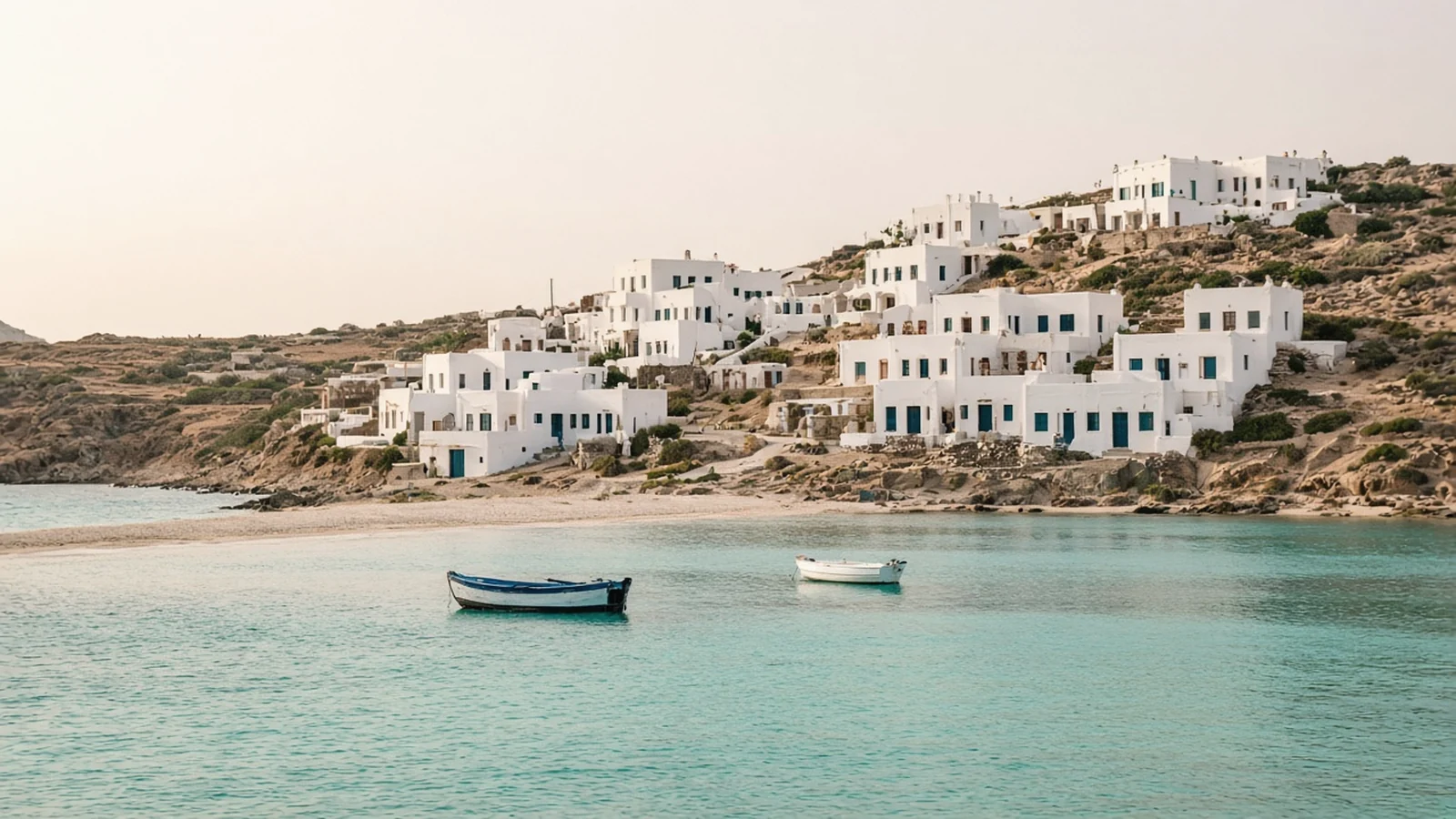
A month-by-month guide to the weather, sea temperature, crowds and ferries, with an honest answer to the question everyone asks: when should I go?
For monthly sea temperatures by island group, see our Greek islands sea temperature guide.
The best time to visit the Greek islands for most people is late May to late June, or September to early October. You get warm sea, long days and everything open, without the heat, crowds and prices of July and August. But “best” depends on what you want: hikers love April, swimmers want late June to September, and anyone on a tight budget should look at the shoulder months. This guide is our hub for timing. It sums up every month and links to our detailed April, May, June, September and October guides.
Quick answer: when is the best time to visit the Greek islands?
Best overall: early June and September. Warm sea, little rain, everything open and fewer people than in high summer.
Best for swimming: July to September, when the sea in the Cyclades averages about 24–25°C. Late June and early October are close.
Best for walking and culture: April, May and October.
Best value: May and October, plus early June and late September. See our cheapest time to visit guide.
Hardest months: July and August if you dislike heat, wind and crowds; November to March if you want a beach holiday, because most seasonal islands are closed.
Who should skip the high season: anyone who hates crowds, can’t stand heat, or is on a budget (see how much a Greek island trip costs). Who should skip the winter: anyone who wants beaches, boat trips or lots of island hopping.
Month-by-month at a glance
This table uses the Cyclades as a benchmark, with HNMS long-term averages for Naxos (air temperature and rain days) and seatemperature.info’s monthly sea averages for Naxos. Crete and Rhodes are usually a degree or two warmer; the Ionian islands are much wetter from October to April.
| Month | Avg high / low (air) | Sea (avg) | Rain days | Crowds | Verdict |
|---|---|---|---|---|---|
| Jan | 14.4°C / 9.6°C | 16.6°C | 12.7 | Very quiet | Off season: town life, not beaches |
| Feb | 14.6°C / 9.4°C | 16.1°C | 11.0 | Very quiet | Off season; Carnival in some years |
| Mar | 15.8°C / 10.4°C | 16.0°C | 9.5 | Very quiet | Spring starts; still mostly closed |
| Apr | 18.7°C / 12.5°C | 16.7°C | 6.0 | Quiet (busy at Easter) | Walking, flowers, culture |
| May | 22.1°C / 15.7°C | 18.9°C | 3.6 | Building | Great all-rounder |
| Jun | 25.9°C / 19.6°C | 22.3°C | 1.1 | Busy | Best for swimming + space |
| Jul | 27.1°C / 22.0°C | 23.9°C | 0.4 | Peak | Hot, windy, busy |
| Aug | 27.0°C / 22.2°C | 24.6°C | 0.3 | Peak (busiest around 15 Aug) | Hottest, busiest, priciest |
| Sep | 25.1°C / 20.1°C | 23.9°C | 1.9 | Busy, easing | Best balance for many |
| Oct | 21.9°C / 17.0°C | 21.7°C | 5.5 | Quiet | Mild, quiet, winding down |
| Nov | 18.8°C / 13.7°C | 19.4°C | 8.8 | Very quiet | Off season; rain picks up |
| Dec | 15.9°C / 11.1°C | 17.6°C | 12.6 | Very quiet (busier at Christmas) | Off season |
Sources: HNMS climatology for Naxos; seatemperature.info monthly sea averages for Naxos. Crowd levels are our general guide, not measured visitor numbers.
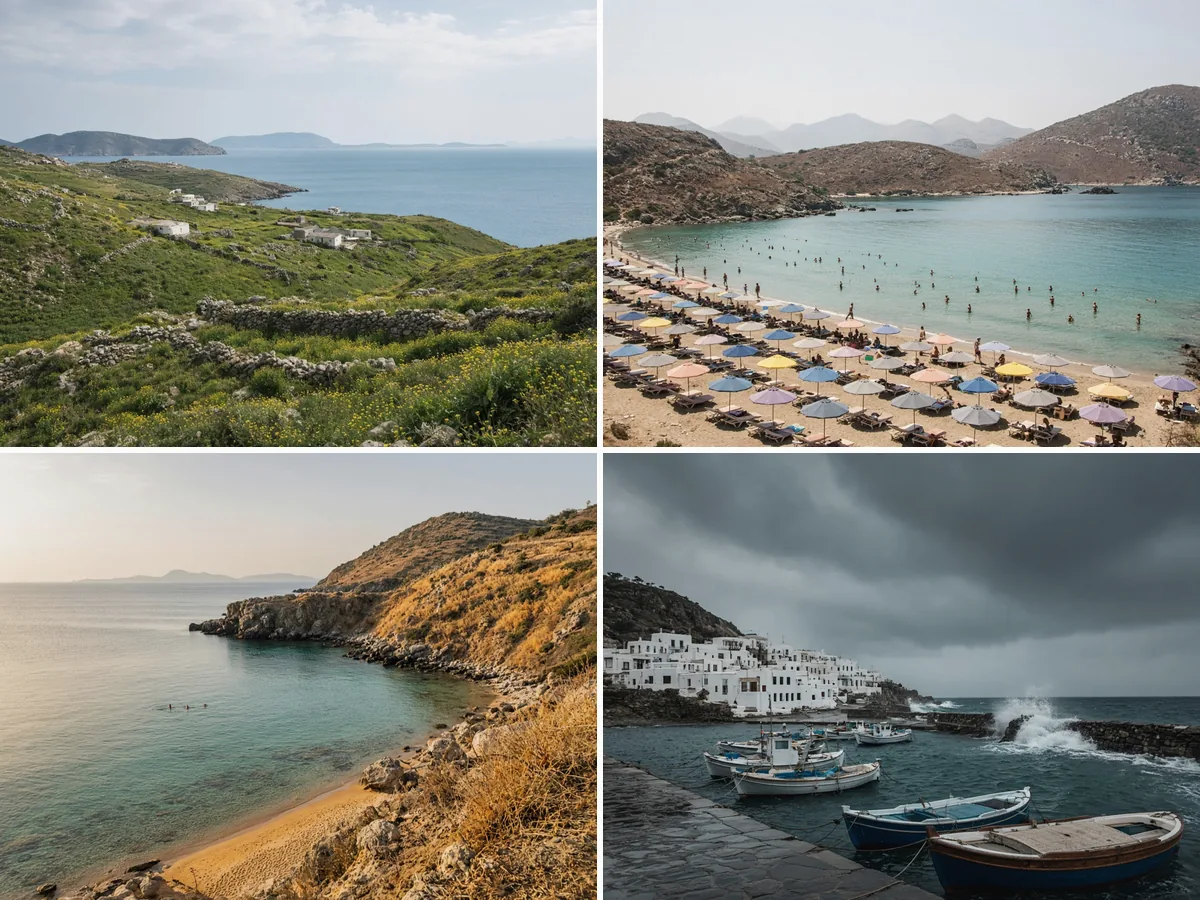
The seasons, explained
Spring (April and May)
Green hills, wildflowers, mild days and low prices. April is for walkers and sightseers: the sea is about 16–17°C on average, cold for most people, and much is still closed on smaller islands until Easter or May. May is a great all-round month, with highs around 22°C in the Cyclades, very little rain and a sea that’s warming through the month. In 2027 Greek Orthodox Easter falls on 2 May, so the Easter rush straddles late April and early May. Read Greek islands in April and Greek islands in May.
Early summer (June)
For many people the sweet spot. Highs of about 26°C, almost no rain, the longest days of the year and a sea averaging about 22°C in the Cyclades, warmer by the end of the month. Crowds and prices build towards July. Read Greek islands in June.
High summer (July and August)
The warmest sea, the liveliest nightlife and every ferry route running, but also the highest prices, the biggest crowds and the strongest wind. The meltemi, the dry north wind of the Aegean, typically blows from mid-June to early September (meteo.gr), strongest in the central and southern Aegean. It keeps the heat bearable but can make some beaches unpleasant and cancel small boats. HNMS long-term figures for Naxos show mean wind strength jumping in July and August compared with May and June. More in our meltemi wind guide. The week around 15 August, a major Greek holiday, is the busiest of the year. See our guide to the Greek islands in July and August. Heatwaves also happen: plan walks and sightseeing for early morning.
Early autumn (September and early October)
The sea is at its warmest in late August and September, crowds thin after the first week or two, and the light softens. Many people’s favourite time. Ferry timetables start trimming from mid-September, and by mid-October more places are closing. Read Greek islands in September and Greek islands in October.
Winter (November to March)
The islands become home again. You’ll find cosy tavernas in the main towns, empty archaeological sites and the lowest prices. But many hotels on seasonal islands close, high-speed ferries stop, weather cancels sailings more often, and rain days run at about 9–13 a month on Naxos, more on Crete, Rhodes and especially Corfu. Choose big islands with year-round life: Crete, Rhodes, Syros or Naxos. Easter in spring and Carnival before Lent are the big festivals. In 2027, Clean Monday, the first day of Lent, is 15 March.
The best time for what you want
| If you want… | Go in… | Why |
|---|---|---|
| Warm swimming | Late June to September | Sea averages about 22–25°C in the Cyclades; warmer around Rhodes and Crete |
| Hiking | April, May, October | Mild days, green or golden hills, no midday heat |
| Island hopping | Late May to September | The full ferry network runs; book Easter and August ahead |
| Low prices | May, October, early June, late September | Most things open, lower demand than high summer |
| Nightlife | July and August | Mykonos, Ios and Paros are at full volume |
| Quiet and culture | April, October, winter on big islands | Empty sites, real local life |
| A family beach holiday | June or September (school dates permitting) | Warm sea without peak heat; July–Aug works if you plan around midday |
The best time by island group
| Island group | Best months | Notes |
|---|---|---|
| Cyclades (Naxos, Paros, Santorini, Milos) | Late May–June, September | The meltemi blows hardest here in July–August; most small islands close from November to April |
| Crete | May–June, September–October | Warm and big, with towns that run all year; Samaria Gorge may open between 10 April and 31 October on a date set each year (19 May in 2026), but it has been closed since 1 October 2026 after storm damage, until further notice (official site, checked 29 Oct 2026) |
| Dodecanese (Rhodes, Kos) | May–June, September–October | The warmest sea we track: Rhodes averages about 28°C in August |
| Ionian (Corfu, Kefalonia, Zakynthos) | Late May–June, September | Greener and less windy in summer, but much wetter in spring and autumn: Corfu averages about 140 mm of rain in October |
Sources: HNMS climatology for Naxos, Heraklion, Rhodes and Corfu; seatemperature.info for Rhodes; OFYPEKA/NECCA via epaithros.eu for the 2026 Samaria opening; the official Samaria ticket site (checked 29 Oct 2026) for the closure.
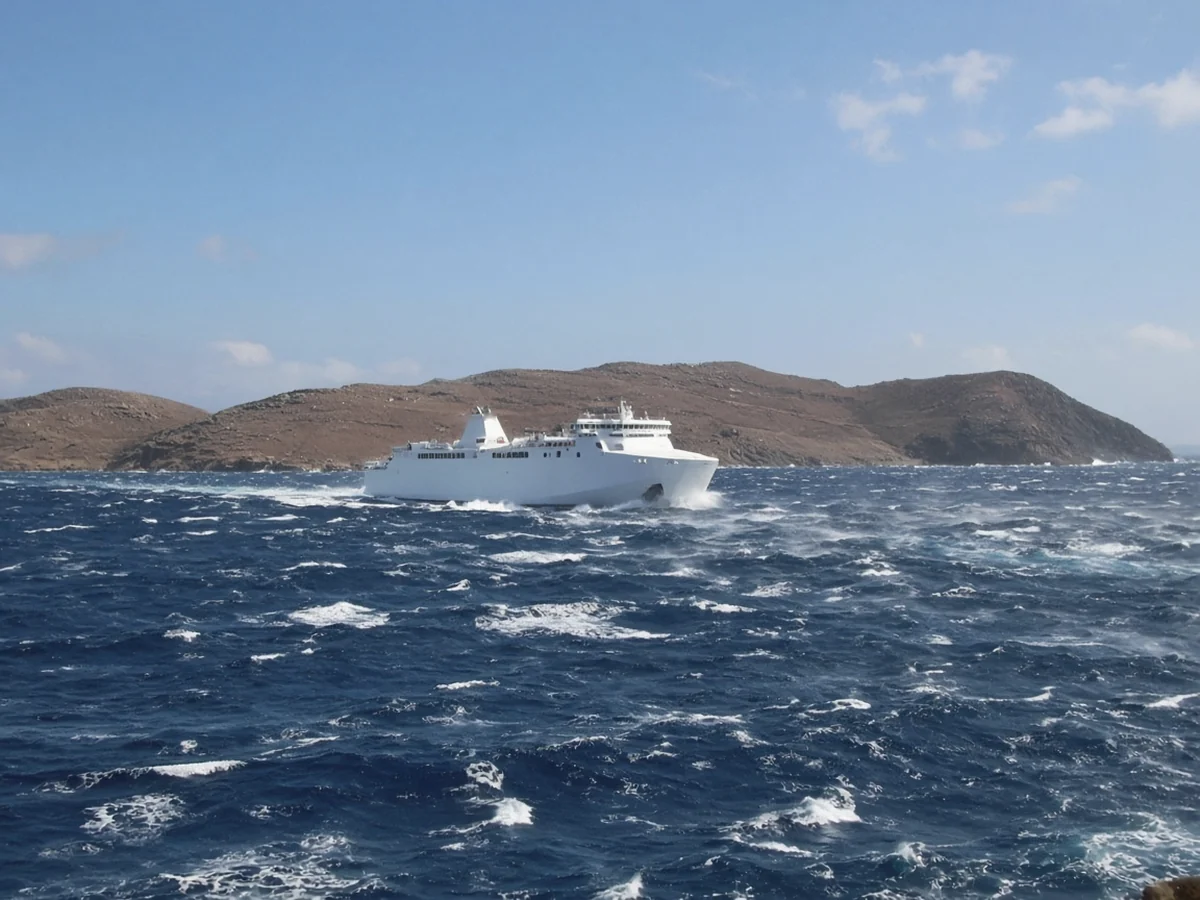
Ferries through the year
Conventional ferries to the main islands, including Paros, Naxos, Santorini, Mykonos, Milos, Syros and Crete, run all year. What changes is the number of high-speed boats and the direct links between smaller islands. In 2026, for example, Seajets’ Piraeus–Serifos–Sifnos–Milos high-speed line ran from 3 April to 31 October (ferries.gr). From November to March, expect fewer sailings and more weather cancellations, and keep a spare day before any flight home. New to ferries? Start with Greek island ferries for beginners.
Key dates for 2027
| Date | Holiday | What it means |
|---|---|---|
| 15 March | Clean Monday | Start of Lent; kite-flying and seafood picnics; a long weekend for Greeks |
| 25 March | Independence Day | Parades; national holiday |
| 28 March | Western Easter | Busier with European visitors in the weeks around it, especially Crete and Rhodes |
| 30 April – 3 May | Orthodox Good Friday to Easter Monday | The biggest celebration of the year; ferries and rooms sell out, some closures |
| 1 May | Labour Day | Falls on Holy Saturday in 2027, so it moves to another date |
| 21 June | Whit Monday (Agiou Pnevmatos) | A Greek long weekend; book ferries ahead |
| 15 August | Dormition of the Virgin | The peak of the Greek summer holidays; the busiest week for ferries |
| 28 October | Ochi Day | National holiday; parades |
Sources: timeanddate.com and the Hellenic Bank Association’s list of 2027 holidays.
Are there months to avoid?
Not really, but there are months that suit some people badly.
- August is the hardest month if you dislike crowds, high prices and strong wind. If it’s your only option, choose bigger islands, book everything early and travel away from 15 August if you can.
- November to March is the wrong time for a beach holiday or a small-island hop. It can be a lovely time for a city-and-food trip on Crete, Rhodes or Syros.
- Early April and late October are hit-and-miss on small islands: the weather can be glorious, but much may be closed.
Our recommendation
If you can choose, go in the first half of June or the middle of September. If you’re a walker, choose late April or May. If you can only go in July or August, choose your islands with care: bigger islands with sheltered beaches, early-morning sightseeing and a flexible ferry plan. For your first trip, our best Greek islands for first-time visitors and island hopping from Athens guides will help you choose where to go once you’ve chosen when.
Frequently asked questions
What is the best month to visit the Greek islands?
For most people, June or September. Both have warm sea, little rain and everything open, without the peak crowds and prices of July and August. May and early October are also excellent, with slightly cooler sea.
When is the sea warm enough to swim in Greece?
For most people, from early June to mid-October. In the Cyclades, the sea averages about 22°C in June and about 24–25°C in August and September (seatemperature.info data for Naxos). Rhodes and Crete are warmer.
What is the cheapest time to visit the Greek islands?
Generally the shoulder months of May and October, plus early June and late September, when most things are open but demand is lower. Winter is cheaper still, but many places on smaller islands are closed. Easter and August are the most expensive times.
When is the meltemi wind worst?
The meltemi typically blows from mid-June to early September, and it’s usually strongest in July and August in the central and southern Aegean, including the Cyclades. It can cancel small boats and make north-facing beaches rough.
Are the Greek islands open in winter?
The big islands with year-round populations are: Crete, Rhodes, Syros, Naxos and Corfu all have living towns. Many hotels, tavernas and beach businesses on seasonal islands like Mykonos, Santorini, Ios and the Small Cyclades close from about November to April, and high-speed ferries stop.
When is Greek Easter in 2027?
Greek Orthodox Easter Sunday is on 2 May 2027, with Good Friday on 30 April and Easter Monday on 3 May. Western Easter is on 28 March 2027.
Sources and useful links
- HNMS climatology: Naxos
- HNMS climatology: Heraklion
- HNMS climatology: Rhodes
- HNMS climatology: Corfu
- seatemperature.info: Naxos sea temperature by month
- seatemperature.info: Rhodes sea temperature by month
- meteo.gr Meteopedia: Etesian winds (meltemi), in Greek
- timeanddate.com: Greek holidays 2027
- Hellenic Bank Association: 2027 holidays
- ferries.gr: Seajets Piraeus–Serifos–Sifnos–Milos, 2026
- epaithros.eu: Samaria National Park opening, 19 May 2026 (OFYPEKA notice)
- NECCA: Samaria Gorge official tickets and closure notice (checked 29 Oct 2026)
Weather figures are long-term averages; any given year can be warmer, cooler, wetter or windier. Check current ferry timetables and opening dates before you travel.