Greek Islands Sea Temperature by Month
Last updated: November 2026
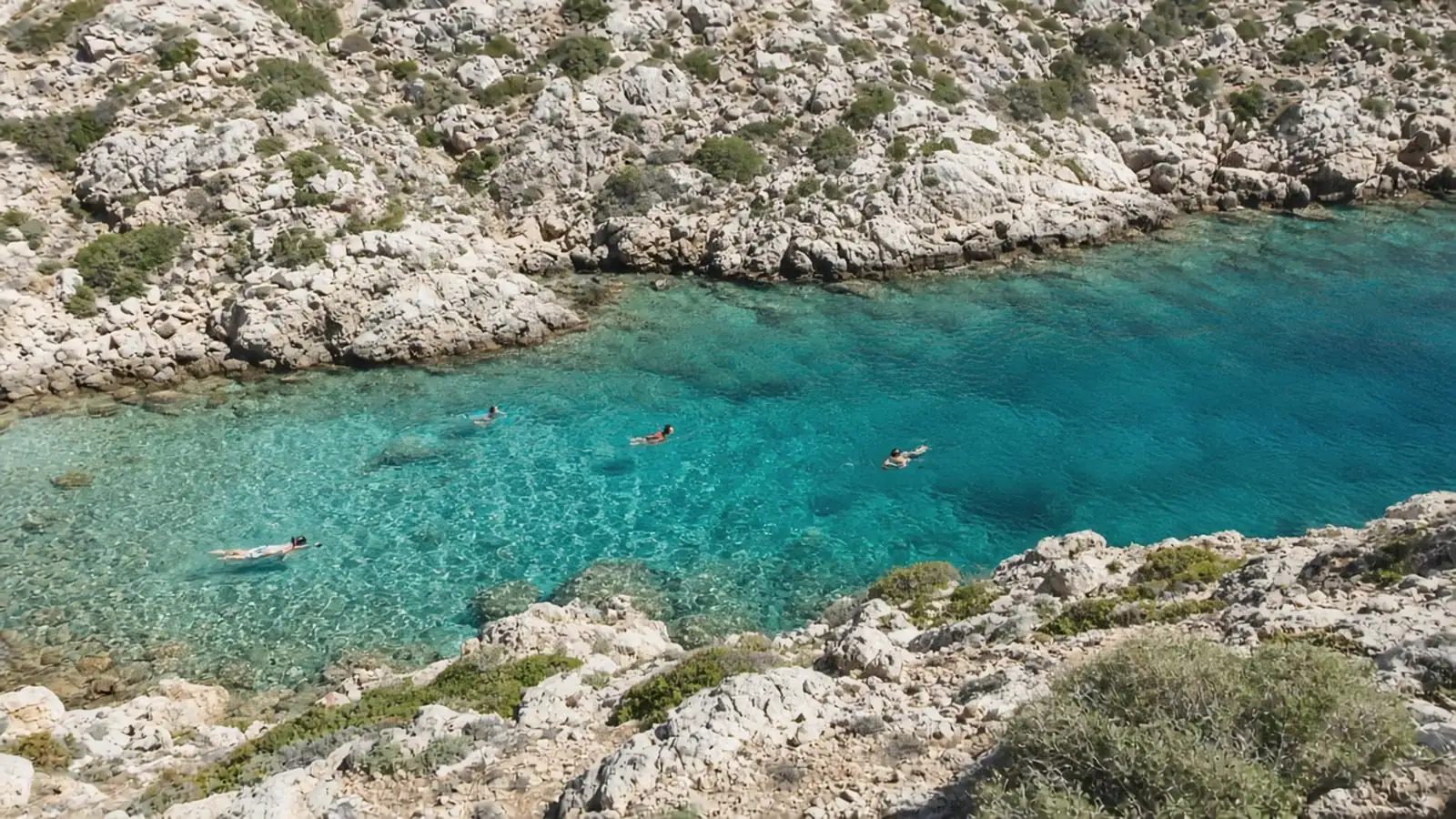
Short version: the Greek sea is coolest in February and March and warmest in August, with September close behind. Around most islands the open sea averages about 21 to 23°C in June, 23.5 to 27°C in August and 20 to 24°C in October. Rhodes and Crete stay warmest longest; the Cyclades and the north-east Aegean run cooler in midsummer, partly because of the summer north wind. For most people, comfortable swimming season is mid-June to mid-October.
This page gives month-by-month figures for seventeen island locations, explains what they feel like in the water, and covers why the beach in front of you might be warmer or colder than the table. For the rest of the picture (crowds, prices, ferries), see our month guides for May, June, September and October.
Before you travel: fares, schedules, opening hours, tax rates and seasonal rules change often, and the details on this page may be out of date. Always confirm current prices, times and rules with the operator or the official site, or locally, before you travel.
Quick answer
| Question | Answer |
|---|---|
| Warmest month | August: about 23.5–27°C on average, depending on the island |
| Coldest months | February and March: about 12.5–17°C |
| Comfortable for most swimmers | Mid-June to mid-October |
| Warmest island in our table | Rhodes, all year; in August the Sporades, the Ionian, the Saronic and Crete are close behind |
| Coolest in summer | The Cyclades and Lesvos |
| Coldest in winter | The north Aegean (Thassos, the Sporades) |
| Best autumn swimming | September everywhere; October in Rhodes, Crete, Kos and the Ionian |
About these numbers
We built the table from the US National Oceanic and Atmospheric Administration’s Optimum Interpolation Sea Surface Temperature dataset (NOAA OISST v2.1), which combines satellite, ship and buoy measurements into a daily global map at a resolution of about 25 km. NOAA publishes long-term monthly means for 1991 to 2020; we took the nearest open-water point to each island. These are official, freely published scientific figures, not readings from a single beach.
Two caveats. First, these are open-water averages: a shallow, sheltered sandy bay can be a degree or two warmer on a calm summer afternoon, and a windy, exposed beach cooler. Second, the sea around Greece has been warming, so recent summers have often been warmer than a 1991-2020 average (more on that below).
What the numbers feel like
| Water temperature | How it feels to most people |
|---|---|
| Under 18°C | Cold. A quick, bracing dip; many people will not go in |
| 18–20°C | Cool. Fine for a short swim on a hot day; takes your breath away at first |
| 20–22°C | Refreshing. Most adults swim happily; children may get chilly after a while |
| 22–25°C | Comfortable for long swims and snorkelling |
| Over 25°C | Warm. Easy for everyone, including small children |
These bands are our own rule of thumb, not a scientific standard. Tolerance varies a lot from person to person.
Sea temperature table by island (°C, monthly average 1991-2020)
| Location | Jan | Feb | Mar | Apr | May | Jun | Jul | Aug | Sep | Oct | Nov | Dec |
|---|---|---|---|---|---|---|---|---|---|---|---|---|
| Mykonos | 16.0 | 15.7 | 15.7 | 16.3 | 18.3 | 21.4 | 23.1 | 23.8 | 23.2 | 21.2 | 18.8 | 16.9 |
| Paros | 16.0 | 15.7 | 15.8 | 16.5 | 18.6 | 21.7 | 23.4 | 24.1 | 23.4 | 21.5 | 19.0 | 17.0 |
| Naxos | 16.2 | 15.8 | 15.9 | 16.5 | 18.4 | 21.5 | 23.1 | 23.8 | 23.2 | 21.3 | 19.0 | 17.1 |
| Milos | 15.9 | 15.5 | 15.7 | 16.5 | 18.7 | 22.2 | 24.3 | 24.7 | 24.0 | 22.2 | 19.7 | 17.4 |
| Santorini | 16.4 | 16.1 | 16.2 | 16.8 | 18.8 | 22.0 | 23.6 | 24.4 | 23.9 | 22.1 | 19.7 | 17.5 |
| Crete north-west (Chania) | 16.1 | 15.5 | 15.7 | 16.6 | 18.9 | 22.4 | 24.9 | 25.7 | 24.7 | 22.7 | 20.3 | 17.9 |
| Crete north (Heraklion) | 16.1 | 15.6 | 15.8 | 16.8 | 19.1 | 22.5 | 24.7 | 25.4 | 24.6 | 22.7 | 20.3 | 17.8 |
| Crete south coast | 16.8 | 16.1 | 16.2 | 17.0 | 19.2 | 22.2 | 24.4 | 25.5 | 25.1 | 23.6 | 21.3 | 18.6 |
| Kos | 17.4 | 16.7 | 16.6 | 17.3 | 19.4 | 22.1 | 23.7 | 25.1 | 24.4 | 22.7 | 20.8 | 18.9 |
| Rhodes | 17.8 | 17.0 | 16.9 | 17.6 | 19.7 | 22.5 | 25.1 | 26.9 | 26.0 | 24.0 | 21.6 | 19.3 |
| Corfu | 15.5 | 14.8 | 14.9 | 16.0 | 18.9 | 22.2 | 24.0 | 25.5 | 24.4 | 22.3 | 19.7 | 17.1 |
| Kefalonia | 15.9 | 15.3 | 15.2 | 16.2 | 18.9 | 22.4 | 24.5 | 25.9 | 24.9 | 22.7 | 20.2 | 17.6 |
| Zakynthos | 16.1 | 15.3 | 15.2 | 16.2 | 18.8 | 22.3 | 24.5 | 25.9 | 25.0 | 22.8 | 20.4 | 17.8 |
| Hydra (Saronic) | 15.5 | 14.9 | 15.1 | 16.1 | 18.9 | 22.5 | 25.0 | 25.7 | 24.8 | 22.8 | 20.3 | 17.5 |
| Skiathos (Sporades) | 14.2 | 13.8 | 13.9 | 15.0 | 18.5 | 22.7 | 25.2 | 26.2 | 24.4 | 21.5 | 18.3 | 15.7 |
| Thassos | 13.2 | 12.6 | 12.5 | 14.2 | 18.3 | 22.6 | 25.0 | 25.7 | 23.7 | 20.4 | 17.2 | 14.8 |
| Lesvos | 15.3 | 14.8 | 15.1 | 16.0 | 18.5 | 21.8 | 23.3 | 23.5 | 22.3 | 20.5 | 18.3 | 16.6 |
Source: NOAA OISST v2.1 long-term monthly mean, 1991-2020, nearest open-water grid point to each island. To convert to °F, multiply by 1.8 and add 32 (22°C is about 72°F; 26°C is about 79°F).
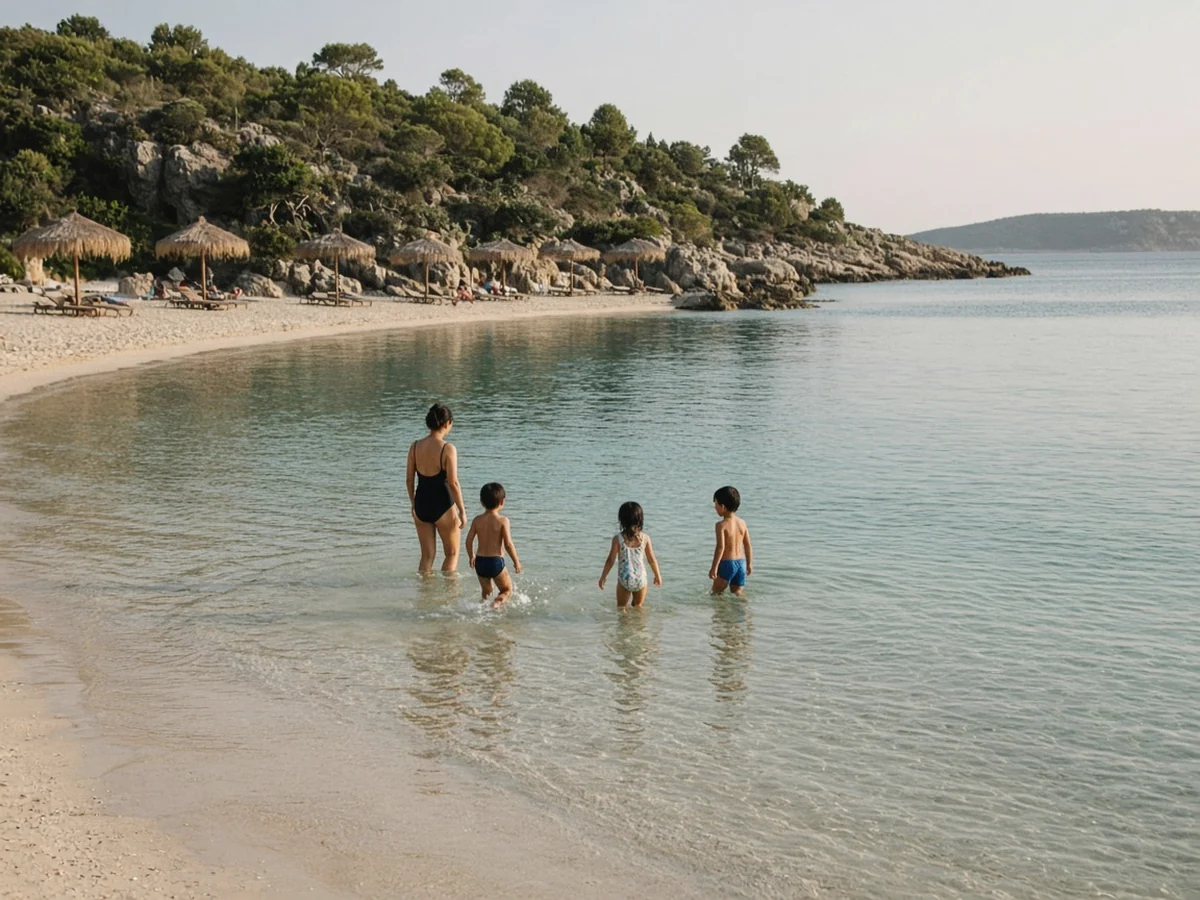
Island group by island group
Cyclades
Mykonos, Paros, Naxos, Milos and Santorini average about 21.5 to 22°C in June, 23 to 24.5°C in July and 24 to 25°C in August, then about 21 to 22°C in October. In midsummer they are a degree or two cooler than Crete or Rhodes. The reason is the meltemi, the strong north wind of July and August, which stirs the sea and can draw cooler water up to the surface. Milos and Santorini, further south and west, run slightly warmer than Mykonos and Naxos. Our meltemi guide explains which beaches shelter from it; see also our Naxos, Milos and Santorini guides.
Crete
Crete’s north coast averages about 22.5°C in June, 25.5°C in August and nearly 23°C in October. The south coast, facing the Libyan Sea, holds its warmth longer into autumn: in our figures it is roughly a degree warmer than the north coast from October to January. Scientific studies of the Aegean also find the warmest water in the south, around Crete and the southern Dodecanese. Crete is a strong choice if you want warm water early or late in the season; see our Crete travel guide.
Dodecanese
Rhodes has the warmest water in our table: almost 27°C in August, 26°C in September and 24°C in October, and it still averages about 17°C in March, the mildest winter sea in our table. Kos is a little cooler in summer but still warmer than the Cyclades for most of the year. Both are good bets for swimming in October; see our Rhodes and Kos guides.
Ionian islands
Corfu, Kefalonia and Zakynthos are cooler than the southern Aegean in winter and spring (Corfu averages under 15°C in February and March) but warm up fast, reaching about 25.5 to 26°C in August, warmer than the Cyclades. The Ionian is usually less windy in summer, which helps. See our Corfu, Kefalonia and Zakynthos guides.
Saronic, Sporades and the north Aegean
The Saronic islands near Athens follow the Ionian pattern: cool in spring, about 25.5°C in August. Further north, the gap between seasons is larger. Skiathos and Thassos have the coldest winter sea in our table (around 12.5 to 14°C in February and March) yet reach 25.5 to 26°C in August. Lesvos, on the east side of the Aegean, stays relatively cool all summer, at about 23.5°C in August, because the summer north wind pushes surface water away from that coast and cooler water wells up. See our Skiathos, Thassos and Lesvos guides.
Month by month
| Month | Typical sea (range across our 17 locations) | Verdict |
|---|---|---|
| April | 14–18°C | Cold. Brave, short dips only |
| May | 18–20°C | Cool. Swimmable on hot days, warmer late in the month |
| June | 21–23°C | Good, warming through the month |
| July | 23–25°C | Warm; exposed Cycladic beaches feel cooler when the meltemi blows |
| August | 24–27°C | Warmest month |
| September | 22–26°C | Still warm; many swimmers think it is the best month |
| October | 20–24°C | Pleasant early in the month, best in the south-east and Ionian |
| November | 17–22°C | Cool; Rhodes and south Crete hold warmth longest |
Ranges are rounded minimum to maximum across the locations in the table above.
The sea lags behind the air. It keeps warming into late August and holds that heat well into autumn, which is why swimming in late September or early October is often better than in May or early June, even when the air temperature is similar. Our September guide covers that sweet spot, and July and August covers peak summer.
Why one beach is colder than another
- Wind. Strong, steady wind mixes the warm surface layer with cooler water below. When the meltemi blows, exposed north-facing beaches can feel several degrees colder than sheltered ones on the same day.
- Upwelling. Along the eastern Aegean, the summer north wind pushes surface water offshore and cooler water rises to replace it. Scientists see a clear west-to-east drop in summer sea temperatures across the Aegean for this reason.
- Depth and shape. Shallow, sandy bays warm up fastest; deep, open water stays cooler.
- Springs. Some beaches have cold freshwater springs seeping in near the shore.
- Time of day. Shallow water is warmest in the late afternoon.
A warming sea
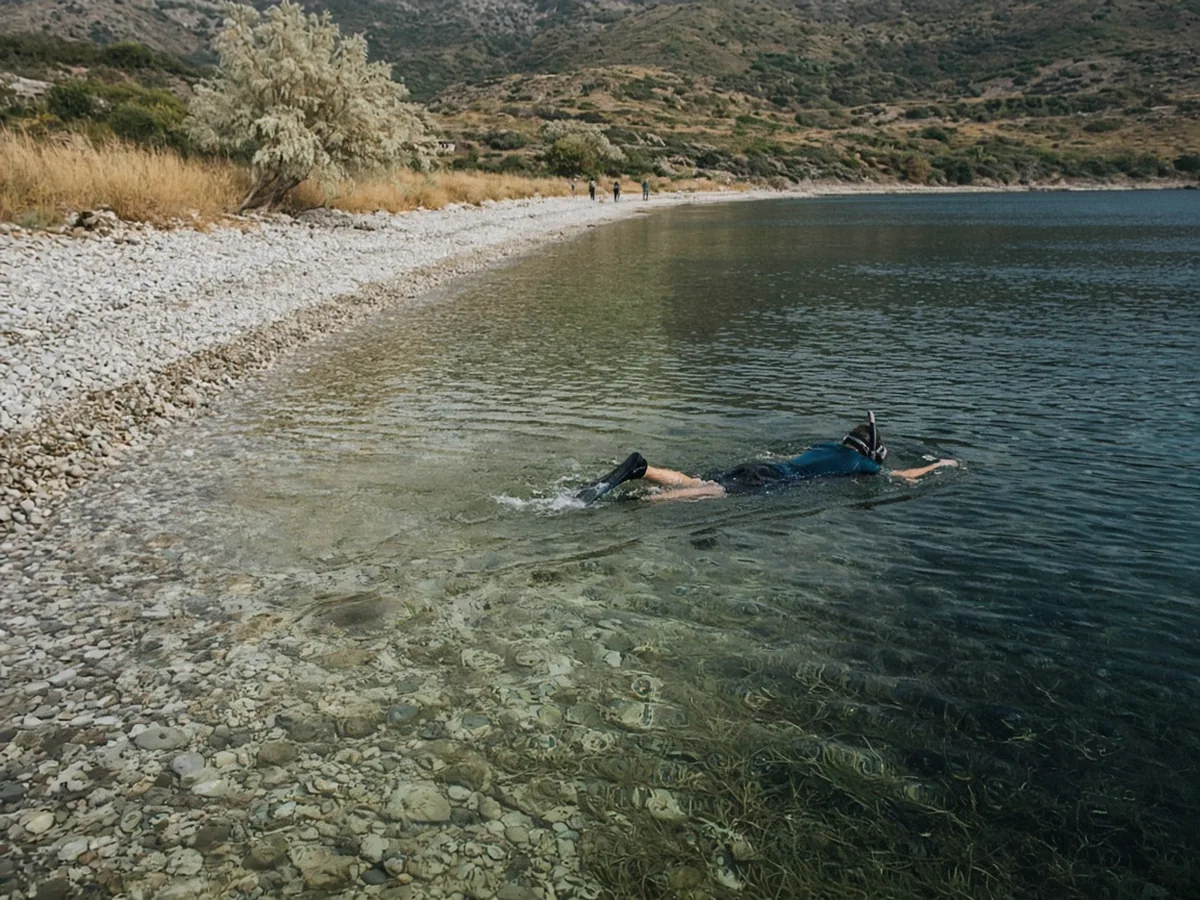
The seas around Greece are among the fastest-warming parts of the Mediterranean. A 2022 study of satellite data for the Aegean, Ionian and Cretan seas found an average rise of about 0.5°C per decade between 2008 and 2021, with the strongest warming in the north Aegean and the southern Ionian, and more frequent marine heatwaves. For swimmers, that means recent summers and autumns have often been warmer than the 1991-2020 averages in our table, and winter water has been less cold. It also brings real problems for marine life, so treat the sea gently: do not touch sea grass or seabed life, and use reef-safe sun cream where you can.
For a live reading, the Hellenic Centre for Marine Research’s POSEIDON system publishes observations and forecasts for Greek seas.
Tips for cool-water months
- In May and late October, swim in the early afternoon in shallow, sheltered bays, when the water has warmed through the day.
- Pack a light wetsuit top or rash vest if you plan to snorkel outside midsummer.
- Choose Rhodes or Crete if warm water is the main point of a spring or autumn trip.
- Check the wind forecast: a calm day after a windy spell can bring noticeably warmer water to a sheltered beach.
- Bring water shoes for pebbly beaches and sea urchins.
Frequently asked questions
When is the sea warm enough to swim in Greece?
For most people from about mid-June to mid-October, when open-water averages are above about 21 to 22 degrees Celsius. May and late October are swimmable if you do not mind cooler water.
What is the warmest month for sea temperature in the Greek islands?
August, with long-term averages of about 23.5 degrees around Lesvos and the Cyclades up to about 27 degrees around Rhodes. September is only slightly cooler.
Which Greek island has the warmest sea?
Of the islands in our table, Rhodes, with an August average of almost 27 degrees and about 24 degrees in October. In August, Skiathos, the Ionian islands, Hydra and Crete come next.
Is the sea warm in Greece in May?
It is cool: about 18 to 20 degrees on long-term averages, fine for a short swim on a hot day and warmer at the end of the month.
Is the sea warm in Greece in October?
Yes, early in the month: about 20 to 24 degrees on average, warmest around Rhodes, Crete and the Ionian.
Why is the sea colder in the Cyclades in summer?
Mainly the meltemi, the strong summer north wind, which mixes cooler water to the surface on exposed beaches. The Cyclades average a degree or two below Crete and Rhodes in midsummer.
Where do these sea temperature figures come from?
From NOAA’s OISST v2.1 dataset, using the 1991-2020 long-term monthly mean at the nearest open-water point to each island. Recent years have often been warmer than these averages.
Sources and useful links
- NOAA PSL: OISST v2.1 dataset and long-term means
- NOAA NCEI: Optimum Interpolation SST overview
- Androulidakis and Krestenitis (2022): SST variability and marine heatwaves in Greek seas
- HCMR POSEIDON: observations and forecasts for Greek seas
Figures are long-term monthly averages for open water near each island (1991-2020). Real temperatures vary from year to year, week to week and beach to beach, and recent years have often run warmer than these averages. Check a current reading before you go.