Greek Islands in July and August: Crowds, Heat, Meltemi and How to Make It Work
Last updated: October 2026
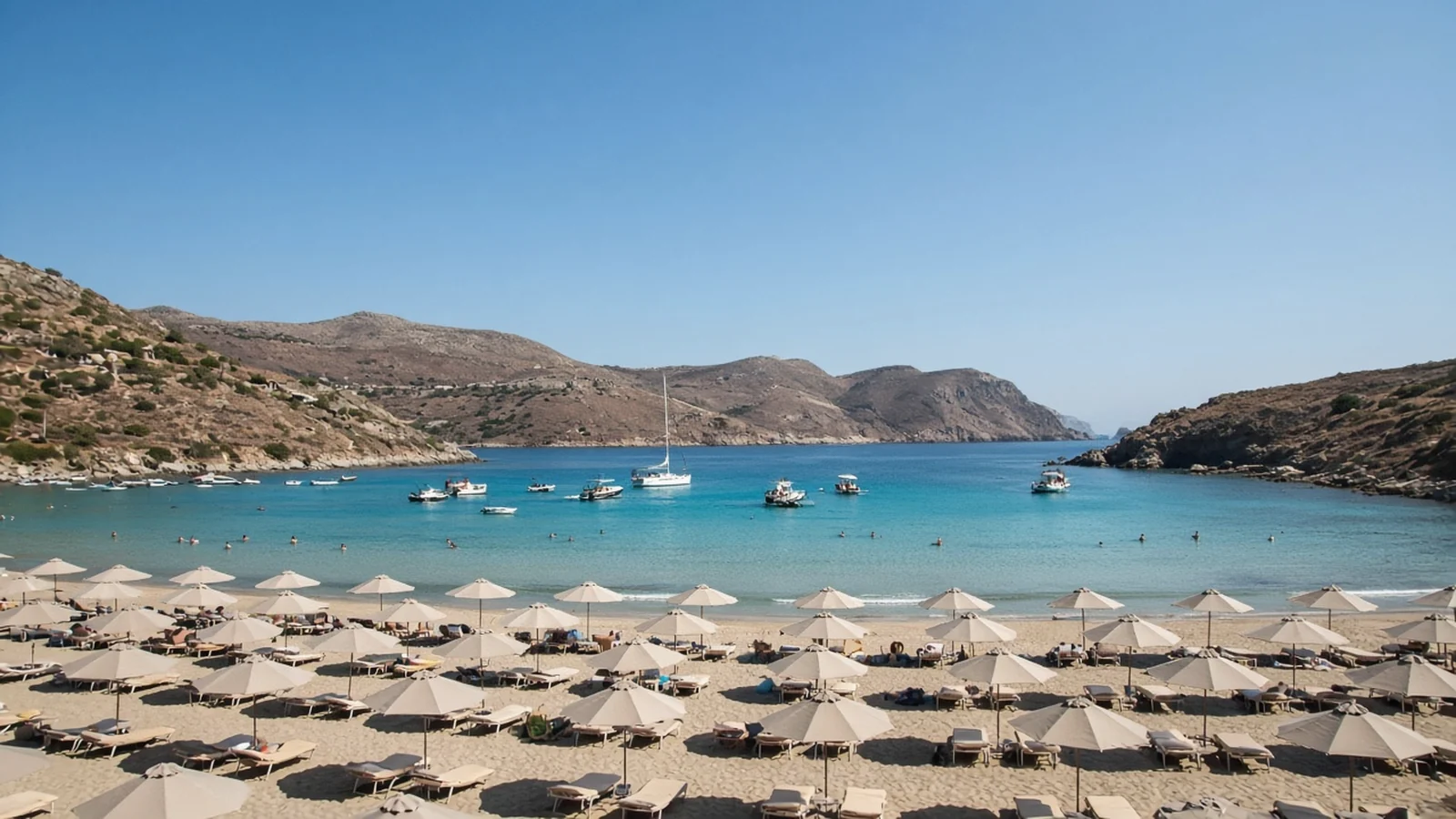
July and August are hot, busy and expensive, and the wind can be strong. They’re also when the sea is warmest, every ferry runs and every taverna is open. If those are your only weeks, you can still have a great trip: choose your islands and your hours carefully, and book early.
For monthly sea temperatures by island group, see our Greek islands sea temperature guide.
Most of the advice online either tells you to avoid high summer altogether or pretends it’s perfect. Neither helps if school holidays or work leave decide your dates. This guide is about making peak season work: what the heat and the meltemi wind are really like, how busy it gets around 15 August, what rooms cost, and which islands and habits make the difference. If you can still choose your month, our June and September guides cover the easier alternatives on either side.
Before you travel: fares and schedules change often, and the prices and times on this page may be out of date. Always confirm current prices and times with the operator, or locally at the port or bus station, before you travel.
Quick answer: should you go in July or August?
Go if: your dates are fixed, you want the warmest sea and full nightlife, or you’re travelling with school-age children.
Expect: highs around 27–30°C on Cycladic islands (hotter in heatwaves and on the mainland), very little rain, sea around 24–25°C, and a strong north wind on many days.
Hardest part: the week around 15 August, the biggest Greek holiday of the summer, when ferries and rooms are fullest.
Make it work: book rooms and key ferries early, pick islands with sheltered beaches, do sightseeing before 11:00, and leave a spare day before your flight home.
Heat and sea: what July and August feel like
Long-term figures from the Hellenic National Meteorological Service (HNMS) for Naxos, which we use as the Cyclades benchmark, show average daily highs of about 27°C in both July and August, with almost no rain. Those are averages. In heatwaves, which now happen most summers, temperatures can go well above that: in a July 2026 heatwave the national forecast had up to 36°C in the Cyclades and Crete and up to 41°C on the mainland.
| July | August | Source | |
|---|---|---|---|
| Average high / low (Naxos) | 27.1°C / 22.0°C | 27.0°C / 22.2°C | HNMS climatology |
| Average sea temperature (Naxos) | about 24°C | about 24.5°C | seatemperature.info |
| Rain days | under 1 | under 1 | HNMS climatology |
| Wind | Often strong north wind (meltemi) | Often strong north wind (meltemi) | meteo.gr, HNMS |
Figures are long-term averages. Islands further south and east, such as Crete and Rhodes, are usually warmer; the mainland, including Athens, is usually hotter.
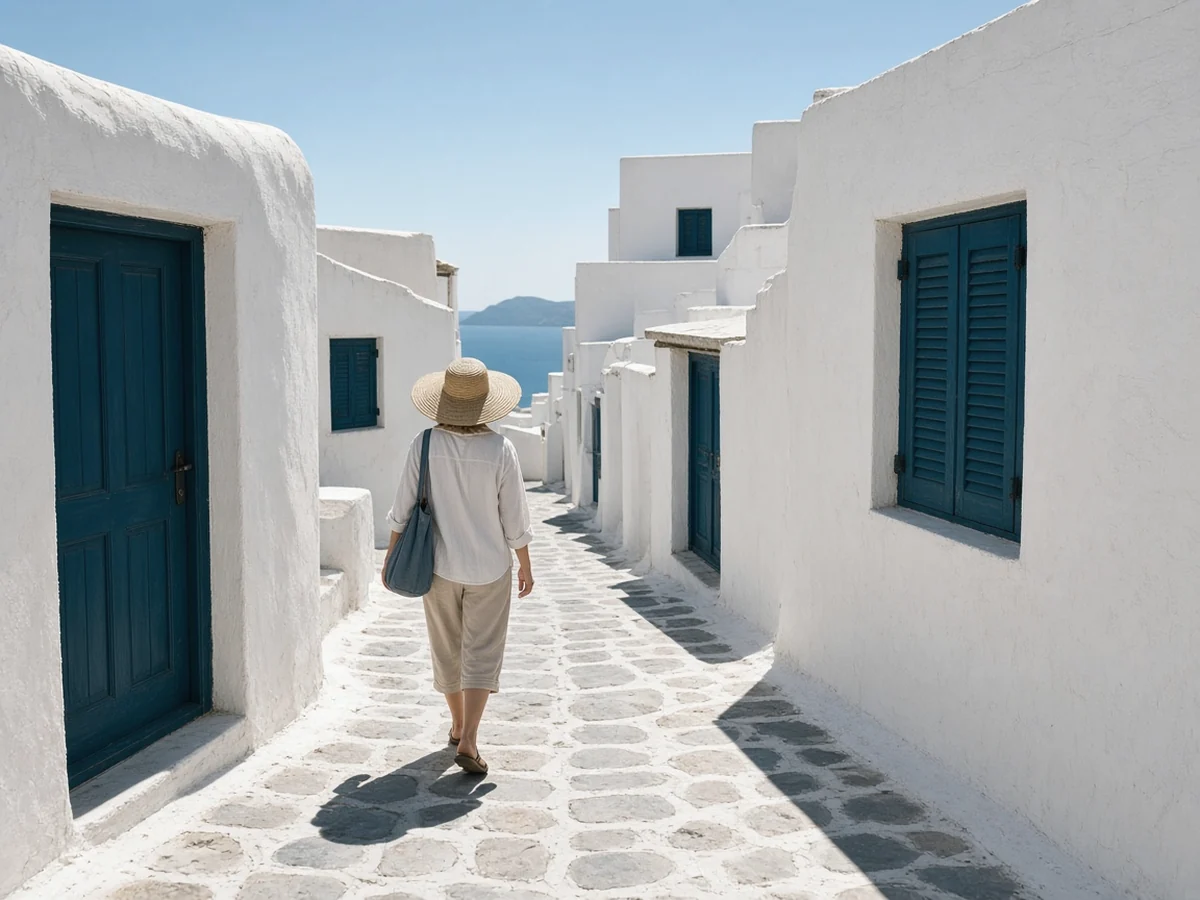
The breeze makes the islands feel cooler than Athens, but don’t be fooled: the sun is strong from mid-morning, there’s little shade on most beaches and paths, and white walls reflect the heat.
The meltemi: the wind that shapes your summer
The meltemi (in Greek, the etesian winds) is the dry north wind of the Aegean summer. The Greek weather service meteo.gr says it is strongest from mid-June to early September, usually reaches 6 to 7 Beaufort, and sometimes 8 to 9 in the central Aegean, with the strongest winds around midday and afternoon and calmer evenings and nights. HNMS figures for Naxos show mean wind strength rising clearly in July and August compared with May and June.
- The good: it cools the islands and keeps the air clear.
- The bad: north-facing beaches get rough and sand blows; small boats, day trips and fast ferries can be cancelled; umbrellas fly.
- What to do: on windy days, swim on south-facing or enclosed bays, take boat trips on calm mornings, and keep island-hopping plans flexible.
A full guide to the meltemi, with which islands and coasts stay calmest, is coming soon. Islands in the Ionian Sea, such as Corfu, Kefalonia and Zakynthos, are largely outside the meltemi’s reach, which is one reason families often choose them for August.
Crowds and the 15 August peak
July is busy; August is busier. On 15 August Greece celebrates the Dormition of the Virgin Mary (the Assumption), a public holiday and the heart of the Greek summer break. Many Greeks head to their family islands in the days before it and come back in the days after, so the week around it is usually the hardest of the year for ferries and rooms. Island churches dedicated to the Virgin hold big festivals (panigyria), which are a highlight if you’re already there.
- Busiest: roughly the second and third weeks of August, around the holiday.
- Most visible crowds: Santorini’s Oia at sunset, Mykonos town, the famous boat-trip beaches, and ports on changeover days.
- Quieter in peak season: big islands with lots of beaches (Naxos, Crete) and early mornings anywhere.
If you’re flexible within the summer, the first half of July and the last week of August tend to be easier than the middle of August.
Prices: what peak season costs
August is the most expensive month for rooms. The Greek hotel institute ITEP’s monthly panel survey put the national average double-room rate at €189 in August 2026, against €117 in May 2026. The Cyclades run above the national average in peak season, and the famous islands far above it.
| Hotel category | Average double room, August 2026 (Greece) |
|---|---|
| 1-star | €85 |
| 2-star | €93 |
| 3-star | €112 |
| 4-star | €200 |
| 5-star | €341 |
| All hotels | €189 |
Source: ITEP monthly panel survey, August 2026 (reported 15 October 2026). National averages; Mykonos, Santorini and the most popular Cyclades are usually higher. Rooms to let and apartments are not included.
Ferries don’t usually cost more in August, but the cheapest seats and cabins sell out first, and car spaces go early. For a fuller budget, see Greek islands on a budget and the cheapest time to visit.
Which islands work best in July and August
| Island or group | Why it works in peak season | Watch out for |
|---|---|---|
| Naxos | Big, with long sandy beaches on both coasts and an inland escape; easy for families | The south-west beaches sit in the lee of the north wind but can still be gusty; the strait to Paros gets rough |
| Crete | Huge, so crowds spread out; south coast for calmer seas on north-wind days | Heat inland; long drives |
| Milos | South-coast beaches sheltered from the north wind | Boat trips cancelled on windy days; rooms book out early |
| Paros | Sheltered coves in Naoussa Bay and on the west coast | Busy and lively; Naoussa is pricey in August |
| Ionian islands (Corfu, Kefalonia, Zakynthos) | Largely outside the meltemi; greener, with shade | Hotter and more humid on still days; very busy resorts |
| Santorini and Mykonos | Everything open, full nightlife | The biggest crowds and highest prices of all |
Wind notes: meteo.gr (meltemi), beachesofgreece.com wind-sheltered beach guide (updated July 2026). Our judgement on crowds.
For island-by-island detail, see our guides to Naxos, Crete, Milos and Paros. Travelling with children? Our Naxos with kids guide covers the island that works best for many families in summer.
Ferries in peak season
- Every route runs. July and August have the fullest timetables of the year, including summer-only links between islands.
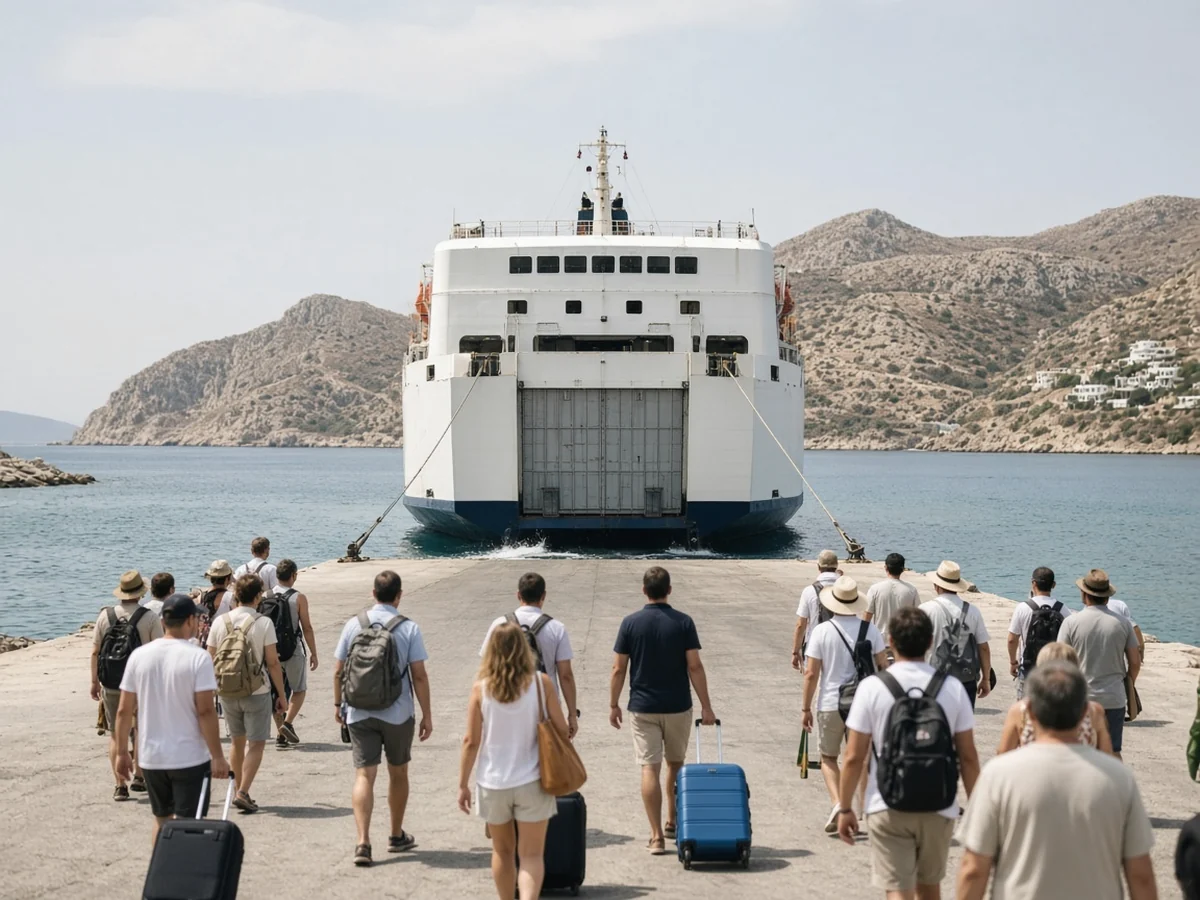
- Book key legs early, especially anything on or near 15 August, the first and last weekends of August, cabins on overnight boats and any car space.
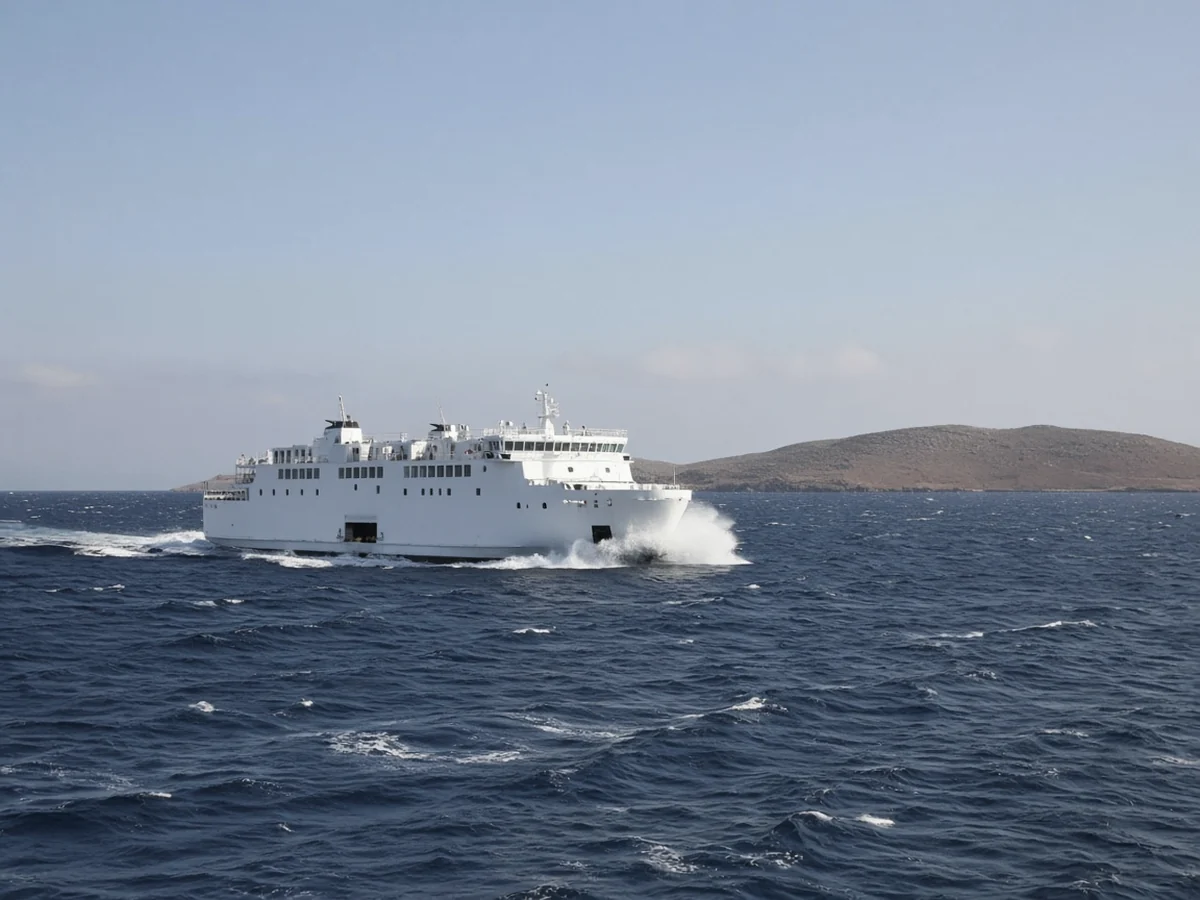
- Fast boats are the first to be cancelled in strong wind. Large conventional ferries keep sailing in conditions that stop catamarans. There is no single Beaufort cut-off: the port authority decides by vessel type, size and route.
- Leave a buffer. Don’t sail back to Athens on the day of an international flight in August. Come back the day before.
New to Greek ferries? Start with Greek island ferries for beginners, and for route ideas see island hopping from Athens.
Heat and fire safety
- Plan around midday. Walk, hike and sightsee early. In heatwaves, the culture ministry has closed the Acropolis and other open-air sites during the hottest hours (for example 12:00–17:00 on 22 July 2026), so check the day before.
- Carry water and shade. Many beaches and paths have none.
- Take fire warnings seriously. Wildfires are a real summer risk. Greece’s Civil Protection publishes a daily fire-risk map, and emergency alerts go to phones through the 112 system. Never light fires or barbecues outdoors, and follow any evacuation message at once.
- Hike only early and with care. Leave mountain walks such as Mount Zas on Naxos for early morning, and skip them in a heatwave.
How to make July and August work
- Book rooms early, and favour places with air conditioning and shade outside.
- Choose fewer islands. Two islands in ten days beats four. Every ferry day in August is hot and crowded.
- Pick a base with options: a town or village where you can reach beaches on both sides of the island, so you can follow the wind.
- Swim early, rest at midday, go out late. That’s what Greeks do, and dinners at 21:00 or later are normal.
- Go for the calm days on boats. Book boat trips with a flexible date, or for early in your stay, so a windy day can be moved.
- Avoid the famous spots at their peak hour, such as sunset in Oia, or go to quieter viewpoints instead.
- Keep a spare day at the end of the trip, in Athens or on the island with the most reliable ferry.
July vs August: which is better?
| July | August | |
|---|---|---|
| Crowds | Busy, building through the month | Busiest, peaking around 15 August |
| Prices | High | Highest of the year |
| Sea | Warm | Warmest |
| Wind | Meltemi common | Meltemi common, often strong |
| Festivals | Some village festivals | 15 August festivals across the islands |
| Best for | Families who can go early in the month; couples | Those tied to August school or work holidays; festival lovers |
If you have the choice, early July or the very end of August is the gentler version of peak season. And if you can shift by a few weeks, late June or September give you nearly the same sea with far fewer people. Our hub on the best time to visit the Greek islands, month by month, is coming soon.
Frequently asked questions
Is August a good time to visit the Greek islands?
It can be, if your dates are fixed. The sea is at its warmest and everything is open, but August is the busiest and most expensive month, and the meltemi wind is often strong. Book early and avoid the week around 15 August if you can.
How hot are the Greek islands in July and August?
On Naxos, long-term averages are about 27°C by day and 22°C at night in both months (HNMS). Heatwaves push temperatures higher: in July 2026 forecasts reached 36°C in the Cyclades and Crete. Athens and the mainland are hotter.
What is the meltemi and when does it blow?
It’s the dry north wind of the Aegean summer. meteo.gr says it is strongest from mid-June to early September, usually 6 to 7 Beaufort and sometimes 8 to 9 in the central Aegean, strongest in the afternoon and calmer at night.
Which Greek islands are least windy in August?
The Ionian islands, such as Corfu, Kefalonia and Zakynthos, are largely outside the meltemi. In the Cyclades, choose south-facing or enclosed bays on windy days, for example the south coast of Milos or Naoussa Bay on Paros.
Why is 15 August so busy in Greece?
It’s the Dormition of the Virgin Mary, a national holiday and the high point of the Greek summer. Many Greeks travel to the islands for it, so ferries and rooms are fullest in the days around it.
Do ferries get cancelled in July and August?
Sometimes, mainly fast boats and small boats on strong-wind days. Large conventional ferries usually keep sailing. The port authority decides by vessel type and route, so leave a spare day before your flight home.
Sources and useful links
- HNMS climatology: Naxos
- seatemperature.info: Naxos sea temperature
- meteo.gr Meteopedia: seasonal winds (meltemi), in Greek
- ITEP monthly panel survey, August 2026
- To Vima: July 2026 heatwave forecast and closures
- Beaches of Greece: wind-sheltered beaches (July 2026)
- Greek Civil Protection
Weather, prices and ferry schedules vary from year to year. This independent guide is for planning; check forecasts, official warnings and operator timetables before you travel.