Paros vs Mykonos: Which Island Should You Choose?
Last updated: November 2026
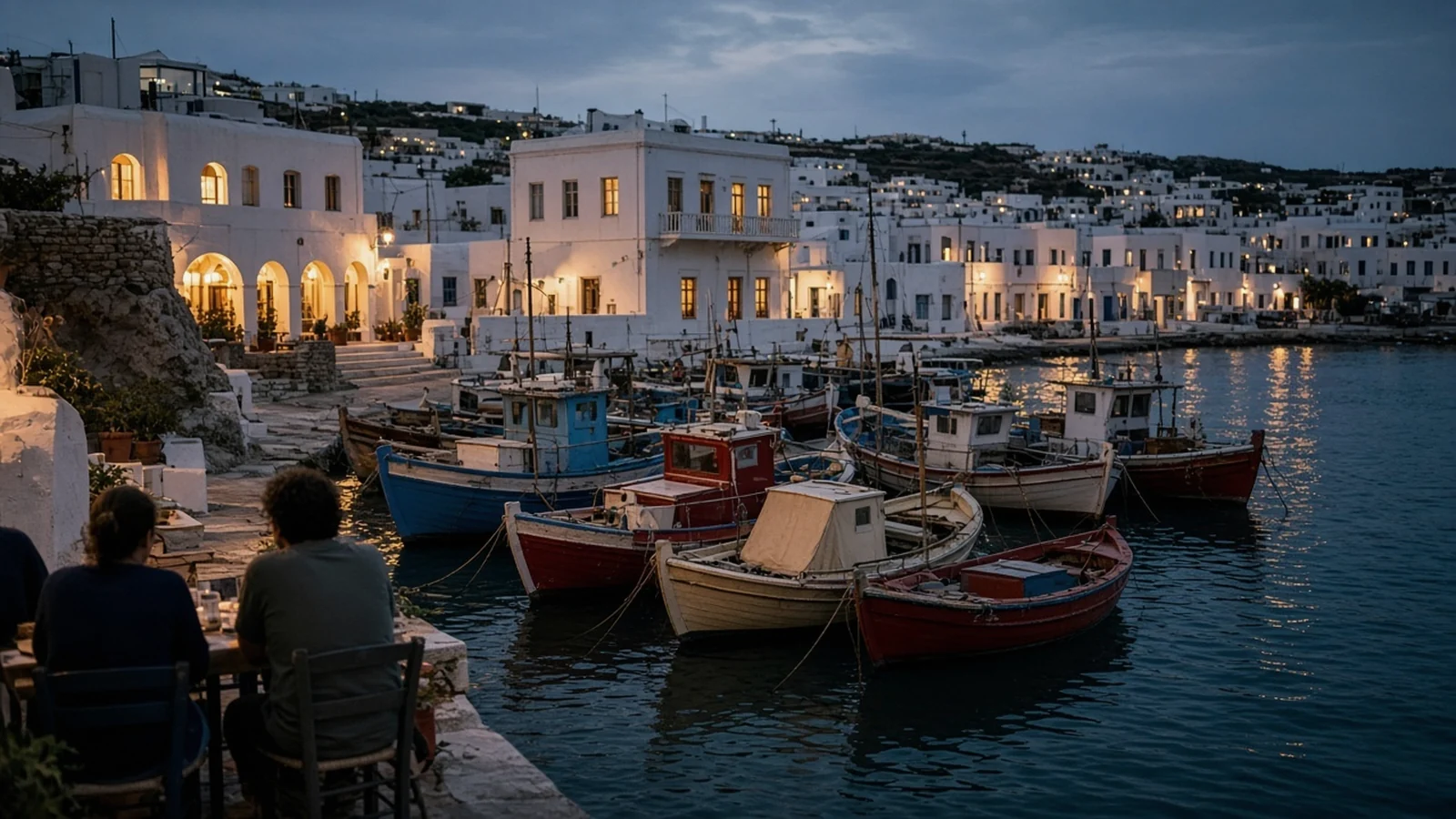
Short version: Mykonos is the glamorous one, with a famous party scene, beach clubs, a beautiful and crowded main town, Delos on the doorstep and high prices in summer. Paros looks similar but feels more relaxed: more beaches and villages, more simple tavernas, lively but smaller nightlife and usually better value. For a week, most people are happier on Paros, with a night or two on Mykonos if they are curious. They are a short ferry apart, so you can do both.
For the full guides, see Paros and Mykonos. If Naxos is also on your list, Paros vs Naxos covers that choice, and Mykonos vs Santorini the other big pairing.
Before you travel: fares, schedules, opening hours, tax rates and seasonal rules change often, and the details on this page may be out of date. Always confirm current prices, times and rules with the operator or the official site, or locally, before you travel.
Quick answer: Paros or Mykonos?
Choose Mykonos for nightlife, beach clubs, a stylish short stay and Delos.
Choose Paros for a longer, better-value stay with more beaches and villages, easy buses and onward ferries.
Families: Paros. More sheltered sand, more space, lower prices.
Couples: either. Mykonos for a splurge; Paros for long dinners in Naoussa and quiet beach days.
Paros vs Mykonos side by side
| Paros | Mykonos | Edge | |
|---|---|---|---|
| Feel | Relaxed, lived-in, two lively towns | Glamorous, busy, famous party scene | Taste |
| Size | Larger, with inland villages | Smaller and more built-up around the town | Paros for variety |
| Cost in summer | High in Naoussa in August, but more mid-range choice | One of the most expensive islands in Greece | Paros |
| Nightlife | Bars in Naoussa and Parikia, a few clubs | Beach clubs, late bars, big-name nights | Mykonos |
| Beaches | Many, varied, some always out of the wind | South-coast beaches sheltered from the north wind; many organised | Paros for choice |
| History | Byzantine church in Parikia, marble villages | Delos, a major ancient site, by boat | Mykonos (Delos) |
| Flights from abroad | Domestic flights only | Many direct summer flights from Europe | Mykonos |
| Ferry hub | Big hub for Naxos, Antiparos, Santorini and small islands | Good links, fewer onward options | Paros |
Comparison based on our live island guides; relative costs are our honest judgement, not a price survey.
Which island suits you?
| You are… | Our pick | Why |
|---|---|---|
| First-time visitors | Paros, narrowly | Easier to love for a week, with more variety and better value |
| Party-goers | Mykonos | Its beach clubs and late bars are the main draw for many visitors |
| Families | Paros | Sheltered sandy beaches, more space and lower prices; see Paros with kids |
| On a budget | Paros | More simple rooms and tavernas; see Greek islands on a budget |
| History lovers | Mykonos, for Delos | The ancient sanctuary is a short boat ride away; see our Delos guide |
| Without a car | Either | Both have bus networks; see Paros and islands without a car |
| Island hoppers | Paros | Direct boats to Naxos, Antiparos, Santorini and many smaller islands |

Cost: the biggest difference
This is the part people underestimate. Mykonos is consistently one of the priciest islands in Greece in high season, for rooms, sunbeds, cocktails and taxis alike. Prices fall a lot in May, June, late September and October, but it rarely feels cheap. Paros is no longer a bargain either, especially Naoussa in August, but you usually get more for your money: more simple tavernas, more mid-range rooms and more free beaches without sunbed minimums. We have not quoted prices on purpose; they change fast and vary hugely by week.
Two cost details apply to both: Greece charges a per-night climate resilience fee on accommodation, higher in the summer months, and cruise passengers landing at Mykonos pay a higher fee in peak season than at most islands. See what a Greek islands trip costs and the cheapest time to visit.
Nightlife: Mykonos, by a distance
Mykonos is the island most people mean by ‘party island’. Evenings start late, with sunset drinks in Little Venice, dinner late and bars and clubs in town and on the south-coast beaches running into the small hours. Some beach clubs charge for sunbeds and set minimum spends, and the big nights sell out in high summer. It is also one of the best-known gay-friendly destinations in the Mediterranean.
Paros has real nightlife on a smaller, friendlier scale: cocktail bars around Naoussa’s little harbour, a strip of bars along Parikia’s waterfront and a few clubs. You can stay out late without the price tag or the dress code. If you want one or two big nights rather than every night, base yourself on Paros and hop to Mykonos.
Beaches
Mykonos beaches are mostly on the south coast, sheltered from the summer north wind (the meltemi). Several are known for their clubs and sunbeds; others in the north are quieter but more exposed. Beach life is organised and can be expensive. In summer a sea taxi links several south-coast beaches. Our Mykonos beaches guide goes beach by beach.
Paros has more beaches and more variety: long sandy bays, rocky coves, the wind-carved granite at Kolymbithres near Naoussa, and the windsurfing and kitesurfing beaches of the south-east. With beaches on every side of the island, you can usually find one out of the wind. Many have a taverna and a few sunbeds; some have nothing at all.

Towns and villages
Mykonos Town is the star: a maze of white lanes, Little Venice with balconies over the water and the row of windmills above. It is genuinely beautiful and genuinely crowded, especially when cruise ships are in. Ano Mera, inland, is the island’s other village, with a monastery and a quieter square.
Paros has more places to wander. Parikia, the port town, has a pretty old quarter and the Byzantine church of Panagia Ekatontapyliani. Naoussa is a picture-book fishing harbour with a strong food scene. Inland, Lefkes is a hill village of marble lanes, and an old stone path runs from there towards the east coast. See where to stay in Paros and where to stay in Mykonos.
Food
Both islands eat well, in different ways. Mykonos has some of the most ambitious, and most expensive, restaurants in the Cyclades, plus stylish beach-club dining; it also has old-fashioned tavernas in Ano Mera and around the town if you look. Look out for local kopanisti, a peppery soft cheese, and louza, a cured pork. Paros has a broader middle: fish tavernas around Naoussa’s harbour, family places in the villages, and farm produce from the island’s interior. Lefkes and Marpissa are good for a slow lunch away from the coast. On both islands, a meal one street back from the waterfront is usually better value than one with the view.

Getting there and getting around
Both islands have daily ferries from Piraeus, and in the warmer months from Rafina, which is closer to Athens airport. The hop between them is short on fast boats and runs often in summer, less so in winter. Check current fares/times with Seajets, Golden Star Ferries, Fast Ferries and Blue Star Ferries, and see ferry from Athens to Paros. For the short hop between the two islands, see our Mykonos to Paros ferry guide.
By air, both have short domestic flights from Athens with Olympic Air and Sky Express. Mykonos also has many direct summer flights from European cities, which can make it the easier arrival point from abroad; Paros is domestic only.
On the ground, KTEL Paros runs buses from Parikia to Naoussa, Lefkes, the east-coast beaches, Pounta (for Antiparos) and the airport. On Mykonos, the island bus runs from two hubs in town to the main beaches, the airport and the new port, and taxis are scarce for the demand in high season, so plan ferry and airport transfers ahead. We have not quoted bus fares.
Doing both
Because they are so close, Paros and Mykonos combine easily. A good shape for a week:
- Piraeus or Rafina to Paros; four or five nights in Naoussa, Parikia or a beach village, with a day on Antiparos.
- Short boat to Mykonos; two nights in or near Mykonos Town, with a morning on Delos.
- Fly home from Mykonos if there is a direct flight to your city, or take the ferry back to Athens.
Want a third island? Naxos is next door to Paros; our 7-day itinerary shows how it fits.
When to go
For both islands, late May, June and September are the sweet spot: warm sea, everything open and fewer people. July and August are busiest and priciest, and the meltemi can blow hard; see our meltemi guide. Mykonos’ nightlife peaks in July and August and much of it winds down from October. Orthodox Easter 2027 falls on 2 May, a busy, festive weekend on both. See June and September.
Frequently asked questions
Is Paros or Mykonos better?
It depends on your trip. Mykonos is better for nightlife, beach clubs and a short, glamorous stay; Paros is better for value, variety, families and longer stays.
Is Paros like Mykonos?
It looks similar, with white towns, windmills and sandy beaches, but it feels more relaxed, is larger and is usually cheaper. Its nightlife is lively but smaller.
Is Paros cheaper than Mykonos?
Usually, yes. Mykonos is one of the most expensive Greek islands in summer; Paros has more mid-range rooms and simple tavernas, though Naoussa in August is not cheap.
Can you do Paros and Mykonos in one trip?
Yes. A week works well: four or five nights on Paros and two on Mykonos, linked by a short ferry.
Which is better for families, Paros or Mykonos?
Paros. It has more sheltered sandy beaches, more space and lower prices.
Can you fly to Paros or Mykonos from abroad?
Mykonos has many direct summer flights from European cities. Paros has domestic flights only, so most visitors fly to Athens or Mykonos and take a ferry.
Sources and useful links
Ferry timetables, bus fares and local fees change every season. We have not listed fares or times; check current fares/times with the operator before you travel.