Cyclades vs Ionian Islands: Which Should You Choose?
Last updated: November 2026
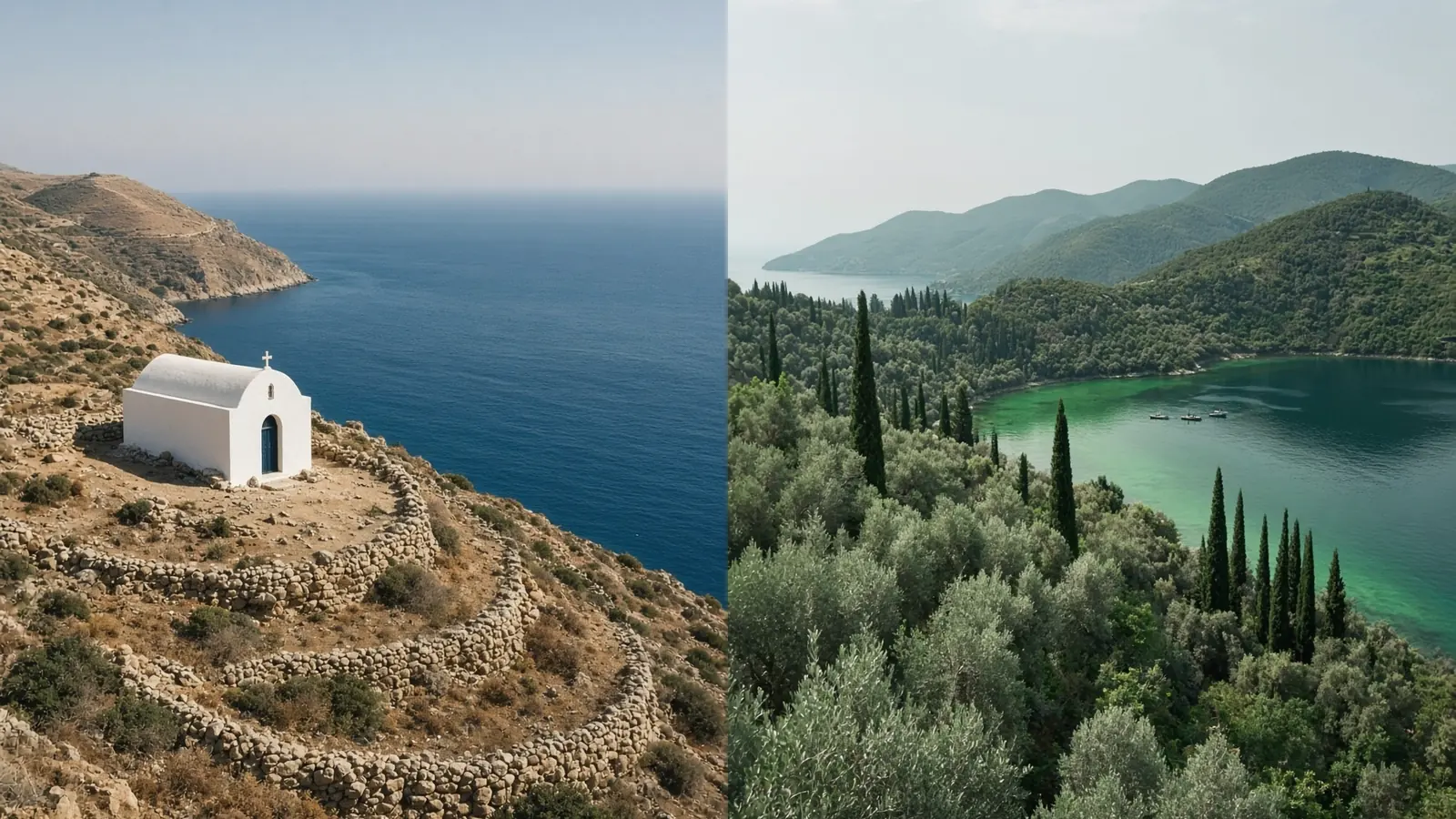
Short version: choose the Cyclades for the classic Greek-island look (white villages, bare golden hills, very clear water) and for easy island hopping on a dense ferry network, but expect strong summer wind. Choose the Ionian islands for green, wooded scenery, Venetian-style towns, calmer summer seas and direct flights from much of Europe, but expect more driving, fewer inter-island ferries and more rain outside summer. Neither is better; they suit different trips.
The Cyclades are the ring of islands in the central Aegean south-east of Athens, including Santorini, Mykonos, Naxos, Paros and Milos. The Ionian islands lie off Greece’s west coast, between the mainland and Italy: Corfu, Paxos, Lefkada, Kefalonia, Ithaca and Zakynthos, with Kythira often grouped with them. For first-trip advice see the best islands for first-timers.
Before you travel: fares, schedules, opening hours, tax rates and seasonal rules change often, and the details on this page may be out of date. Always confirm current prices, times and rules with the operator or the official site, or locally, before you travel.
Quick answer: Cyclades or Ionian?
Choose the Cyclades if you want to visit two or three islands by ferry, love whitewashed villages and stark landscapes, and don’t mind wind.
Choose the Ionian if you want green scenery, sheltered swimming, a road trip on one or two big islands, or a direct flight to your island from abroad.
Families: both work. The Ionian’s calmer summer seas are a plus; the Cyclades’ sandy beaches on Naxos and Paros are excellent.
Island-hoppers: the Cyclades, by a distance.
Cyclades vs Ionian side by side
| Cyclades | Ionian | Edge | |
|---|---|---|---|
| Look | White cube houses, blue domes, bare golden hills | Green hills, olive groves, cypresses, pastel Venetian-era towns | Taste |
| Summer wind | The meltemi often blows hard in July and August | Generally lighter; afternoon breezes | Ionian |
| Rain | Very dry, especially in summer | Much wetter, mainly late autumn to early spring | Cyclades |
| Beaches | Sand on Naxos and Paros, volcanic coves on Milos and Santorini | White-pebble beaches, cliff coves, some long sandy bays | Taste |
| Island hopping | Dense network; short hops between many islands | Few links; islands far apart, often via the mainland | Cyclades |
| Flights from abroad | Mykonos, Santorini (and Crete nearby); others via Athens | Corfu, Kefalonia, Zakynthos and Preveza for Lefkada | Ionian |
| Driving needed | Optional on many islands with buses | Strongly recommended on the big islands | Cyclades |
| Season | Long, dry season; quiet and windy in winter | Lush spring, busy summer, rainy winter | Taste |
Which suits you?
| You are… | Pick | Why |
|---|---|---|
| First-time island hopper | Cyclades | Paros, Naxos and Santorini on one ferry line |
| Road-tripper | Ionian | Kefalonia, Corfu and Lefkada reward a car |
| Hates wind | Ionian | Calmer summer seas, sheltered bays |
| Walker | Either | Naxos, Amorgos and Sifnos trails, or the Corfu Trail and Kefalonia’s mountains |
| Sailor | Ionian | Short, sheltered hops are a classic first sailing holiday area |
| Want the postcard Greece | Cyclades | The whitewashed look is Cycladic |
| Want greenery and shade | Ionian | Olive groves and forests reach the sea |

Landscape and towns
The Cyclades are dry and rocky, with low scrub, stone walls and terraces climbing bare hills. Villages are tight clusters of white cube houses, often built on a hilltop or around a castle for protection, with narrow lanes and blue-domed churches. Each island has its own character: volcanic Santorini and Milos, green-ish and farming Naxos, the marble villages of Paros, the cliffs of Folegandros and Amorgos. See the Small Cyclades and the least touristy islands for quieter options.
The Ionian islands were never ruled by the Ottomans for long and spent centuries under Venice, which shows in Corfu’s arcades and fortresses and in the bell towers and pastel houses across the group. Many towns on Kefalonia and Zakynthos were rebuilt after the 1953 earthquake. The landscape is softer and greener: olive groves, cypress, fir forest on Kefalonia’s Mount Ainos, and cliffs dropping into very blue water. See our Corfu, Kefalonia and Lefkada guides.
Wind and weather
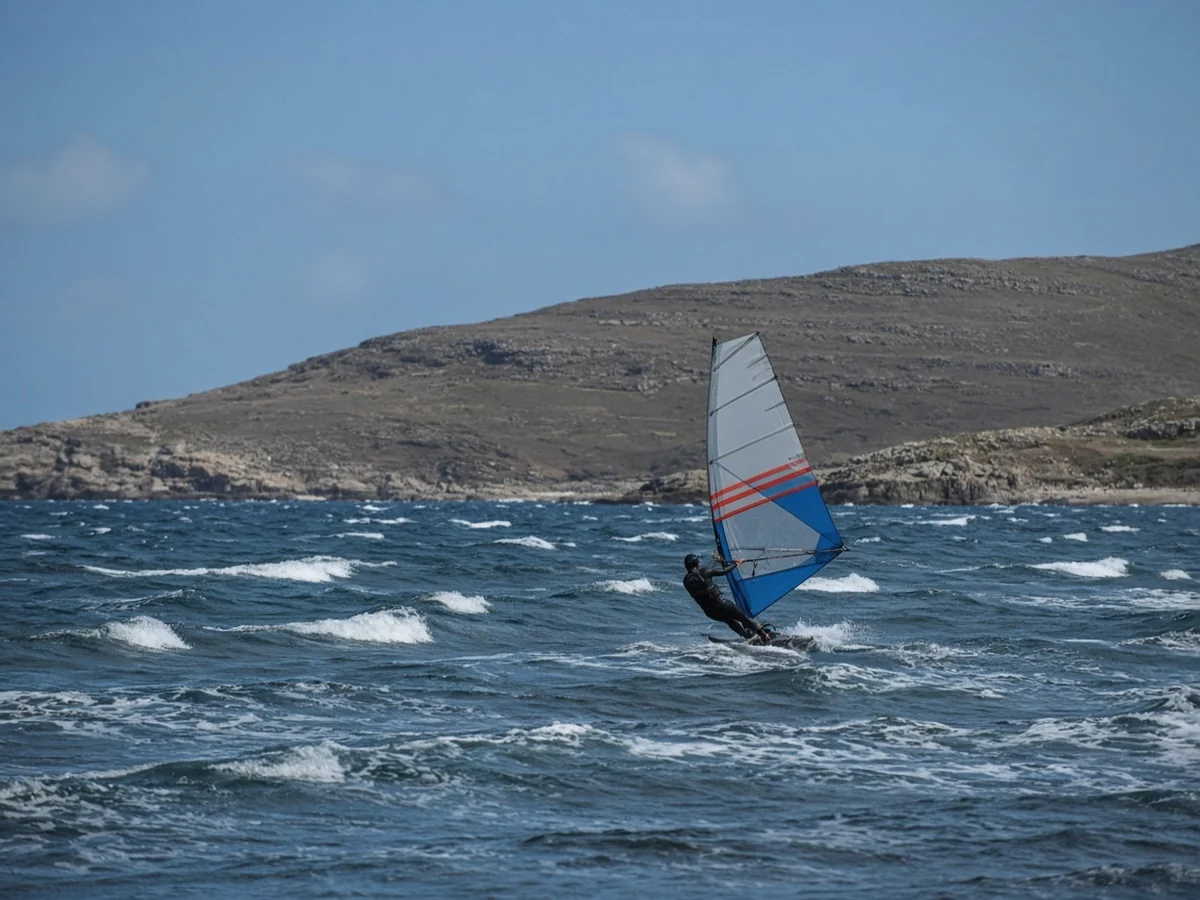
This is the biggest practical difference. In the Cyclades, the summer north wind, the meltemi, blows often in July and August, sometimes strongly for several days. It keeps the heat bearable but can make beaches on north-facing coasts unpleasant, rough up the sea and delay or cancel smaller fast boats. Our meltemi guide explains how to plan around it.
The Ionian is usually calmer in summer, with light afternoon breezes, which makes it popular for sailing and for families with small children. The trade-off is rain: the Ionian is much greener because it is much wetter, mostly from late autumn to early spring, while the Cyclades are among the driest parts of Greece. For long-term averages, the Hellenic National Meteorological Service publishes station climate data.
Beaches and sea
The Cyclades have very clear water and a big range of beaches: long sandy bays on Naxos and Paros, the lunar rock coves of Milos, dark volcanic sand on Santorini, and remote coves reachable only by boat. On windy days, choose a south-facing beach. See Milos and Naxos beach guides.
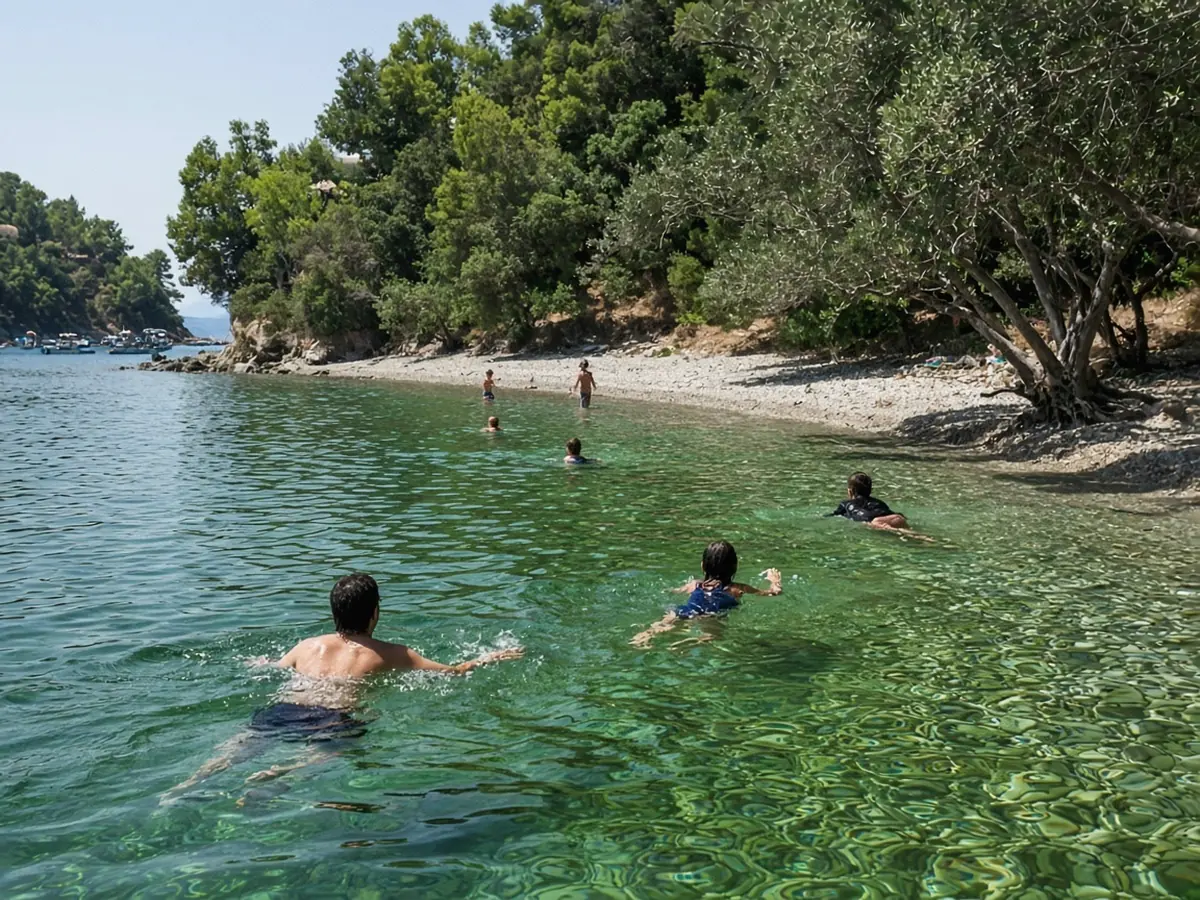
Ionian beaches are often white pebble below cliffs, with intensely blue water, plus long sandy beaches in parts of Corfu, Kefalonia and Zakynthos. Some of the most famous cliff-backed beaches have had rockfall problems: Navagio on Zakynthos stayed closed to landings in 2026, and Myrtos on Kefalonia had rockfalls in July 2026. Check local advice before you go.
Island hopping
The Cyclades are built for it. Ferries from Piraeus, Rafina and Lavrio fan out across the group, and short hops link neighbours such as Paros and Naxos, Milos and Sifnos, or Naxos and the Small Cyclades. Two or three islands in a week or ten days is easy; see the 7-day and western Cyclades itineraries and island hopping from Athens.
The Ionian is harder. The islands are strung out along the coast, and many links go via mainland ports such as Igoumenitsa, Kyllini or Patras. There are useful short crossings (Corfu to Paxos, Kefalonia to Ithaca, Lefkada to Kefalonia and Ithaca in summer, Kefalonia to Zakynthos in summer), but Corfu and Zakynthos are far apart. Many visitors pick one or two neighbouring islands and drive. check current fares/times with Levante Ferries and the other Ionian operators.
Flights and arrival
For many travellers from Europe, the Ionian is easier to reach: Corfu, Kefalonia and Zakynthos have many direct summer flights, and Preveza (Aktion) on the mainland serves Lefkada, all run by Fraport Greece. In the Cyclades, Mykonos and Santorini have direct summer flights from Europe, but most other islands, including Naxos, Paros and Milos, have domestic flights only, so you usually fly to Athens and take a ferry or a short hop. Year-round, Aegean and Sky Express fly from Athens to most of the larger islands in both groups.
Food
Food is a quiet reason to choose one group over the other. Cycladic cooking grows from dry land and small farms: capers, fava (yellow split pea puree), sun-dried tomatoes, local cheeses such as Naxos graviera, slow-baked chickpeas on Sifnos, fresh fish and island wines from Santorini’s volcanic soil. Ionian food shows its Venetian past, especially on Corfu: pastitsada (spiced meat with pasta), sofrito (veal in garlic and wine sauce) and bourdeto (spicy fish stew), plus kumquat liqueur, Kefalonian meat pie and Robola wine. Both groups have simple tavernas and smarter restaurants; in either, the best meals are often a few streets away from the harbour. See Naxos and Sifnos for two of the best Cycladic food islands.
Cost and crowds
The most famous Cyclades, Santorini and Mykonos, are among the most expensive places in Greece in summer, and they can be very crowded. Many other Cyclades, such as Naxos, Syros, Sifnos or the Small Cyclades, are better value. The Ionian has a big package-holiday trade around some resorts on Corfu and Zakynthos, which keeps a lot of mid-range accommodation available, and its quieter corners (Paxos, Ithaca, north Kefalonia) can be expensive for what they are in August simply because they are small. Neither group is cheap in peak weeks. See the cheapest Greek islands and islands on a budget.
Best starting points
| Trip | Cyclades route | Ionian route |
|---|---|---|
| 7 days | Paros and Naxos, or Milos and Sifnos | Corfu with a day on Paxos, or Kefalonia with Ithaca |
| 10 days | Naxos, Paros and Santorini, or the western Cyclades | Kefalonia and Zakynthos (summer ferry), or Lefkada and Kefalonia |
| 14 days | Four islands with a slow pace | Corfu, Kefalonia and Zakynthos with flights or the mainland between |
Can you combine the two groups? Only with effort: there is no direct ferry between them, so you would fly via Athens or cross the mainland. With two weeks or more, a week in each is possible, but most people enjoy one group more by staying put.
Frequently asked questions
Are the Cyclades or Ionian islands better?
Neither is better overall. The Cyclades suit island hopping and the classic whitewashed look; the Ionian suits green scenery, calmer summer seas, road trips and direct flights.
Which is windier, the Cyclades or the Ionian?
The Cyclades. The meltemi often blows hard in July and August; the Ionian is usually calmer in summer.
Which is better for island hopping?
The Cyclades, with a dense ferry network and short hops between many islands. Ionian islands are farther apart and many links go via the mainland.
Which is better for families?
Both work. The Ionian’s calmer summer seas help with small children; Naxos and Paros in the Cyclades have excellent shallow sandy beaches.
Can you visit the Cyclades and the Ionian in one trip?
Yes, but there is no direct ferry. You fly via Athens or cross the mainland, so it needs two weeks or more.
Which is greener?
The Ionian, by far. Its olive groves and forests reach the sea because it gets much more rain than the dry Cyclades.
Sources and useful links
- Fraport Greece regional airports
- Hellenic National Meteorological Service
- Levante Ferries
- Blue Star Ferries
- Aegean Airlines
- Sky Express
Ferry and flight networks, seasons and timetables change every year. We have not listed fares or times; check current fares/times with the operators before you plan a route.