Where to Stay in Naoussa, Paros: the Harbour, the Lanes and the Bay
Last updated: 17 November 2026

Short version: stay in the old-town lanes if you want to walk to dinner and still sleep. The harbour is the prettiest setting and the noisiest. Agioi Anargyroi and the other near-town beaches suit a swim-first stay that is still on foot. The edges of the village, toward the ring road, are quieter and easier with a car. Naoussa is a lovely base; it is not the ferry port, and it is the dearest village on Paros in high season.
Naoussa is the fishing harbour most people picture when they think of Paros: a small north-coast bay, a ruined Venetian fort at its mouth, white lanes behind the quay, and beaches around the headland. Evenings here are the island’s liveliest, more tavernas and music than club district, though in July and August the lanes are packed. Ferries arrive in Parikia, about a 10 km road trip, so every stay starts with a bus or a taxi. For the island-wide choice, see where to stay in Paros and the Paros travel guide. We have not named hotels. A pin ‘in Naoussa’ can mean a room over the harbour or a studio a walk up the hill; check the map, the noise, and the drop-off.
Before you travel: fares, schedules, opening hours, tax rates and seasonal rules change often, and the details on this page may be out of date. Always confirm current prices, times and rules with the operator or the official site, or locally, before you travel.
Which part of Naoussa suits you
| If you want… | Stay in | Why | Watch out for |
|---|---|---|---|
| The postcard harbour, and you do not mind noise | Old harbour / waterfront | You walk out to the tables, the fort and the evening scene | Highest prices; late noise; little parking; rooms can be small |
| Atmosphere with a better night’s sleep | Old-town lanes, a short walk back from the quay | You are still on foot for dinner, usually one street off the crush | Some lanes are tight and cobbled; not every room is quiet |
| A swim before breakfast, still walking to town | Agioi Anargyroi and the near-town beach side | A sandy, convenient town beach and a short walk to the harbour | Busy in high season; you still hear the village in the evening |
| Parking, space, a slightly lower bill | The edges of the village, toward the ring road | Easier drop-off and a quieter night; you walk or take a short taxi in | You are not in the prettiest streets; in August the walk can feel long in the heat |
| The ferry on your doorstep | Not Naoussa; stay in Parikia | Naoussa is a bus or taxi from the port | Early boats mean a pre-booked taxi or a first bus you have actually checked |
Couples and food-first travellers usually want the lanes or a carefully chosen harbour room. Families often prefer the Agioi Anargyroi side, or a quieter east-coast base such as Logaras; see Paros with kids. Budget rooms in the centre are scarce in summer; look at the edges, or at Parikia. Without a car, Naoussa still works: the village is walked, summer boats cross the bay, and buses link you to Parikia. See Paros without a car.
How Naoussa is laid out
The old harbour is the centre of gravity: a tight horseshoe of quay, fishing boats and tables, with the ruined Venetian kastro on the rocks at the entrance. Behind it, the old town is a knot of white lanes, mostly pedestrian and mostly level, though not perfectly smooth. West of the centre, a short walk brings you to the town beaches around Agioi Anargyroi. Further around the bay are Kolymbithres and Monastiri, by road or seasonal boat. Inland, the village thins toward the ring road, the bus stops and the car parks that fill every August evening.
This map shows places to stay from our partner Stay22; we may earn a commission if you book, at no cost to you.
You can do daily life here on foot if you stay inside the village. What you cannot do is assume a car will help you at dinner time. It will not, unless your room has a space and you leave the car there.
The old harbour and waterfront
This is the Naoussa of the evening photographs: tables on the quay, the fort at the mouth of the bay, lights on the water. It is genuinely pretty, and in high season it is also loud, crowded and expensive. Light sleepers should look one or two streets back. It suits couples and short stays who want to walk out to dinner. Downsides: noise, prices, and a drop-off that may end around the corner from the door. The kastro is a short stroll, best in the morning when the quay is still a working harbour.

The old-town lanes
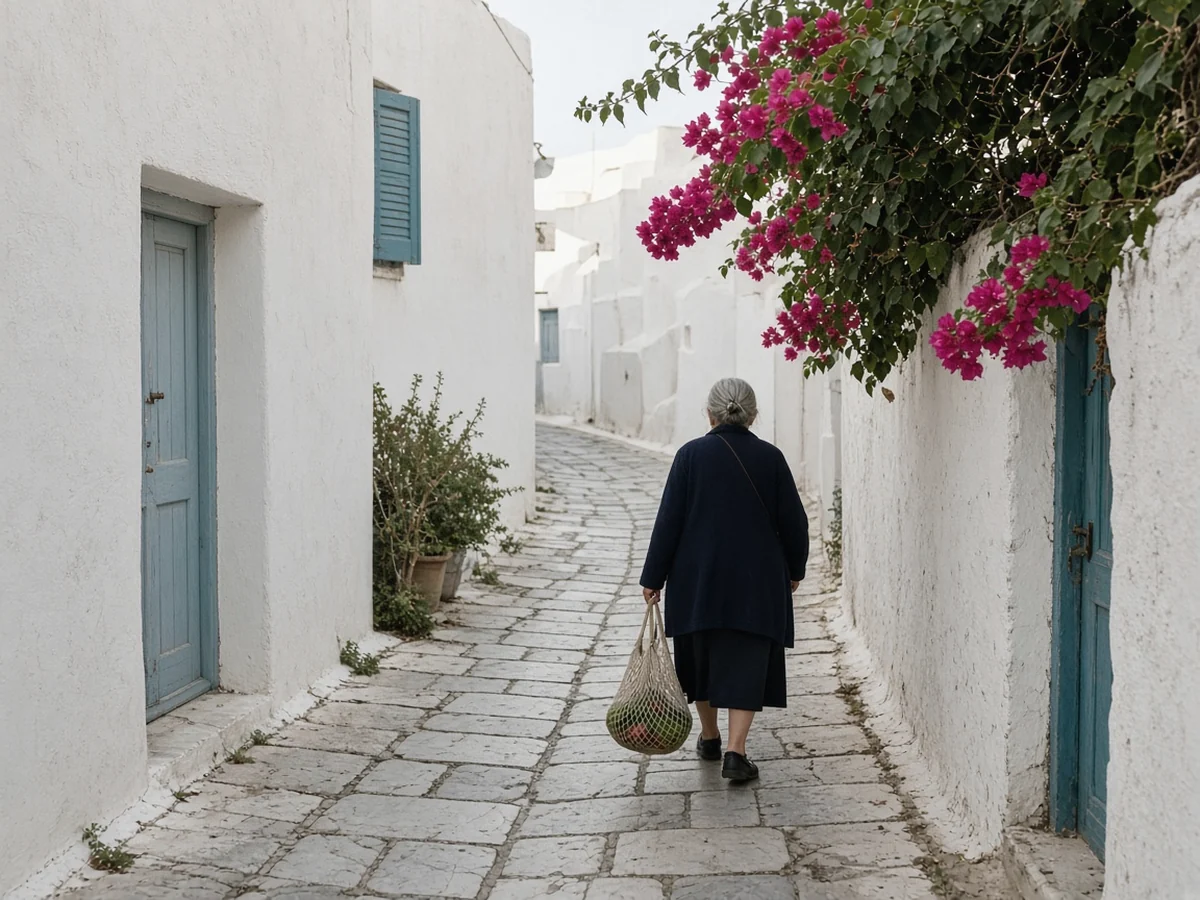
A minute or two inland from the quay, Naoussa becomes a village again: narrower lanes, tavernas that are slightly easier to get a table at, and rooms that are not quite as exposed to the waterfront soundtrack. This is the area we would point most first-timers toward, as long as the pin is real. It is still busy in July and August, just less of a stage set. Downsides: cobbles, tight corners with bags, and noise that depends on whether you face a bar or a back wall.
Agioi Anargyroi and the near beaches
West of the harbour, a short walk brings you to Agioi Anargyroi, the most convenient town beach: sand, shallow water, and the village close enough that you can walk back for lunch. It suits families, and anyone without a car who still wants a daily swim. Downsides: it is busy in high season, and a room ‘near the beach’ can still sit on a road. This north side of Paros can feel the meltemi; on a rough day, look at more sheltered coves or the south coast. See best beaches in Paros.

The quieter edges of the village
Uphill and toward the ring road, Naoussa is more spread out: rooms with a bit of parking, and a walk down into the lanes. This is usually the practical choice if you have a car, or if you want a quieter night without leaving the village. It suits drivers, families who want space, and people who like to sleep. A ‘ten-minute walk’ at noon in July with children is not the same walk as the listing made it sound; check the uphill return.
Getting around
Inside the village, walk. The centre is not designed for cars. Taxis can reach the edges; they are scarce when the last ferries and the dinner rush coincide, so pre-book for an early boat out of Parikia.
KTEL Paros buses link Naoussa with Parikia, and in season they add routes toward beaches such as Kolymbithres, Santa Maria and Ampelas. We do not quote fares or frequencies. check current fares/times with the KTEL Paros timetable.
In summer, small boats also cross the bay from the old harbour to Kolymbithres and Monastiri, often more pleasant than driving. Check at the harbour the day before rather than building a tight plan around a remembered departure.
You land at Parikia, not in Naoussa. The bus is straightforward when it matches your ferry; a pre-booked transfer is simpler after a late boat or with a lot of luggage. See ferry from Athens to Paros. A car is useful for south-coast beaches, and a nuisance every evening you try to park by the harbour.
Nearby beaches and sights
The town beaches are the convenient ones. A little further around the bay are Kolymbithres, pretty and busy, with rounded granite and small sandy pockets, and Monastiri, a more sheltered cove with a chapel above it. Both are reachable by the seasonal harbour boats or by road. Further toward the north-east, Santa Maria is a longer sandy beach, exposed when the north wind blows; the smaller cove beside it is often better on a breezy day.
In the village, the evening is the sight: the harbour, the kastro, and a wander in the lanes. Just outside town, a long-established winery sits on the road south; check current opening times with the estate.
Parikia, Lefkes and the east coast are easy day trips by bus. The Lefkes Byzantine trail is the obvious hill walk. Antiparos is more naturally a trip from Parikia or Pounta; see the Antiparos travel guide. There is no live GIH things-to-do page for Paros yet, so the travel guide and the beach guide are the pages to keep open.
Practical tips
- Noise. Harbour and main-square rooms hear the evening. If you sleep light, book a lane or an edge room and do not take a “sea view over the quay” on faith.
- Parking. Assume you will not park by the harbour at dinner time in summer. Use the edge car parks and walk, or stay where a space comes with the room.
- Bags and cobbles. Naoussa is easier than a cliff village, but it is not step-free everywhere. Ask about the last stretch from the drop-off.
- Wind. The north and north-east faces of the bay feel the meltemi. On those days, pick a sheltered cove or change coasts rather than insisting on the famous beach.
- Season. June and September are the months when Naoussa is at its best: open, walkable, still lively in the evening. July and August work if you have booked and you do not mind sharing the lanes. For length of stay, see how many days in Paros.
- The port. Build real time into departure mornings. The road to Parikia is short until it is not, and taxis disappear when everyone has the same boat.
- Fees. A per-room, per-night climate resilience fee is usually paid at the property. Ask your host for the current amount.
The honest line is unchanged: Naoussa for atmosphere, restaurants and the bay; Parikia for ferries, buses and usually better value. You can visit one from the other in an evening. Paros vs Naxos and Paros vs Mykonos help if the island choice is still open.
Frequently asked questions
Is it better to stay in Naoussa or Parikia?
Naoussa if you care about the harbour, the restaurants and the evening scene, and you do not mind a bus or taxi to the ferry. Parikia if you want to walk off the boat, use every bus route, and usually pay less. See where to stay in Paros.
Where should I stay in Naoussa without a car?
In the lanes, at Agioi Anargyroi, or anywhere you can walk to the harbour and the bus stop. Summer boats help with the best-known beaches. Check current buses with KTEL Paros. See Paros without a car.
Is Naoussa too busy in August?
The harbour and the main lanes are packed in the evening, and rooms cost more than in June or September. If you want quiet in peak season, stay on the edge of town, or look at Logaras, Aliki or Lefkes.
How far is Naoussa from the port?
A short road trip, generally described as about 10 km, and a bus or taxi ride rather than a walk. Allow slack for an early ferry: traffic in July and August makes a fool of a fixed number of minutes.
Where should families stay in Naoussa?
The Agioi Anargyroi side, or an edge room with space to come back to, rather than a harbour balcony over the tables. If a sandy, shallow beach is the priority, also consider Logaras and Piso Livadi. See Paros with kids.
How do I get to Kolymbithres from Naoussa?
In summer, the pleasant way is the small boat from the old harbour; the other way is the road, by bus when the seasonal route is running, or by car or taxi. Go early in July and August. Check the day’s boat at the harbour, and current buses with KTEL Paros. See best beaches in Paros.
Sources and useful links
Room rates, opening seasons and bus and boat times change often. We do not quote fares, frequencies or room prices; check current fares and times with the operator or your host before you travel.