Where to Stay in Chania: Old Town, Harbour and Beach Suburbs
Last updated: 17 November 2026

Short version: stay in the old town if you want to walk out to the harbour every evening and do not mind crowds, stairs and some noise. Stay just behind it, in Splantzia or the streets towards the market, for a calmer night and a shorter walk to the buses. Stay in Nea Chora if a town beach and fish tavernas matter more than being in the lanes. Chania works very well without a car for the town itself; you will want buses, a taxi or a hire car for the west-coast beaches and the hills.
Chania is the town most first-time visitors to Crete fall for, and a strong base for the west. The harbour and the lanes behind it are the reason people stay, and the food is genuinely good if you eat a street or two back from the water. The trade-offs are summer crowds, late harbour noise, stairs, awkward parking, and a long haul if you also want Knossos and the east. This page is about which part of town to book. For the island-wide choice, use where to stay in Crete. For what to do once you have a room, see things to do in Chania and the Crete travel guide.
We do not name hotels here. Pick the area first, then compare places on their own sites and read recent reviews for stairs, noise and how close a taxi can get.
Before you travel: fares, schedules, opening hours, tax rates and seasonal rules change often, and the details on this page may be out of date. Always confirm current prices, times and rules with the operator or the official site, or locally, before you travel.
The areas at a glance
The stay choices sit in a tight band along the water. The old town and harbour are the postcard: Topanas on the west side, the lanes behind the waterfront, and the Kastelli hill above. Splantzia and the streets just outside the walls towards the market are usually a little calmer and closer to the buses. Nea Chora, immediately west, has the closest sandy town beach and a line of fish tavernas. East of the walls, Koum Kapi has a seafront promenade and a more local evening scene; beyond it, the old tanneries of Tabakaria and the villa suburb of Halepa (also written Chalepa) are quieter, and a longer walk. Agia Marina and Platanias, west of town, are the usual resort-strip alternative if you want sand at the door and a bus into Chania.
This map shows places to stay from our partner Stay22; we may earn a commission if you book, at no cost to you.
Which area suits you
| Area | Best for | Watch-outs | Without a car? |
|---|---|---|---|
| Old town and harbour | First-timers, couples, evenings on foot | Crowds, harbour noise, stairs, no parking at the door | Excellent |
| Splantzia and just outside the walls | A shorter walk to buses and a slightly quieter night | Some streets are still lively; confirm noise | Excellent |
| Nea Chora | Families, a town beach, fish tavernas | A 10-15 minute walk to the harbour; it is a city beach, not a wild cove | Excellent |
| Koum Kapi and Tabakaria | A more local seafront, evening walks | Can be lively at night; Tabakaria still feels industrial in places | Very good |
| Halepa | A calmer stay in a leafy historic suburb | Further from the harbour; you will use a bus, taxi or a longer walk | Good (city bus or taxi) |
| Agia Marina and Platanias (west of town) | Beach-resort days, families who want sand at the door | Less town character; more hotels and bars | Good (frequent KTEL buses into town) |
Walking times are typical for a fit adult without heavy bags; lanes, heat and steps slow you down in summer.
Old town and harbour
This is the atmosphere people come for. You can walk the harbour in the early morning, when it is mostly fishermen and joggers, and again after dinner, when the waterfront fills up. Behind the tavernas, the lanes of the old town are a mix of Venetian and Ottoman houses. Topanas, on the west side towards Nea Chora, is often a little quieter than the harbourfront itself. The old Jewish quarter around the restored Etz Hayyim synagogue, and the low Kastelli hill above the harbour, are part of the same tight historic core.
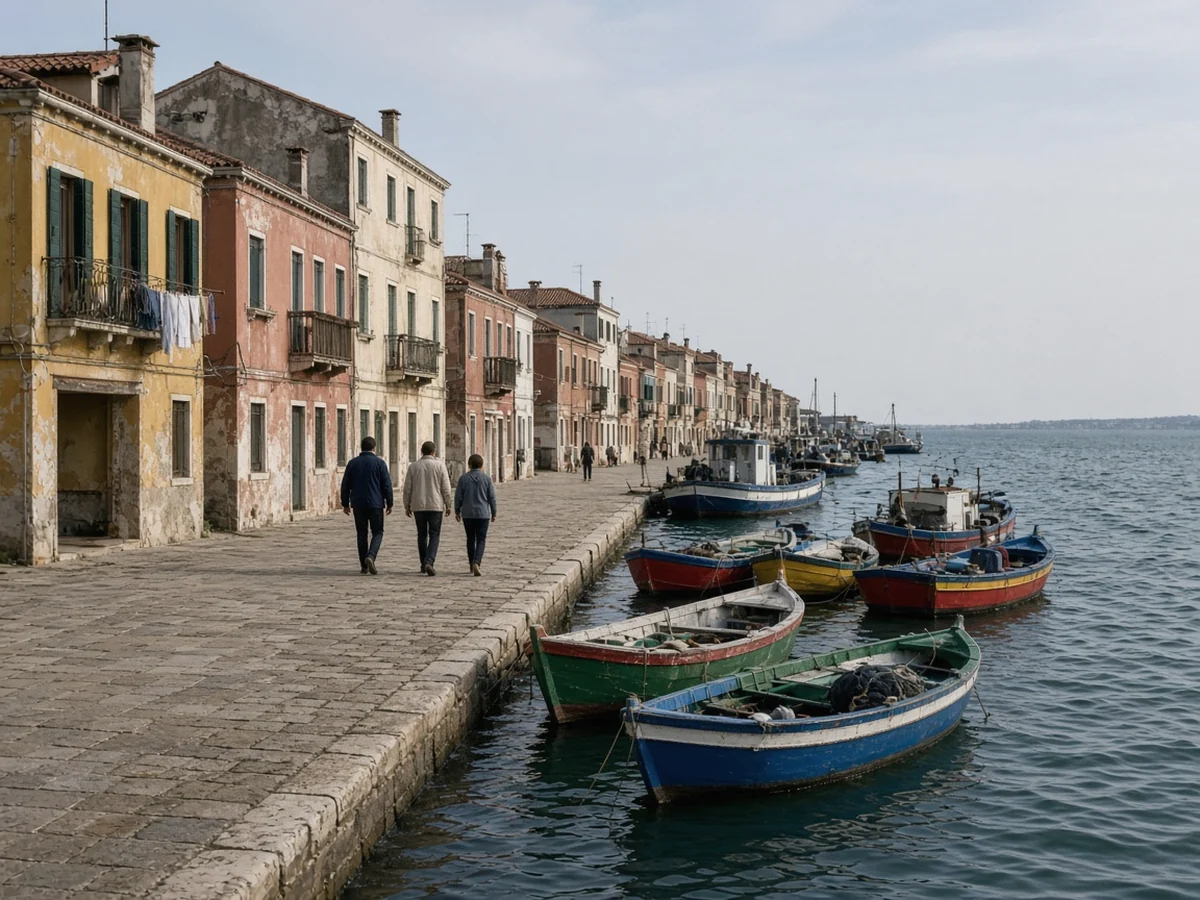
The catch is practical. Many rooms are in old buildings with stairs and no lift, and you will usually carry bags over cobbles from the nearest point a taxi can reach. The harbourfront is noisy in the evening, especially in July and August; a room on the water is a view, not a quiet night. The lanes trap heat at midday. Cruise ships dock at Souda, and tour groups are a regular presence on busy days, so the harbour is at its best early and late. Choose this area if you want to walk out for dinner every night and are happy to take a bus or taxi to the beach. Skip a harbourfront room if you are a light sleeper, travelling with a buggy, or not ready for stairs.
Splantzia and just outside the walls
Splantzia sits at the eastern end of the old town, around a square shaded by a large plane tree, and still feels like part of the historic centre. A few minutes further, the streets just outside the walls, towards the municipal market, are a useful middle ground: you can still walk to the harbour, but you are closer to everyday shops and to the main KTEL bus station on Kydonias and Partheniou Kelaidi Streets.

This is the area we would look at first if you want old-town character without sleeping above a harbour restaurant. It suits couples, independent travellers and anyone using buses for day trips. Ask about street noise, check whether your building has stairs, and leave a car in a public or paid lot, as you would in the rest of the old town.
Nea Chora
Nea Chora (the name means “new town”) is the district immediately west of the Venetian harbour. Official city tourism describes it as the closest sandy beach to the centre, with a coastal promenade and a well-known line of fish tavernas. From most addresses it is about a ten-to-fifteen-minute walk to the harbour, on the flat. Parking is a little easier than inside the walls, though it is still a busy seaside neighbourhood in summer.

It suits families, anyone who wants a swim without boarding a bus, and travellers who prefer a residential evening to a lane of souvenir shops. The beach is a pleasant town beach, organised in season, not one of the big west-coast sands. You can still take Elafonisi, Falasarna or Balos as day trips; do not expect that scenery on the doorstep.
Koum Kapi, Tabakaria and Halepa
Just east of the old-town walls, Koum Kapi (the old “Gate of Sand”) has an elevated promenade, cafes and a small town beach. City tourism notes that it is popular with locals, especially in the evening. It is a walk from the harbour and a good fit if you want a seafront stay with a slightly less touristy rhythm; it can also be lively at night.
A little further east, Tabakaria is the old tannery district. Some industrial buildings have been converted, but the area still has a working edge and is not the first place we would send a first-timer. Halepa, further east again, is the leafy villa suburb of the late 19th and early 20th centuries: calmer and more spacious, but you will not stroll to the harbour on a whim. Use a city bus, a taxi or a longer walk. It suits a quieter room, or a stay that also uses the road out towards Souda and the airport.
Getting around
The old town is best on foot, and much of it is pedestrian. Wear shoes that can cope with cobbles, and plan on carrying bags the last few minutes to your door.
Intercity and regional buses are run by KTEL Chania-Rethymno. The main station is on Kydonias and Partheniou Kelaidi Streets, a short walk from the old town, and it is where you catch buses to the airport, to Rethymno and Heraklion, to Kissamos, and, in season, to some west- and south-coast beaches. Check current times; summer queues build before popular beach departures. Our Crete by bus guide covers the north-coast line.
City buses are a separate network, Chania urban buses. Use them for Souda port (line 13) and nearer suburbs such as Halepa. They do not replace KTEL for the airport or Rethymno. Taxis cover arrivals and awkward hours.
Hire a car for day trips, not for the old town: park outside the historic core and walk in. Chania airport sits on the Akrotiri peninsula; KTEL buses run to the main station, and a pre-booked transfer is simpler with luggage or a late flight. Ferries from Piraeus arrive at Souda, not at the Venetian harbour; use the city bus, a taxi or a transfer into town. See Athens to Crete by ferry or flight.
Nearby beaches and sights
For a swim on foot, start with Nea Chora, then Koum Kapi. For a longer sandy day without a car, the organised beaches around Agia Marina and Platanias are the usual KTEL ride. The famous far-west beaches, Balos and Gramvousa, Falasarna and Elafonisi, are day trips: one per day, not three. Akrotiri, including Stavros, Marathi and the steep cove of Seitan Limania, is much easier with a car.
Give yourself a morning to walk the harbour, Topanas, Splantzia and the museums; things to do in Chania has the detail. The Samaria Gorge has been closed since 1 October 2026 after storm damage. When we checked the official ticket site on 17 November 2026, it showed the park closed from 1 November 2026 to 9 April 2027 for the off-season. Whether it reopens on time in 2027 depends on repairs. If you wanted a gorge walk, look at Imbros or Agia Irini instead, and check they are open.
Chania is a poor single base if Knossos or the far east are the centre of the trip; split the stay, or start from how many days in Crete and where to stay in Crete. Families may also find Crete with kids useful.
Frequently asked questions
Where is the best area to stay in Chania?
For a first visit, the old town or Splantzia is the most satisfying base: you can walk to dinner and see the harbour early and late. Choose Nea Chora if a town beach matters more, or Halepa if you want a quieter residential stay and do not mind a bus or taxi into the centre.
Is it better to stay in the old town or in Nea Chora?
The old town is better for atmosphere and evenings on foot. Nea Chora is better if you want a sandy town beach, slightly easier parking and a more residential feel, at the cost of a 10-15 minute walk to the harbour. Neither replaces a west-coast beach day at Falasarna, Elafonisi or Balos.
Do you need a car if you stay in Chania?
Not for the town itself. The old town, Nea Chora, Koum Kapi and the KTEL station are manageable on foot, with city buses and taxis for Souda and the nearer suburbs. A car, or at least some KTEL or tour days, helps for Akrotiri, the gorges and the quieter beaches. Park outside the old town.
Is Chania a good base without a car?
Yes, it is one of the best car-free bases on Crete, because it sits on the north-coast KTEL line and has enough to fill several evenings on foot. See our guides to Crete by bus and Greek islands without a car. You will still need to plan beach and gorge days around current bus times.
How do I get from Chania airport or Souda port to town?
The airport is on the Akrotiri peninsula. KTEL buses run to the main station, a short walk from the old town; taxis and pre-booked transfers are simpler with luggage or awkward arrival times. Ferries from Piraeus use Souda, east of town, not the Venetian harbour. City bus line 13 serves the port; a taxi or transfer is the easier option late at night. Check current times with the operators.
Is the Samaria Gorge open from Chania?
No, not at the time of writing. The gorge has been closed since 1 October 2026 after storm damage, and the official ticket site, checked on 17 November 2026, showed it closed from 1 November 2026 to 9 April 2027 for the off-season. 2027 reopening is not confirmed. Check the official site and our Samaria Gorge guide before you plan a walk around it.
Sources and useful links
- Chania official tourism: neighbourhoods
- Chania official tourism: Nea Chora
- Chania official tourism: Koum Kapi
- KTEL Chania-Rethymno (intercity and airport buses)
- Chania urban buses (city routes, including Souda port)
- Samaria National Park official ticket site (NECCA)
Bus timetables, ferry schedules, parking rules and hotel opening seasons change through the year. We have not quoted prices or times; check current rates and times with the official source before you go. This is a draft and has not been published.