Where to Stay in Corfu Town: Old Town, Garitsa and the Port
Last updated: 17 November 2026

Short version: stay in the Old Town if you want to walk the lanes after the day visitors leave and do not mind cobbles, stairs and some noise. Stay along Garitsa Bay if you want a slightly quieter seafront and a promenade, still within reach of the centre on foot. Stay towards the New Fortress, Mandouki and the new port if you are arriving by ferry or want a more practical, less pretty base. Corfu Town is the best place on the island to stay without a car, but it is not a beach-resort town: you will take a bus or taxi to a proper beach.
Corfu Town (Kerkyra) is a real city with a UNESCO-listed historic centre, two fortresses, a busy port and an airport on the edge of town. That compactness is the point: you can walk in the evening, eat well, and use the town as the hub of both the blue city buses and the green island buses. The downsides are cruise-ship days, when the centre fills from mid-morning, the lack of a serious beach in the historic core, and parking, which is a poor reason to bring a car into the lanes. This page is about which part of town to book. For the rest of the island, use the Corfu travel guide, which is also the live where-to-stay overview. There is no separate “where to stay in Corfu” page. For what to see, see things to do in Corfu.
We do not name hotels here. Pick the area first, then compare places on their own sites, and read recent reviews for stairs, noise and how close a taxi can get.
Before you travel: fares, schedules, opening hours, tax rates and seasonal rules change often, and the details on this page may be out of date. Always confirm current prices, times and rules with the operator or the official site, or locally, before you travel.
The areas at a glance
The Old Town, including Campiello, is the dense grid of tall Venetian-era houses and narrow lanes (the kantounia) east of the Spianada. The Spianada and Liston, with the Mandraki harbour under the Old Fortress, are the open civic heart of the same historic centre: greener, more formal, still very central. West and north of that core, towards the New Fortress, Mandouki (also written Mantouki) and the new port, the town becomes more working and practical. South of the Old Fortress, Garitsa Bay is a quieter seafront with a promenade. A little further south, Kanoni looks over the famous lagoon and is no longer a walk-everywhere base. The first resort beaches, around Kontokali, Gouvia and Dassia, sit just outside town and are a separate choice.
This map shows places to stay from our partner Stay22; we may earn a commission if you book, at no cost to you.
Which area suits you
| Area | Best for | Watch-outs | Without a car? |
|---|---|---|---|
| Old Town and Campiello | First-timers, couples, evenings on foot, a short culture-first trip | Cobbles, stairs, luggage, lane noise, crowds on cruise days | Excellent |
| Spianada, Liston and Mandraki | A central stay with more open space, easy walks to the Old Fortress | Still busy; cafe prices on the Liston reflect the setting | Excellent |
| New Fortress, Mandouki and the port | Ferry arrivals, a practical cheaper-feeling base, buses out of town | Less atmosphere; port and road noise; not the postcard streets | Excellent |
| Garitsa | A calmer seafront, a promenade, a slightly residential evening | A longer walk to the innermost lanes; the bay is not a big sandy beach | Very good |
| Kanoni | Views over the lagoon, a quieter room south of town | You will need a city bus or taxi into the centre; planes pass low | Good (blue bus) |
| Kontokali, Gouvia, Dassia (just outside) | A swim near town, still close to the airport and buses | A built-up coast road; not Corfu Town itself | Good (blue buses) |
The historic core is walked. A car is a hindrance in the Old Town and only useful if you plan island days beyond the bus network.
Old Town and Campiello
The Old Town has been a UNESCO World Heritage Site since 2007, and it is the best town in the Ionian: a tight, tall, pastel maze with washing lines overhead and small squares opening without warning. Campiello, the oldest quarter, is the quietest and most atmospheric part of that maze, and the most tiring with bags. Stay here if you want to walk out after the cruise groups have gone, find a small taverna, and be in the lanes again at breakfast.

The practical cost is real. The core is pedestrian in practice, the streets are cobbled and sometimes steep, and many rooms are up stairs in old buildings with no lift. You should ask, before you book, how close a taxi can get and how many steps there are after that. On cruise-ship days the centre is crowded from mid-morning; early and late are the times that justify staying here. Rooms near bar streets can be noisy. This is a poor choice if you need step-free access, or if a beach on the doorstep is the main point of the holiday.
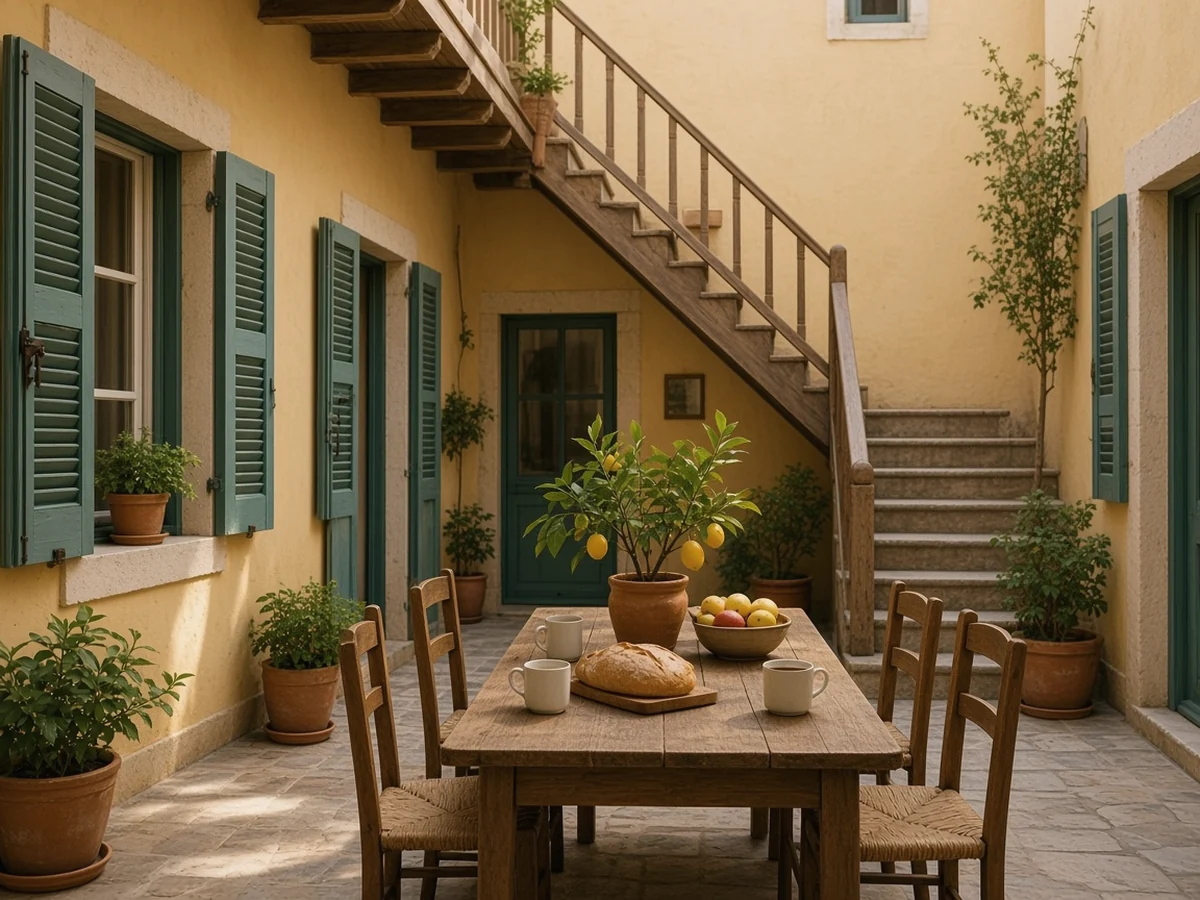
Spianada, Liston and Mandraki
The Spianada is the large green esplanade between the town and the Old Fortress, one of the biggest squares in Greece, with cricket still played on part of it. The Liston, the arcade of cafes along its edge, is the formal front of the same centre: a coffee here is a Corfu ritual, and you pay for the view. Mandraki, the small harbour under the fortress, sits at the eastern edge of this zone.
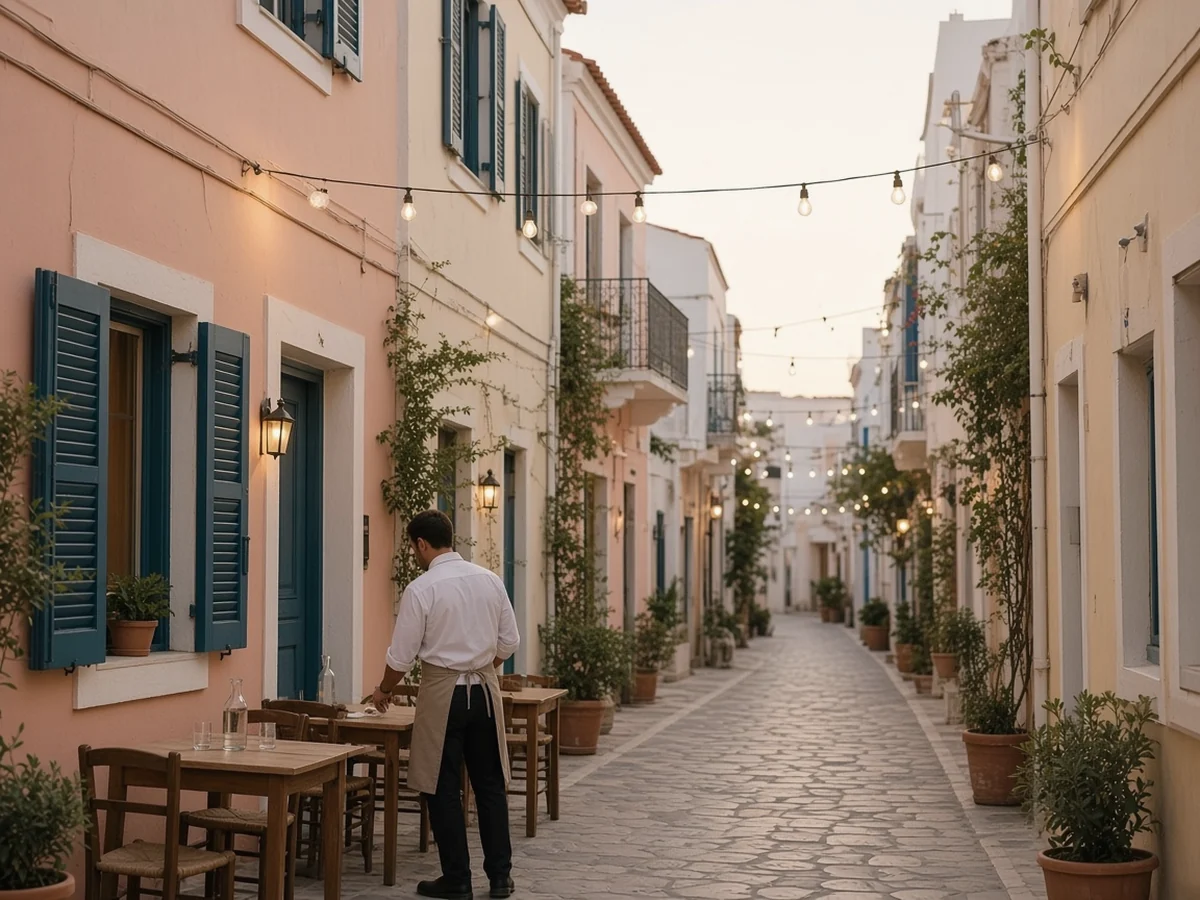
Staying on this side of the Old Town still puts you in the historic centre, but with more air, easier orientation and a shorter walk to the fortress bridge. It can feel a little more open and civic than the innermost kantounia, which some people prefer, especially on a first night. It is not quiet in the high season, and it is not a beach, but it is an excellent no-car base for a short stay.
New Fortress, Mandouki and the port
On the other side of the Old Town, the New Fortress looks over a more workaday slice of the city. Towards Mandouki and the new port, you are closer to the ferries, including boats to the mainland and to Albania, and closer to the green intercity bus station. Blue city bus line 15 also links the port with San Rocco Square and the airport.
This is the practical edge of town rather than the pretty one. You may hear traffic and port activity, and the streets are less about wandering. Choose it if you arrive by ship, if you want an easier in-and-out with buses, or if you would rather spend the atmosphere budget on dinners in the Old Town than on the room itself. Walk up into the lanes when you want them; do not expect those lanes outside the door.
Garitsa and Kanoni
Garitsa runs along the bay south of the Old Fortress: a seafront promenade, neoclassical frontages, and a calmer evening than the innermost Old Town. Locals use the path, and there is small-scale swimming at the little Faliraki beach near the fortress, which is not the same as a big sandy resort beach. From most Garitsa addresses you can still walk into the Spianada, though it is further than a Campiello room and less magical at the front door.
Further south, Kanoni is the hillside and peninsula that looks down on the white Vlacherna monastery and the wooded islet of Pontikonisi. It is a viewpoint and a quieter residential base, not a substitute for staying in town. Planes on the airport approach pass low overhead, which delights some visitors and bothers others. You will use a blue city bus or a taxi to get into the centre; official city-bus information lists the Kanoni line from San Rocco and the Spianada. The wooded estate of Mon Repos sits between Garitsa and Kanoni and is an easy outing from either.
Getting around
Inside the Old Town, you walk. Wear decent shoes, pack bags you can actually carry, and do not plan to park in the historic core. Drivers usually leave the car around San Rocco Square, along Garitsa Bay, or near the new port, then walk or take a short taxi.
Corfu has two separate bus companies, which confuses people. The blue buses, Astiko KTEL Kerkyras, cover the town, the airport, the port and the nearer suburbs and beaches. Line 15 is the useful arrival route: it links the airport with the green intercity bus station, San Rocco Square and the port. The green buses, KTEL Kerkyras, run from the intercity station near the port to resorts and villages around the island, including Paleokastritsa, Sidari, Kassiopi, Glyfada and Kavos. Check current times on both official sites before you choose a base; a town stay makes a car-free week realistic if you are willing to ride out and back.
The airport is on the edge of town, only a short hop from the centre, which is one reason Corfu Town works so well for a first arrival. Taxis are straightforward for that run and for evenings. A hire car is worth considering for two or three island days, not as an all-week companion to an Old Town room; the roads are narrow and winding, and parking at popular west-coast beaches is hard in August. See Greek islands without a car for the wider picture.
Nearby beaches and sights
Be clear about swimming. The historic centre is not a beach base. Faliraki, near the Old Fortress, and the Garitsa seafront are the close-in options, and they are modest. For a more conventional beach day, blue buses along the mid-east coast serve Kontokali, Gouvia and Dassia, a built-up strip that is handy rather than wild. The island’s best scenery is further out, on the north-east pebble coves and the west-coast sands, which are green-bus or hire-car territory. Things to do in Corfu and the Corfu travel guide cover those coasts.
In town, the Old Town itself is the main event, together with the Old Fortress, the quieter New Fortress in its opening season, and the Museum of Asian Art in the palace on the Spianada. On cruise days, walk early or stay out and come back in the evening. Just south, Kanoni and Mon Repos fill an easy half-day without leaving the city buses behind. If you are comparing Corfu with another Ionian island, Corfu vs Zakynthos and Ionian island hopping may help; Paxos is the classic short hop from town by boat.
Frequently asked questions
Where is the best place to stay in Corfu Town?
For a first visit, the Old Town or the streets around the Spianada and Liston. You can walk everywhere that matters in the evening, and you are at the centre of the bus network. Choose Garitsa if you want a calmer seafront and a promenade, or the port side if you are arriving by ferry and prefer a practical base.
Is Corfu Town a good place to stay without a car?
Yes. It is the best car-free base on the island. The Old Town is walked, blue city buses cover the airport, the port, Kanoni and the nearer beaches, and green intercity buses leave from the station near the port for the rest of the island. Check current times with both operators.
Is there a beach in Corfu Town?
Not a major sandy resort beach in the historic centre. There is small-scale swimming near the Old Fortress and along Garitsa Bay. For a fuller beach day, use the blue buses to the mid-east coast, or go further to the west or north-east. If a beach on the doorstep is the main point of the trip, stay on one of those coasts instead, and come into town for the day.
How do I get from the airport to the Old Town?
The airport is on the edge of town. Blue city bus line 15 runs to San Rocco Square, the intercity bus station and the port; from San Rocco or the Spianada you can walk into the Old Town, depending on your exact address. A taxi or pre-booked transfer is simpler with luggage or late at night. Check current times with Astiko KTEL Kerkyras.
Is Corfu Town noisy or crowded?
It can be, especially from mid-morning on cruise-ship days and in the evenings near bar streets. The lanes are at their best early and late. Garitsa is usually calmer at night than Campiello or the Liston. Read recent reviews for the specific street, not just the area name.
Should I stay in Corfu Town or in a resort?
Stay in town for culture, food, a short trip, or a week without a car. Stay on the coast if swimming and a view from the room matter more, and come into town for the Old Town as a day or evening out. The Corfu travel guide compares the island’s coasts.
Sources and useful links
- UNESCO: Old Town of Corfu (listed 2007)
- Astiko KTEL Kerkyras (blue city buses), including line 15 airport-port
- KTEL Kerkyras (green intercity buses)
Bus timetables, ferry schedules, parking rules and museum hours change through the year. We have not quoted prices or times; check current rates and times with the official source before you go. This is a draft and has not been published.