Ferry From Athens to Naxos: Ports, Times and Tips
Last updated: October 2026
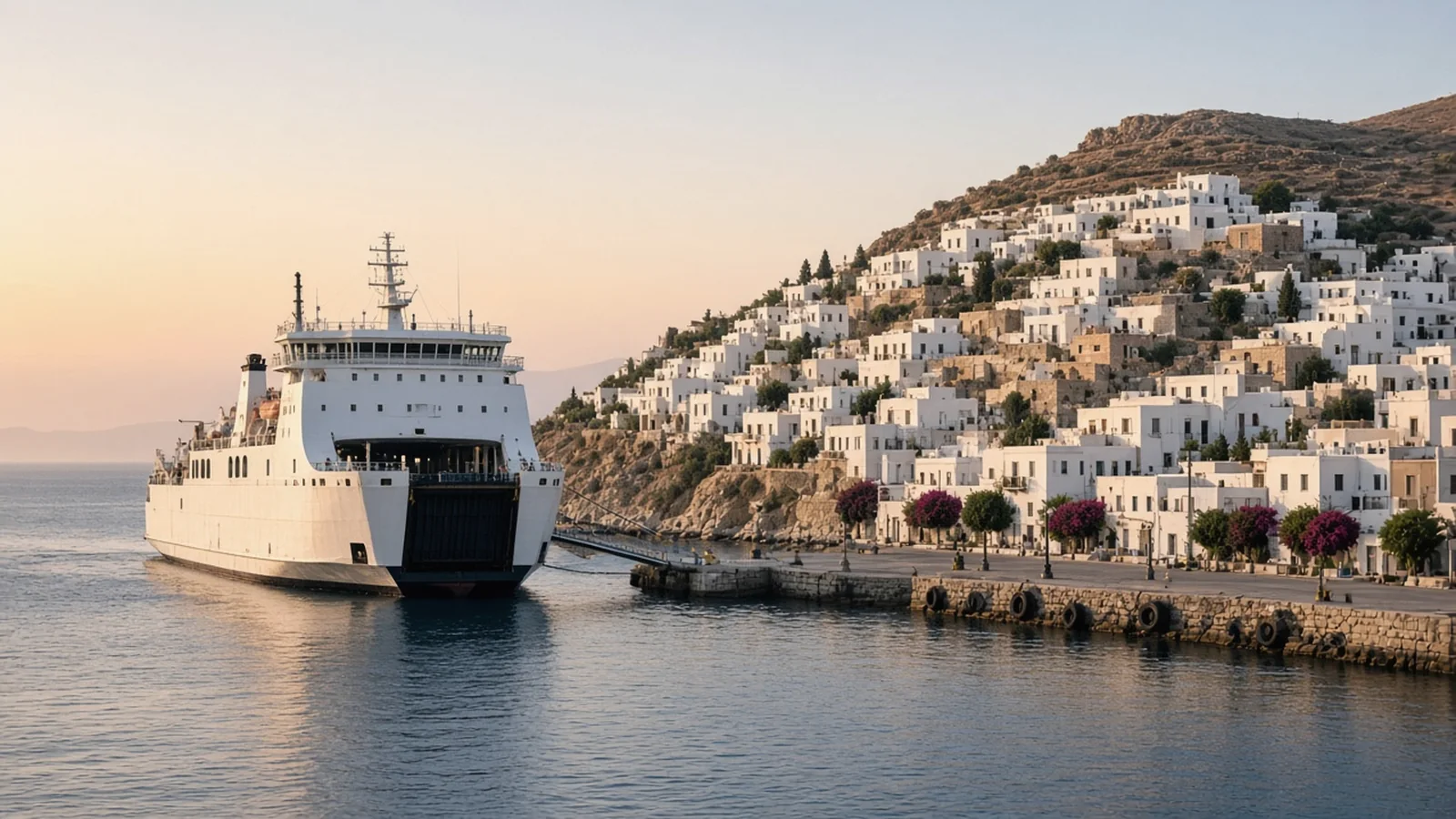
The good news: Athens to Naxos is one of the easiest ferry trips in Greece. The only real decisions are which port, which boat and which day.
Naxos is on the main Cyclades ferry line from Athens, so there are sailings every day of the year from Piraeus, plus seasonal boats from Rafina near the airport. You can choose a high-speed boat that gets you there in about three and a quarter hours, or a big conventional ferry that takes five to seven hours but rides the waves better and usually costs less. All ferries arrive at the port in Chora (Naxos Town), within walking distance of the old town.
This guide covers the two ports, who sails the route, journey times, fast vs conventional, how to reach the port, booking, the wind, and what happens when you arrive. If ferries are new to you, read Greek island ferries for beginners as well. It explains tickets, gates, luggage and seasickness in more detail.
No booking links, no commissions. We link to the operators and to independent timetable sites so you can compare for yourself.
Quick answer: how to get from Athens to Naxos by ferry
Most people: sail from Piraeus. There are boats every day, all year, from about 3¼ hours (high-speed) to about 5¼–7 hours (conventional).
Landing at Athens airport in spring to autumn? Check Rafina too. It’s much closer to the airport, with seasonal sailings (April to October in 2026) of roughly 3¾–4½ hours.
Operators: Blue Star Ferries (conventional) and Seajets (high-speed) from Piraeus; Seajets and Fast Ferries from Rafina in season.
Book ahead for July, August, holiday weekends and any car. Otherwise a few days ahead is usually fine.
Seasick? Take the big conventional ferry, especially on a windy day.
Checked: October 2026 · How we research
Piraeus vs Rafina: which port should you use?
| Piraeus | Rafina | |
|---|---|---|
| Season | All year, every day | Seasonal (April to October in 2026) |
| Fastest trip | About 3¼ hrs (high-speed) | About 3¾–4½ hrs (high-speed) |
| Conventional ferries | Yes, several a day (about 5¼–7 hrs) | Yes, in season, via Tinos and Mykonos |
| Route | Usually via Paros (some via Syros) | Via Andros, Tinos, Mykonos and sometimes Paros |
| From the airport | About an hour by metro, or the X96 bus | Roughly 30 minutes by road (bus or taxi) |
| From central Athens | Easy by metro (Lines 1 and 3) | Intercity bus or taxi |
| Port size | Huge: the gate matters | Small and walkable |
| Best for | Staying in Athens first; winter trips; most choice | Going straight from a morning flight; avoiding the city |
Journey times from Ferryhopper’s route pages and the 2026 timetables on ferries.gr, checked October 2026. Times vary by boat and stops.
Our take: if you’re spending a night or two in Athens first, Piraeus is simpler, because the metro takes you there and it has the most sailings. If you land at the airport in the morning and want to be on Naxos that evening, compare the Rafina sailings: the port is far closer to the airport, and it’s small and easy to use. Lavrio, Athens’ third port, had only one slow ferry a week to Naxos in autumn 2026 (about 9¾ hours, calling at several islands on the way), so it’s rarely the easiest choice.
Who sails from Athens to Naxos, and how long it takes
| Route | Operator | Type | Typical journey time | How often (2026) |
|---|---|---|---|---|
| Piraeus – Naxos | Blue Star Ferries | Conventional | About 5¼ to 7 hrs | 2–3 a day, all year |
| Piraeus – Naxos | Seajets | High-speed | About 3¼ to 4½ hrs | 2–4 a day in season |
| Rafina – Naxos | Seajets | High-speed | About 4¼–4½ hrs | Daily from 3 April 2026 |
| Rafina – Naxos | Fast Ferries | Conventional | Longer; calls at Tinos and Mykonos on the way | Daily, late May to September 2026 |
Sources: Ferryhopper (Piraeus – Naxos operator table and Rafina – Naxos route page); ferries.gr 2026 Seajets Rafina timetable; Fast Ferries routes page. Frequencies are for summer 2026 and change every season. Fast Ferries’ Rafina line ran on to Naxos daily from 25 May to 30 September 2026. High-speed boats from Piraeus are mainly a spring-to-autumn service; in winter, Blue Star’s conventional ferries are the main option, so check before you travel.
Some real examples from the 2026 timetables, so you can picture a travel day:
- Blue Star Patmos (conventional) left Piraeus at 17:30 Sunday to Thursday, calling at Syros and Paros and reaching Naxos at 23:55. The return left Naxos at 09:30 Monday to Friday and reached Piraeus at 14:45 (ferries.gr). That late arrival is the catch with evening boats: book a room that can check you in near midnight.
- Seajets Champion Jet 3 (high-speed) left Piraeus at 08:00 and reached Naxos at 11:20, via Paros, daily from 29 May to 14 September 2026 (ferries.gr).
- Seajets from Rafina: a boat based on Naxos left at 09:00 for Rafina (arriving 13:15) and returned at 14:20, reaching Naxos at 18:40, via Paros, Mykonos, Tinos and Andros (ferries.gr, from 3 April 2026).
Timetables for 2027 weren’t published when we wrote this. Use these as a guide to the pattern, not as times to plan around.

Fast boat or conventional ferry?
| Conventional (e.g. Blue Star) | High-speed (e.g. Seajets) | |
|---|---|---|
| Time from Piraeus | About 5¼–7 hrs | About 3¼–4½ hrs |
| In wind | Big and steady; rarely cancelled | Bumpier; more likely to be delayed or cancelled |
| On board | Open decks, cafés, restaurants, lounges and cabins | Allocated seats indoors, café bar; little or no deck access |
| Price | Usually cheaper | Usually more expensive |
| Season | All year | Mainly spring to autumn |
On a calm day, the fast boat saves a couple of hours. On a windy day, or if anyone in your group gets seasick, the bigger, slower ferry is the more comfortable trip, and on a ship like the Blue Star boats you can sit out on deck with a coffee. Look at the arrival time as well as the duration: an early-afternoon arrival gives you an evening in Chora.
Ticket prices change with the season, the type of seat and how early you book, so we don’t quote them here. Compare current fares on the operators’ own sites or a ferry search site for your actual date.
Getting to Piraeus port
- From the airport: Metro Line 3 runs from the airport to Piraeus in about an hour. The X96 express bus also links the airport with the port and runs around the clock, but it’s slower in traffic. A taxi takes roughly 45 minutes to an hour.
- From central Athens: Metro Line 1 or Line 3 to Piraeus station, which is opposite the central gates.
- Find your gate. Piraeus is a huge port with numbered gates. Ferryhopper says Naxos boats normally leave from gates E4, E6, E7, E9 or E10, but the gate on your ticket and the port’s display boards are what count. If you take a taxi, give the driver the gate number.
- Arrive early. Be at the gate at least an hour before departure, or 1½–2 hours if you have a car.
Our Greek island hopping from Athens guide covers all three Athens ports and whether to sail on the day you land.
Getting to Rafina port
Rafina is a small harbour town on the east coast of Attica, roughly 30 minutes by road from the airport. KTEL Attikis intercity buses run from the airport (about 30 minutes, roughly every one to two hours in autumn 2026, with tickets usually bought on the bus) and from central Athens, or you can take a taxi or pre-booked transfer. The port is compact: you can walk from the bus stop to the ramps. Bus times don’t always line up with sailings, so check them before you rely on one for a morning boat.
Booking and tickets

- When to book: once your dates are fixed for July, August and holiday weekends (Easter, Whit Monday and the 15 August holiday), and as early as possible if you’re taking a car. In spring, autumn and winter there’s usually space a few days ahead.
- Where: on the operator’s site or a ferry search site. E-tickets are standard; check in online if your operator offers it.
- ID: carry your passport or ID card; names on tickets are checked when you board.
- Seats: deck/economy tickets give you access to the public lounges and decks. On a long conventional crossing, a numbered seat or a cabin can be worth it, and cabins are available on the Blue Star ships on this route (Ferryhopper).
- Luggage: there’s no luggage check-in. You leave big bags in a luggage area near the entrance or keep them with you.
Wind, delays and cancellations
In summer the Aegean is often windy. The meltemi, a strong north wind, typically peaks between mid-June and early September. When it blows hard, high-speed boats are more likely to be delayed or cancelled, and on rare occasions the port authorities stop all sailings for a few hours. The big conventional ferries usually keep running.
- Don’t plan a same-day ferry and flight home. Get back to Athens the day before.
- If your boat is cancelled, you’re usually offered another departure or a refund. Contact the operator, or whoever you booked through.
- If the forecast is rough and you’re prone to seasickness, switch to a conventional ferry if you can.

Arriving in Naxos
All ferries dock at the port in Chora, on the west coast. You can walk off the boat into town: the waterfront, the old town and the marble Portara gateway on its islet are all within a few minutes. The KTEL Naxos bus station is by the port, with buses to the west-coast beaches and the villages (check the current timetable on naxosbuses.com), and there’s a taxi rank. In high summer, if you arrive late at night, arrange a transfer with your hotel.
Not sure where to base yourself? Our where to stay in Naxos guide compares Chora, Agios Georgios, Agios Prokopios, Agia Anna and Plaka, and the Naxos travel guide covers what to do once you’re there. Travelling with children? See Naxos with kids.

Flying instead
Naxos has a small airport a few kilometres south of Chora, with flights from Athens on Olympic Air and Sky Express. The flight takes about 40–45 minutes, and in late October 2026 there were about 17 flights a week (2LNR schedule data); schedules change by season. Flying makes sense if your time is short, if you’re connecting from an international flight, or if you get very seasick. The catches: small planes, tighter luggage allowances than the ferry, and fewer flights than sailings, so check the schedules before you choose.
Onward from Naxos
Naxos is a great hub. Paros is a short hop away, and there are boats to Mykonos, Santorini, Ios, Amorgos and the Small Cyclades. For ideas, see our 7-day, 10-day and 14-day itineraries, Paros vs Naxos and Naxos vs Paros vs Milos. Planning without a car? Naxos is one of the easiest islands for that: see Greek islands without a car.
Frequently asked questions
How long is the ferry from Athens to Naxos?
From Piraeus, about 3¼ to 4½ hours on a high-speed boat and about 5¼ to 7 hours on a conventional ferry. From Rafina, the fastest boats take roughly 3¾ to 4½ hours. Times depend on the boat and the number of stops.
Which port is best for Naxos, Piraeus or Rafina?
Piraeus has the most sailings and runs all year, and it’s easy to reach by metro from central Athens. Rafina is much closer to the airport and has seasonal sailings (April to October in 2026), so it’s worth checking if you’re going straight from a flight.
Is there a ferry from Athens to Naxos every day?
Yes. Ferries run from Piraeus to Naxos every day, all year. In summer there are several sailings a day, on both conventional and high-speed boats.
Which ferry companies go from Athens to Naxos?
Blue Star Ferries (conventional) and Seajets (high-speed) sail from Piraeus. From Rafina, Seajets and Fast Ferries run in season. Check the operators’ sites for current timetables.
Should I take the fast ferry or the slow ferry to Naxos?
Take the fast boat on a calm day if time matters. Take the conventional ferry if the forecast is windy, if anyone gets seasick, or if you want open decks and a cheaper ticket.
Do I need to book the Athens to Naxos ferry in advance?
For July, August, holiday weekends and cars, yes. At other times you can usually book a few days ahead, but booking early gives you more choice of times and seats.
Can I go from Athens airport straight to the ferry?
Yes. Metro Line 3 runs from the airport to Piraeus in about an hour, and Rafina is about 30 minutes away by road. Leave plenty of time, and avoid a tight connection after a long-haul flight.
Is it better to fly or take the ferry to Naxos?
The ferry is usually simpler, runs more often and lets you take more luggage. Flying takes under an hour and suits short trips or people who get very seasick.
Sources and useful links
- Ferryhopper: Piraeus–Naxos route
- Ferryhopper: Rafina–Naxos route
- ferries.gr: Blue Star Piraeus–Paros–Naxos timetable 2026
- ferries.gr: Seajets Piraeus–Paros–Naxos timetable 2026
- ferries.gr: Seajets Rafina–Naxos timetable 2026
- Fast Ferries: routes
- KTEL Naxos: bus timetables
- Blue Star Ferries
- Seajets
- Sky Express: Athens–Naxos flights
Ferry timetables, operators and port arrangements change every season. This independent guide is for research and planning; always check the current timetable with the operator before you travel.