How Many Days in Milos? 3 to 6-Day Plans with a Wind Backup
Last updated: October 2026
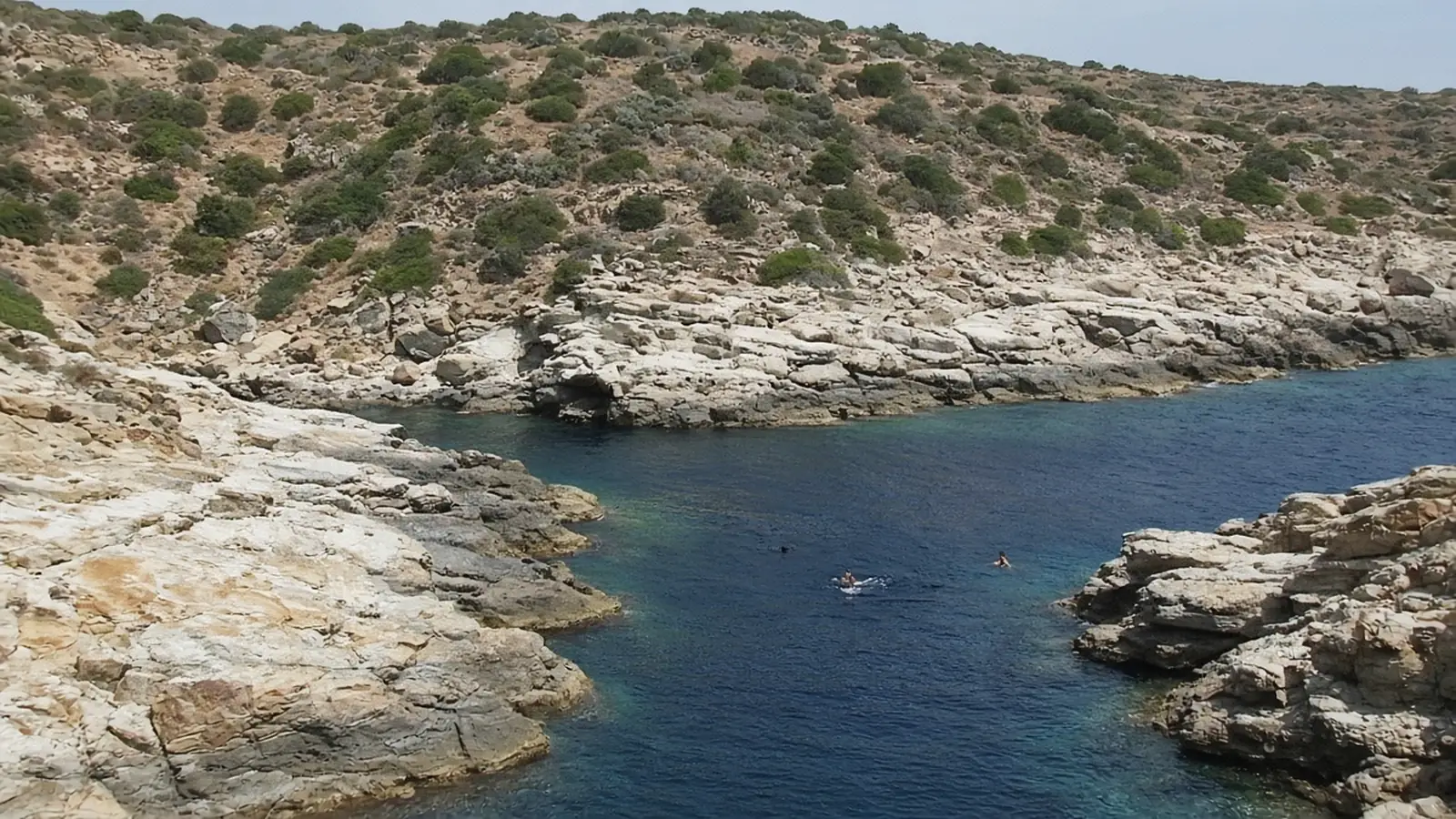
Four or five days is right for Milos. It gives you two land days, a boat day to Kleftiko, a beach day and a spare day for when the wind cancels the boat. Three days works if you’re happy to gamble on the weather.
Milos is famous for its coastline: white rocks, sea caves, coves you can only reach by boat. That’s also why planning matters. The best of Milos is seen from the water, and the boats don’t sail when the wind is strong, which in July and August happens often. This guide gives day-by-day plans for three to six days, built so that you always have a backup. For the island overview, see our Milos travel guide; for the sights, our things to do in Milos guide; for bases, where to stay in Milos.
No booking links, no commissions. Bus times come from Milos Buses’ 2026 timetable and ferry times from the Kimolos local ferry, checked on 29 October 2026.
Before you travel: fares and schedules change often, and the prices and times on this page may be out of date. Always confirm current prices and times with the operator, or locally at the port or bus station, before you travel.
Quick answer: how many days in Milos?
3 days: one boat day, one land day, one beach day. No margin if the wind cancels the boat.
4 days: adds a spare day, so you can move the boat trip. Good for most people.
5 days (our pick): time for Plaka and the north coast, the boat, south-coast beaches and Kimolos, with a day to spare.
6 days: slow mornings, a second boat or sailing trip, or an overnight on Kimolos.
2 days? Possible as a stop on an island-hopping trip, but you’ll probably have to choose between the boat and the land.
Why the wind changes everything on Milos
In summer the prevailing wind, the meltemi, blows from the north or north-east, sometimes for several days. When it does, the north-coast beaches such as Sarakiniko, Papafragas and Plathiena can be rough, while the south coast (Paleochori, Agia Kyriaki, Provatas, Firiplaka) is usually calmer. Boat trips to Kleftiko on the south-west coast may change their route or be cancelled. When the wind comes from the south, the pattern reverses.
So build your plan with flexible days: put the boat trip early in your stay, check the forecast each evening, and swap days around. Sarakiniko is dangerous in a big north swell: in July 2026, Milos’s mayor said the site had lifeguards from 10:00 to 18:00 for the first time that summer, and warned that diving from the rocks isn’t safe when the wind is strong.
| Wind | Do this | Avoid |
|---|---|---|
| Calm or light | The boat trip; Sarakiniko and the north coast | — |
| North wind (meltemi) | South-coast beaches; Plaka and the villages; Kimolos only if the small ferry is running | Swimming at Sarakiniko and the exposed north |
| South wind | North-coast beaches; Plaka; Klima | The south coast |
General guidance; follow flags and lifeguards’ advice.

How long for your kind of trip?
| Your trip | Days | Why |
|---|---|---|
| Island-hopping stop | 3 | A boat day, a land day and a beach day |
| Couples | 4–5 | Sunsets in Plaka, a boat trip, slow beach days |
| Photographers and walkers | 5 | Early and late light at the rocks and fishing villages |
| Families | 5–6 | Shorter days and sheltered beaches |
| Without a car | 4–5 | Bus gaps mean fewer stops per day |
Comparing islands? See Milos vs Santorini and Naxos vs Paros vs Milos.
Getting around Milos
Most people rent a car or a quad on Milos, because the beaches are spread out and many are down dirt roads. But the island’s buses are better than their reputation in high summer. From 13 July to 23 August 2026, Milos Buses ran 17 buses a day from Adamas to Plaka and Trypiti, the last at 00:15, ten a day to Pollonia via Papafragas and the north coast, eight a day to Sarakiniko and six a day to Firiplaka and Tsigrado. The flat fare was €2. Out of season, though, the network shrinks to just two routes.
| Route from Adamas | Summer peak 2026 (13 Jul–23 Aug) | Late October 2026 |
|---|---|---|
| Plaka and Trypiti | 17 a day | 4 a day |
| Pollonia (via Papafragas) | 10 a day | 2 a day |
| Sarakiniko | 8 a day | None |
| Firiplaka and Tsigrado | 6 a day | None |
| Paleochori | 2 a day | None |
Source: Milos Buses (milosbuses.com) 2026 timetable. Winter timetable from 24 October 2026.
Check locally: these times and fares may be out of date. Confirm them with Milos Buses or at the bus stop before you travel.
We’ll cover car-free Milos in its own guide. If you’re driving, a small car is safer than a quad on the island’s dirt roads; helmets are compulsory on any two-wheeler.
Milos in 3 days
| Day | Morning | Afternoon | Evening |
|---|---|---|---|
| 1 | Boat trip to Kleftiko and the south-west coast (if the sea allows) | On the boat | Dinner in Adamas |
| 2 | Sarakiniko early, before the crowds; Papafragas viewpoint | Pollonia for lunch and a swim | Sunset in Plaka |
| 3 | A south-coast beach: Paleochori or Firiplaka | Klima and the painted boathouses; Plaka’s lanes | Ferry or a last dinner |
If the boat is cancelled on day 1: swap days 1 and 3, and try again. If the wind is up for all three days, consider a land-based view of the coast instead; see our backup plan below. Boat trip options will be compared in a separate guide.
Milos in 4 days
Follow the three-day plan, and keep day 4 free as your spare. If the boat went ahead, use it for:
- Plaka properly: the castle hill (Kastro) for the view, the Catacombs and the ancient theatre at Trypiti, and the spot where the Venus de Milo was found in 1820.
- The fishing villages: Klima, Mandrakia and Firopotamos, with their colourful boathouses (syrmata). Respect private homes when taking photos.
- A quieter beach: Provatas or Agia Kyriaki in the south, both sandy and usually calm in a north wind.

Milos in 5 or 6 days
| Day | 5-day plan | 6-day plan |
|---|---|---|
| 1 | Boat trip to Kleftiko | Boat trip to Kleftiko |
| 2 | Sarakiniko, Papafragas, Pollonia; Plaka at sunset | Sarakiniko, Papafragas, Pollonia; Plaka at sunset |
| 3 | South-coast beaches: Paleochori, Agia Kyriaki or Firiplaka | South-coast beaches |
| 4 | Kimolos day trip from Pollonia | Kimolos (or an overnight there) |
| 5 | Spare day: Plaka, Klima, Firopotamos, the Catacombs | Plaka, Klima and the fishing villages |
| 6 | — | Spare day, a sailing trip or a slow beach day |
Kimolos is the quiet island next door. A small car ferry crosses from Pollonia to Psathi in about 25 minutes, several times a day: in late October 2026 there were two or three return sailings a day. Our Kimolos day trip guide has the ferry times and a one-day plan.
Exploring the wider western Cyclades? Our Western Cyclades island hopping guide links Milos with Sifnos, Serifos and Kimolos.
Your wind backup plan
- Book the boat trip for your first full day, with free cancellation or rebooking, and keep at least one spare day after it.
- Check the forecast every evening and swap beach days by wind direction. Our best beaches in Milos guide sorts them by wind.
- Have a land day ready: Plaka, the Catacombs, Klima and Firopotamos are fine in any wind.
- On strong north-wind days, head south: Paleochori, Agia Kyriaki and Provatas are usually calmest.
- Don’t plan Kimolos on a very windy day. The small ferry can be cancelled.
- Leave a day between your boat trip and your ferry off the island, in case both are disrupted.
When to go
June and September are the best months for Milos: warm sea and calmer weather. July and August are hottest, busiest and windiest, with the most boat cancellations. Late May and early October are quieter, but some buses and boats are not yet running or have stopped; in 2026, Milos Buses’ full summer network ran from 25 May to 11 October. Orthodox Easter 2027 falls on 2 May, before most of the summer services start. See our June and September guides.
Getting there: see our ferry from Athens to Milos guide, and ferries for beginners.
Frequently asked questions
How many days do you need in Milos?
Four or five days for most people: a boat day to Kleftiko, a day for Plaka and the north coast, a beach day and a spare day in case the wind cancels the boat. Five also lets you add Kimolos.
Is 3 days in Milos enough?
Yes, for the highlights: a boat day, a land day and a beach day. But there’s no margin if the wind cancels the boat, so book a flexible ticket and do it early.
Is 2 days in Milos enough?
Only as a quick stop. You’ll probably have to choose between the Kleftiko boat and the land sights.
What if the Kleftiko boat is cancelled?
Swap it with a land day (Plaka, the Catacombs, the fishing villages) or a south-coast beach day, and try again the next day. That’s why we recommend a spare day.
Can you see Milos without a car?
In high summer, yes, mostly. In 2026, buses from Adamas reached Plaka, Pollonia, Sarakiniko and Firiplaka several times a day. Out of season, only Plaka and Pollonia had buses, so a car helps.
Is Kimolos worth a day from Milos?
Yes, if you have five days or more. The small car ferry from Pollonia takes about 25 minutes, and Kimolos is quiet, with a fine village and beaches.
When is the best time to visit Milos?
June and September. July and August are busiest and windiest; in May and October some services aren’t running.
Sources and useful links
- Milos Buses: timetable
- Kimolos Link: Osia Methodia ferry (Pollonia–Kimolos)
- To Vima: Sarakiniko safety and lifeguards (July 2026)
- Visit Greece: Milos beaches
Bus, boat and ferry schedules change by season, and boat trips depend on the weather. Times quoted are 2026 examples; check the current ones before you go.