Limnos Travel Guide: Myrina, Dunes and a Distinctive Cuisine
Last updated: November 2026
Before you travel: fares and schedules change often, and the prices and times on this page may be out of date. Always confirm current prices and times with the operator, or locally at the port or bus station, before you travel.
The short version
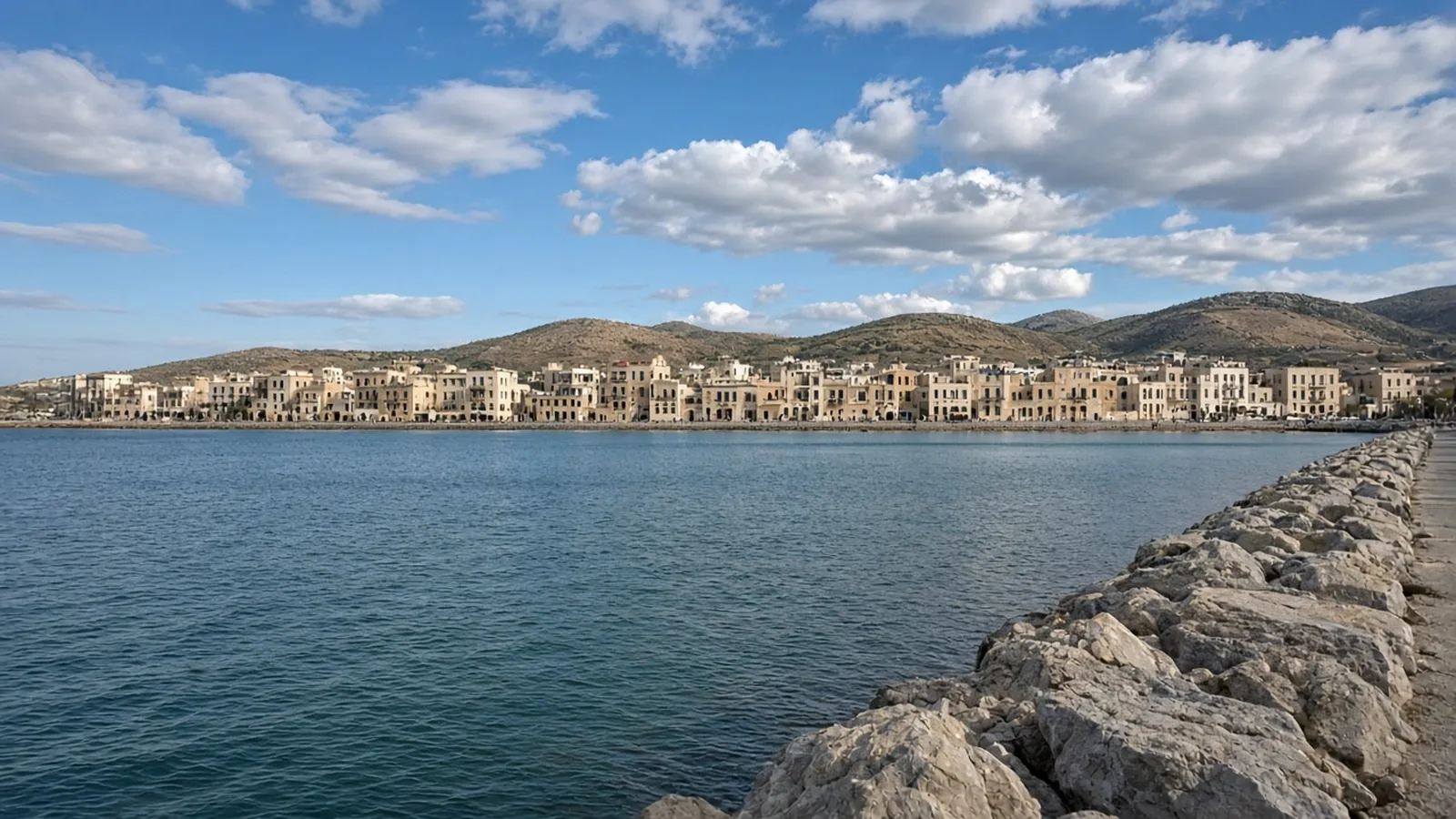
Limnos, also known as Lemnos, is a north-eastern Aegean island with more open ground than many visitors expect. Myth links it to Hephaestus, and the volcanic story is visible in rock formations, dunes and a changing coastline. Fertile plains, wetlands and long sandy beaches sit alongside Myrina, watched over by a well-preserved castle.
It is a place for space, swimming and food rather than for one harbour that contains the whole holiday. A room in Myrina does not put the eastern sites or northern dunes on your doorstep. The compensation is practical access: Limnos has its own airport as well as ferry links from Attica and northern Greece.
Is Limnos right for you?
| Your holiday style | How it fits | What to consider |
|---|---|---|
| Landscape and archaeology | Dunes, rock formations, Poliochni and Hephaestia | Sites and fragile ground need current access checks and careful walking |
| Food and wine travellers | Cheeses, honey and distinctive grape varieties | Specialities are worth asking for, not a fixed menu in every village |
| Beach days with variety | Long sands near town and wilder shores further out | Wind can decide the swimming plan, especially on more exposed coasts |
Limnos suits travellers who like to explore and then come back to a simple swim. It is less satisfying as a purely car-free harbour holiday.
Where to stay
| Base | Why choose it | The trade-off |
|---|---|---|
| Myrina | The capital, castle views, town beaches and the widest choice of services | A proper town, not a single sleepy lane; some rooms sit a walk above the waterfront |
| Platy | A nearby beach village for a sandier, more local swimming base | You will still travel for the castle, the east and the dunes |
| Moudros | An eastern harbour town and a practical base for that side of the island | A different atmosphere from Myrina, with wartime history close by |
| Kontias | A western village with restored windmills and a quieter rhythm | Better with a car; evening choice is smaller than in town |
| A room beside a distant beach | Useful if you want one shore to dominate the stay | Check supplies, wind exposure and how you will reach Myrina |
Myrina is the default first base: ferry connections, the castle above two waterfronts, and enough restaurants to keep evenings easy. Rooms around Romeikos Gialos feel different from those nearer the working harbour, so ask about the walk and night-time noise. Platy, a short hop south, suits a longer sandy beach without giving up easy access to town.
Moudros works if your interest leans east, towards Poliochni and a quieter harbour. Village stays such as Kontias change the pace and almost require a car.
Beaches to put on your list
In and around Myrina, Romeikos Gialos is the sandy town shore and Riha Nera is known for a gentler feel to the water. Further south, Platy (Plati) is a long sandy beach with a more social strip, while Thanos tends to feel calmer. Evgatis is another golden-sand option many families look at first.
Farther out, Gomati sits close to the dune country and suits people who want space more than facilities. Keros is the name most often mentioned for wind and water sports. The Fanaraki pair and Agios Ioannis near Kaspakas are wilder shores. Pick beaches by wind and driving time, not by collecting every name.

Treat beach descriptions as a starting point, not a promise about the sea on your day. Look at waves and the entry before swimming, keep children close and leave if the conditions feel wrong. Carry drinking water, shade and a bag for your rubbish. Do not assume a beach bar, lifeguard or boat back will be available simply because someone mentions one in an older holiday review.
Things to do beyond the beach
Walk up to the castle of Myrina for the island’s defining view. The present fortress is largely Venetian, on earlier Byzantine and ancient ground. Confirm current access and stay on sound paths.
East of the island, Poliochni is a major Early Bronze Age settlement. Tourism language sometimes calls it the oldest city in Europe; read that as interpretation, not as a fact you need to defend after a short visit. Nearby, Hephaestia (Ifestia), including its theatre, occupies another important part of the same landscape. Check opening arrangements before you drive across the island for them.
The Ammothines, or Pachies Ammoudies, are sand dunes near Katalakkos and Gomati: treat them as fragile ground, not a place to drive or slide. Falakra offers sculpted volcanic rock meeting the sea. The roofless chapel of Panagia Kakaviotissa is an unusual countryside visit if access is confirmed. Near Kontopouli, Aliki is a salt lake and bird stopover. At Moudros, the Allied cemetery is a place for a quiet visit connected with the Gallipoli campaign.
What to eat
Limnos has a clearer culinary identity than many beach islands. Look for kalathaki, the basket-shaped cheese made from sheep’s and goat’s milk, and for melichloro (also called melipasto). Wines to ask about include the local red Limnio, known as Kalampaki, and Muscat of Alexandria. Honey and the local split-pea dish afkos belong in the same pantry. Ask what was made that day rather than guessing prices, and do not drive back from a remote beach after drinking.
How to get there
Limnos has its own airport, Hephaestus, with connections that typically include Athens and Thessaloniki. Check current flights rather than an old frequency table, and plan the transfer to your base.
Ferries offer another approach. Sailings from Lavrio are the usual link towards Athens without using the airport; SeaJets is one operator to compare. From northern Greece, Kavala is the principal port to investigate, with Blue Star Ferries among the companies to check. The tourism site’s local arrival guidance page is useful orientation, but you should still confirm the specific sailing. Journey times and weekly counts are omitted because they change.
Build the trip around a service actually offered on your date, then arrange accommodation and transfers. Do not turn a summer route diagram into an assumption about a winter connection. On separate ferry and flight tickets, leave a sensible contingency before the flight home; an overnight buffer is often more useful than a faster boat. Confirm the port printed on the ticket and the luggage or vehicle conditions directly with the operator.
Getting around
A car is the difference between a Myrina-and-nearby-beach holiday and a trip that also includes dunes, Poliochni and more distant sands. Do not drive onto dune or wetland tracks.
Without a car, stay honest about scale. Myrina plus the town beaches and a taxi hop to Platy can work. Taxis will not replace a full-island plan.
When comparing transport, include the whole outing: getting to the start, getting back after dinner and what happens if the weather changes. A car-free base can work well even on an island where a car helps with wider exploring. The important distinction is between choosing a limited, enjoyable radius and expecting to reach every cove without planning. Our car-free island guide explains that trade-off.
When to visit
Late spring is attractive for walking and wetland birdlife before the strongest heat. Early autumn often still suits swimming with fewer people on the larger sands. High summer has the fullest beach life, and wind on exposed shores can send you looking for a more sheltered bay.
| Season | Plan around | Main caution |
|---|---|---|
| Spring | Village walks and countryside rather than a guaranteed swimming holiday | Check open businesses and transport before committing |
| Early summer | A balance of beach time and exploring | Sun exposure and availability still need planning |
| High summer | Book the base and essential journeys ahead | Heat, crowding at popular spots and weather disruption |
| Early autumn | Flexible beach days and walks | Seasonal services may finish before your holiday ends |
These are planning judgements, not a forecast. Spring swimming can feel cool, autumn rain is possible and the wind can change a beach day at any point in the season. We deliberately avoid neat air-temperature averages or promises of warm seas. Choose dates around the activities you care about, then check the forecast and current services shortly before travelling.
A realistic three-day plan
| Day | A manageable plan | Keep it flexible |
|---|---|---|
| 1 | Settle in Myrina, walk the castle if it is open, and swim at Romeikos Gialos or Riha Nera | Do not drive to the far side of the island after a late arrival |
| 2 | Spend a beach day at Platy, Thanos or Evgatis, choosing by wind and how social you want the shore to be | Keep a town evening rather than adding a second long transfer |
| 3 | Choose either the eastern archaeological pair of Poliochni and Hephaestia, or the northern dunes and Gomati | Do not force both landscapes into the same rushed circuit |
This is a suggestion for three usable days, not three dates with a late arrival and an early departure squeezed into them. If the first ferry gets in late, make the first evening only about checking in and finding dinner. Swap the coast day with the village day if the weather turns. Leave one unallocated half-day rather than treating every beach and viewpoint as compulsory.
The honest downsides
Limnos is larger and more open than a harbour postcard suggests. Without a car, many distinctive landscapes stay theoretical. Wind can close down an exposed beach day. A flight solves a lot, but a ferry from Attica is a long-haul choice. Come for space, swimming and food, not for a compact waterfront-only holiday.
For the wider journey, use our ferries for beginners guide and Less touristy Greek islands. This page is an individual island hub, not a timetable or a promise that every neighbouring island has a direct connection.
Frequently asked questions
Is Limnos worth visiting?
Yes, if you want sandy beaches, unusual landscapes and a strong local food culture, and you are willing to travel between them. It is less ideal as a tiny, fully walkable harbour holiday.
Where should I stay on Limnos?
Myrina is the practical town base; Platy suits a nearby beach stay; Moudros helps if you want the east; village rooms such as Kontias change the pace and almost require a car.
Do you need a car on Limnos?
A car makes a large difference on Limnos. A stay centred on Myrina and nearby beaches can work with walking and taxis, but the dunes and eastern sites are not a casual stroll.
How many days should I spend on Limnos?
Allow three usable days for a first look, plus travel time. Stay longer if you want unhurried beach days or walks; the right length depends more on your pace and connections than on a checklist.
How do you get to Limnos?
You can fly into Hephaestus Airport or arrive by ferry, including routes associated with Lavrio and Kavala. Confirm the current flight or sailing; do not rely on an old timetable.
When is a good time to visit Limnos?
Late spring and early autumn are appealing for exploring as well as swimming. High summer is for beach life, with more heat and wind to consider.
Sources and useful links
- Visit Greece: Limnos
- Visit Greece: beaches of Limnos
- Visit Limnos: sights
- Visit Limnos: gastronomy
- Visit Limnos: how to get there
- Blue Star Ferries
- SeaJets
Independent planning guide. Transport, visitor access and seasonal businesses can change; confirm current arrangements directly before travelling.