Lipsi Travel Guide
Last updated: November 2026

Before you travel: fares and schedules change often, and the prices and times on this page may be out of date. Always confirm current prices and times with the operator, or locally at the port or bus station, before you travel.
The short version
Lipsi, also written Leipsoi, sits between Patmos and Leros in the Dodecanese. It has one harbour settlement, a working fishing port, lanes around the church of Agios Ioannis Theologos, and a scatter of sandy and pebbly coves. Mythology links the island with Ogygia and Calypso; treat that as story, not a sightseeing list.
There is no airport. Whether you sail from Piraeus or fly to Kos or Rhodes and continue by ferry, the last step is by sea. Three full days is a sensible first stay, with travel time counted separately.
Is it right for you?
Lipsi suits travellers who want swimming, village evenings and a compact island they can learn in a few days. It is a weak match if you need an airport, broad nightlife or a different resort strip each afternoon. Families can enjoy the nearer shallow bays if they choose an easy approach and accept that some coves have little shade.
| Priority | How to judge the fit | Trade-off |
|---|---|---|
| Quiet swimming days | Many coves sit close to the single village | Popular bays still fill on peak summer afternoons |
| Village atmosphere | Almost everything useful clusters around the harbour and hill | You will see the same lanes more than once |
| Island hopping | Patmos, Leros and other Dodecanese ports sit on the same wider network | Direct timings vary; never assume a same-day chain |
| A very short break | The island itself is small | The sea transfer can use up a thin weekend |
Judge the whole door-to-door journey, not only the hours you hope to spend on a beach.
Where to stay
Official descriptions speak of a single hamlet around the harbour rather than rival resort towns. You are choosing a position inside that settlement, not a hotel ranking or a room price.
| Area | Why consider it | Trade-off |
|---|---|---|
| Harbour and lower village | The shortest bag transfer, nearby tavernas and an easy first evening | Boat noise, evening activity and less privacy at peak times |
| Lanes up the hill | Quieter nights and views over the bay | Steps, gradients and a longer walk with luggage |
| Near a favourite beach access | Useful if swimming is the whole point of the stay | Check the real path or road before treating a map pin as the shore |
Before reserving, ask about luggage access, steps, quay noise and how you will reach the beaches you want. If you arrive on a late boat, a simple walk from the quay matters more than a distant terrace photograph.
Beaches and swimming
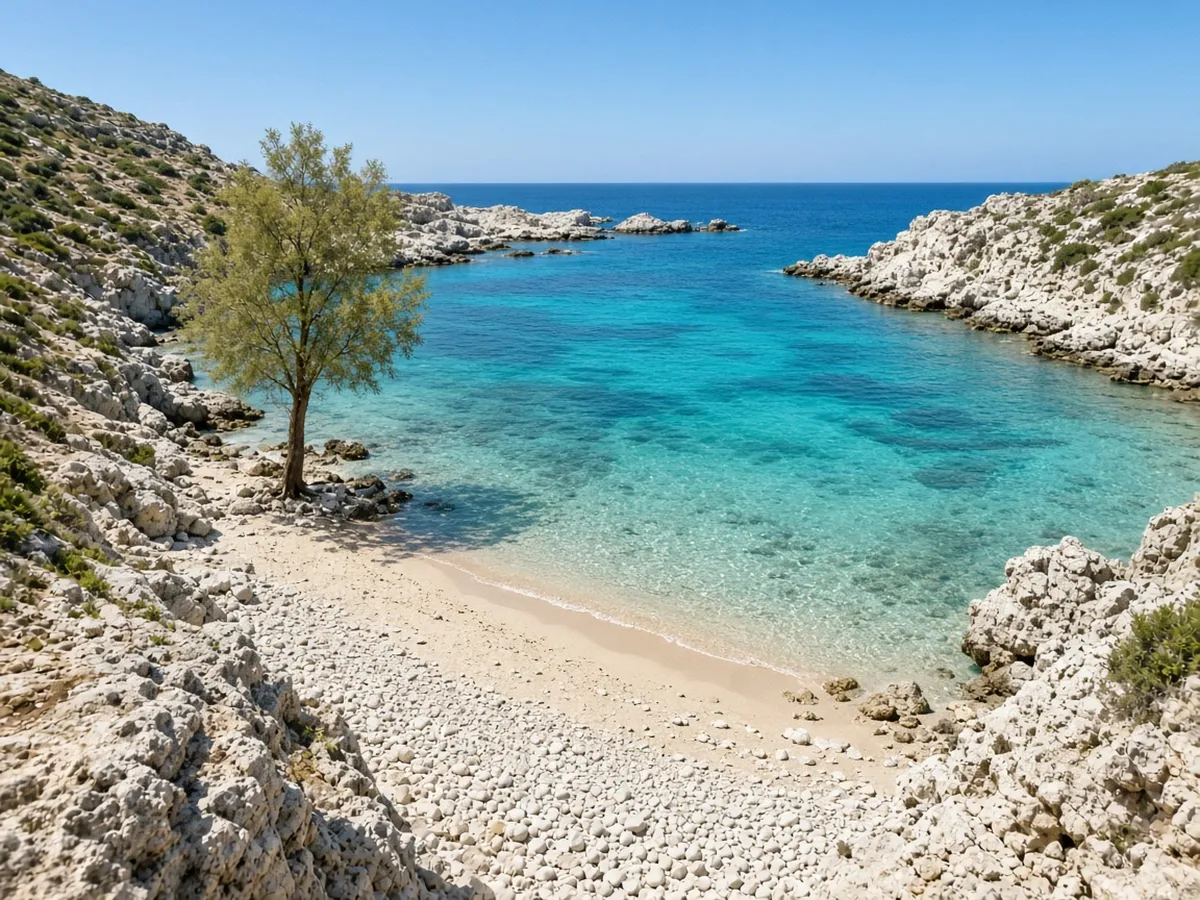
Visit Greece lists many small shores rather than one compulsory beach. Lientou is the handy sandy stop near the harbour; Kambos is a quieter narrow cove. Platys Gialos is known for a sandy seabed, Katsadia for tree shade, Chochlakoura for white pebbles and Monodendri for a wilder rocky setting.
| Beach | Why people go | What to check |
|---|---|---|
| Lientou | Closest sandy swim to the village | It is convenient, not a secret cove |
| Kambos | A simple, quieter sandy bay | Facilities may be limited |
| Platys Gialos | Shallow, sandy-bottom swimming | Confirm shade, parking or any seasonal service |
| Katsadia | Natural shade and a relaxed stop | Nearby coves reward a short extra walk |
| Chochlakoura | White pebbles and clear water | Bring sun protection; pebble shores are not all gently shelved |
| Monodendri, Papandria, Tourkomnima, Xirokambos | More secluded sand or pebble coves | Some involve longer walks, dirt access or a boat |
Koimisi, the Kamares coves and Christos also appear in official beach notes.
Choose each swim for entry, shade and the day’s sea state. Wear suitable footwear on pebble or rock, and do not treat an organised label as a guarantee of a cafe or lifeguard. If you reach a remote cove by boat, confirm the return. The island and neighbouring islets are part of the Natura 2000 network, so leave the shore as you found it.
Things to do beyond the beach
Start with the harbour and the lanes around the church of Agios Ioannis Theologos, a daily reference point for the village. From Koimisi beach a path continues toward Pano Panagia, with views over the harbour. Discover Greece also notes walks to higher ground above the village; pick a modest route, ask about the current path and carry water.
A boat circuit of nearby islets can be the most memorable outing if the sea is kind, because Lipsi is a small cluster rather than a single rock. These trips are seasonal and weather-dependent. A summer wine festival and a late-summer feast around the icon of Panagia tou Harou can draw extra visitors; confirm both rather than treating them as fixed dates.

Food and easy meals
Eat in the village, especially around the harbour. Official notes emphasise local produce and fresh fish. The municipality highlights Fokiano red wine, local cheeses and pies, thyme honey, figs, wood-oven bread and sweets such as xerotigana. Ask what was landed that day, and do not order a whole fish without understanding a weight-based charge. No cafe prices are quoted here.
How to get there
Lipsi has no airport. The Municipality of Lipsi names ferry routes from Piraeus and regional connections involving Rhodes, Kos, Kalymnos, Leros, Patmos and Samos. For current sailings and fares, check Blue Star Ferries, Hellenic Seaways and Dodekanisos Seaways directly. Smaller local boats also appear on some island-to-island patterns; verify the operator, vessel type and port for your exact date rather than copying an old timetable.
A fly-and-ferry plan through Kos or Rhodes can be more realistic than a single long sea journey, but it is still two or more separate tickets. Price and time the whole chain, including any overnight on the larger island, before you commit. Read our ferry guide for beginners if you are new to Greek island connections. Separate tickets usually mean separate risks if the first leg is delayed. Tell your accommodation the confirmed arrival, especially if the boat is due outside ordinary daytime hours.
Getting around
The island is compact, with a modest road network from the village to many beaches. The municipality mentions taxis and public transport toward the shores, and bicycle, motorbike or car hire if you want more of the coast. Walking suits the harbour and nearer bays; do not assume a summer beach bus continues into quieter months.
A car is optional if you sleep in the village and keep most swims close. Hire one only if you want farther coves. The live car-free islands guide explains the trade-off: room location matters more than deciding on a vehicle first.
When to visit
Late spring and early autumn are sensible starting points for swimming, easier walks and a less crowded village. High summer brings more boats and more pressure on popular coves. A local feast can change the harbour for a night or two. Winter needs confirmed rooms and transport, not a summer beach list.
| Season | Planning approach |
|---|---|
| Spring | Good for village walks; check which rooms, boats and beach services have opened. |
| Early summer | Balance swimming with an outing before the strongest midday heat. |
| High summer | Reserve key transport and expect livelier beaches, especially around local events. |
| Autumn | Keep a weather alternative and confirm what remains open. |
| Winter | Plan around the working village and verified boats, not a resort programme. |
Wind matters more than a monthly average. We have not used temperature tables. See the Greek islands in September and the meltemi guide for the wider seasonal picture.
A realistic three-day plan
This is a pace for three full days on the island, not three days including two long ferry rides. Swap the days around for weather, openings and your arrival time. If you have less time, drop an outing rather than compressing all of it.
- Day 1: Arrive without a sightseeing deadline, settle into the village and swim at a nearby bay such as Lientou or Kambos. Keep dinner close to your room if the journey has been long.
- Day 2: Spend a slower beach day at Platys Gialos or Katsadia, then walk a short inland or coastal path if the heat allows. Leave time to wander the harbour at an easier hour.
- Day 3: Choose either a more secluded cove or a boat outing around nearby islets, but only with a confirmed return. Keep the afternoon loose so packing for the next ferry is not a rush.
Honest downsides and common mistakes
The main compromises are access and scale. There is no airport, ferry combinations can be thin outside the main season, and one village means limited shops and evening choice. Popular beaches are not empty simply because the island is small.
The avoidable mistakes are mostly practical: treating Lipsi as a same-day add-on from a distant island, booking a hillside room without checking the luggage route, and assuming every beach has shade, a cafe or a reliable return bus. People who enjoy less crowded Greek islands still need a buffer before an important onward crossing. Do not copy a summer timetable onto a shoulder-season trip.
Before you book
Check the exact accommodation access, both directions of your ferry chain and cancellation terms before paying. Leave a sensible buffer before a flight or a long-distance boat, and keep an alternative swim if the sea is rough.
Frequently asked questions
Is Lipsi worth visiting?
Yes if you want a compact Dodecanese island with one harbour village and straightforward swimming. It is less convenient for a very short trip because there is no airport.
Where should I stay in Lipsi?
Stay in the main settlement around the harbour. Choose a lower-village room for an easy arrival, or a hillside room if you want more quiet and accept steps.
Do I need a car on Lipsi?
Not necessarily. Many visitors walk to nearby beaches and use taxis or seasonal transport for farther coves. A hired bike, motorbike or car helps if you want more of the coast.
How many days should I spend on Lipsi?
Allow at least three full days for the village, several beaches and one longer outing, with ferry time counted separately.
When is a good time to visit Lipsi?
Late spring and early autumn are useful for mixed swimming and village time. High summer has more boats and a livelier harbour. Verify seasonal services for your dates.
Where can I check current ferries to Lipsi?
Use Blue Star Ferries, Hellenic Seaways and Dodekanisos Seaways for your actual date, and verify the exact ports. This guide does not retain unverified departure times or fares.
Sources and useful links
- Visit Greece – Lipsi
- Visit Greece – beaches of Lipsi
- Visit Greece – wine on Lipsi
- Municipality of Lipsi – access and transportation
- Municipality of Lipsi – local products and food
- Discover Greece – Lipsi
- Dodekanisos Seaways – current sailings
Travel services and visitor access change. Check current details directly before booking; adapt walks and swimming to local conditions.