Kefalonia Travel Guide: Beaches, Caves and Where to Stay
Last updated: October 2026

Kefalonia is big, mountainous and green, with some of the most photogenic beaches in Greece. It’s a road-trip island: plan on a car, and plan on more driving than you expect.
Kefalonia (also spelled Cephalonia) is the largest of the Ionian islands, off the west coast of mainland Greece between Lefkada and Zakynthos. It has a high mountain at its centre, Mount Ainos, covered in dark fir forest and protected as a national park; long, white-pebble beaches under cliffs on the west coast; caves and an underground lake near Sami; and pretty harbour villages such as Assos and Fiskardo. Many people know it from the novel and film Captain Corelli’s Mandolin.
It’s less built-up than parts of Corfu and Zakynthos, and it doesn’t have a big party scene. The trade-off is distance. The island is large, the roads are slow and winding, and the public buses are infrequent, especially outside July and August. The devastating earthquake of 1953 destroyed most of the island’s old towns, so places like Argostoli were rebuilt in a plainer style; Fiskardo, in the far north, was largely spared. To choose between the two, see our Kefalonia vs Zakynthos guide.
This guide covers where to stay, the beaches, the caves, getting there, why a car matters, when to go and a five-day plan. No booking links, no commissions: we link to official sites only.
Kefalonia at a glance
| Kefalonia | |
|---|---|
| Where | Ionian Sea, between Lefkada (north) and Zakynthos (south); Ithaca lies just off its east coast |
| Main town | Argostoli, the capital, on a bay in the south-west |
| Airport | Kefalonia “Anna Pollatou” (EFL), south of Argostoli |
| Ferry ports | Poros (from Kyllini), Sami (from Patras, Ithaca and others), Fiskardo, Pessada, Argostoli/Lixouri |
| Best for | Road trips, beaches, nature, couples, families who drive |
| Not ideal for | Car-free trips; nightlife; seeing it all in a few days |
| Car needed? | Yes, for almost everyone |
| Ideal stay | 7 days, ideally split between two bases |
Is Kefalonia right for you?
You’ll probably love it if you like scenery, driving and variety: a mountain forest in the morning, a cave after lunch and a sunset over a white-pebble beach. It suits couples and families who are happy to drive, and walkers in spring and autumn.
It may not suit you if you don’t drive, want nightlife, or only have a few days. Many of the best places are far apart: Argostoli to Fiskardo, for example, is about 50 km, roughly an hour by road. The famous beaches are busy in high summer, and the big west-coast beaches can have strong waves and steep drop-offs.

Where to stay in Kefalonia
| Area | Best for | Honest downsides |
|---|---|---|
| Argostoli | The capital: restaurants, shops, buses, near the airport | A working town rebuilt after 1953; you’ll drive to the best beaches |
| Lassi (near Argostoli) | Beaches close to town and the airport; lots of choice | The island’s main resort strip; under the flight path in places |
| Sami and Agia Efimia | Central east coast: ferries, the caves, Antisamos, Myrtos within reach | Quieter in the evening |
| Assos | Romance, a tiny harbour village, views | Very small; steep road; limited parking |
| Fiskardo | A pretty harbour, upmarket restaurants, boats to Ithaca and Lefkada | Pricier; far from the airport and south |
| South coast (Skala, Lourdas, Katelios) | Long sandy beaches, families | Far from the north; Skala is a resort |
| Lixouri peninsula | A quieter, local feel, red-sand beaches | The far west; you need the ferry or a long drive to Argostoli |
We don’t name hotels in this guide. For a week, many visitors split their stay: a few nights in the south (Argostoli, Lassi or the south coast) and a few in the north (Assos or Fiskardo). It saves hours of driving.
Best beaches in Kefalonia
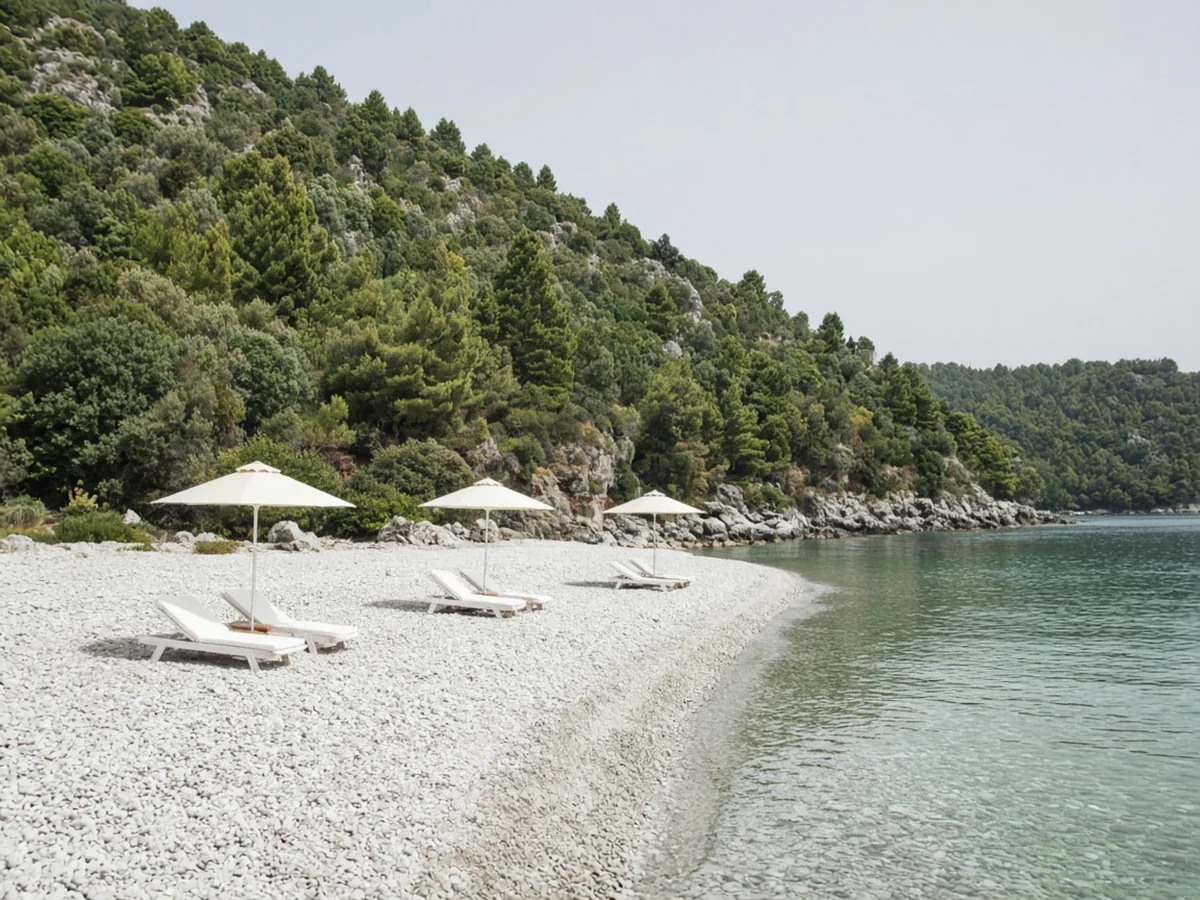
| Beach | Area | Type | Watch out for |
|---|---|---|---|
| Myrtos | North-west | Long white pebbles under cliffs | Rockfalls (a large one in July 2026), waves, a steep winding access road |
| Antisamos | Near Sami | Pebble, wooded hills | Busy; organised |
| Petani | Lixouri peninsula | Pebble and sand under cliffs | Far west; waves |
| Xi | Lixouri peninsula | Red-orange sand, shallow | Organised and busy |
| Makris and Platis Gialos | Lassi, near Argostoli | Sand | Crowds; resort feel |
| Skala and the south coast | South | Long sand | Some beaches are turtle-nesting areas |
| Fiskardo and Assos coves | North | Small pebble coves | Small; fill up early |
About Myrtos: it’s one of the most photographed beaches in Greece, but in July 2026 a large rockfall hit the beach, and the access road has been waiting for permanent repairs, with a contract signed in July 2026. Look at it from the viewpoint on the road above, follow any signs and closures, keep well away from the base of the cliffs, and swim only when the sea is calm.
Things to do beyond the beaches

- Melissani and Drogarati. Melissani is a cave lake near Sami whose roof has partly collapsed, so sunlight falls on the water; you visit by small boat. Drogarati is a large cave with stalactites nearby. The Municipality of Sami runs both. In summer 2026 they were open daily from 09:00 to 18:00, and from mid-October from 10:00 to 15:00, so check before you go.
- Mount Ainos National Park. The island’s high mountain, covered in Kefalonian fir. Drive up or walk the forest trails for huge views.
- Assos and Fiskardo. Two of the prettiest villages in the Ionian. Assos sits below a ruined Venetian castle on a peninsula; Fiskardo has a harbour full of boats and traditional houses that survived the 1953 earthquake.
- Argostoli. The lively capital, with a long waterfront. Loggerhead turtles are often seen in the harbour near the fish market. Don’t feed or touch them.
- Ithaca for the day. Odysseus’s island is a short ferry ride from Sami. Ferries also link Kefalonia with Lefkada in summer.
- Wine. Kefalonia is known for Robola, a white wine grown on the slopes of Mount Ainos.
What to eat in Kefalonia
Look out for Kefalonian meat pie (kreatopita), bourbourelia (a soup of mixed beans and pulses) and local honey, feta and Robola wine. The best tavernas are often in the villages, away from the resort strips.
How to get to Kefalonia
By air
Kefalonia airport (EFL) is south of Argostoli, near Lassi. In summer there are direct flights from many European cities, and Aegean and Sky Express fly from Athens. A KTEL bus runs between Argostoli, Lassi and the airport, but in 2026 only until 20 October and only a few times a day, so a taxi or a hire car picked up at the airport is usually easier. There’s a taxi rank outside the terminal.
By ferry
| Route | Operators (2026) | Typical time | Runs |
|---|---|---|---|
| Kyllini (Peloponnese) – Poros | Levante Ferries | About 1½ hrs | All year, daily |
| Patras – Sami | Levante Ferries | About 3–3½ hrs | All year, most days |
| Sami – Ithaca | Ionion Pelagos, Levante Ferries | About 20–30 min | All year |
| Lefkada – Fiskardo / Sami | Ionion Pelagos, West Ferry, Lefkada Palace | From about 1 hr | Usually May to October |
| Zakynthos – Pessada / Sami | Seasonal operators | About 1½–3 hrs | Summer, usually May to September |
| Bari (Italy) – Sami | Seasonal | About 14 hrs | Mid-July to early September |
Across the bay, the short Argostoli–Lixouri ferry runs through the day; Ionian Sea Ferries publishes the timetable.
Source: Ferryhopper route pages; Levante Ferries’ and Ionian Sea Ferries’ websites, checked October 2026.
From Athens by land, KTEL Kefalonia runs buses that connect Argostoli, Lixouri, Sami and Poros with Patras and Athens, using the ferries. It’s a long day; flying is quicker. If ferries are new to you, read Greek island ferries for beginners.
Getting around Kefalonia
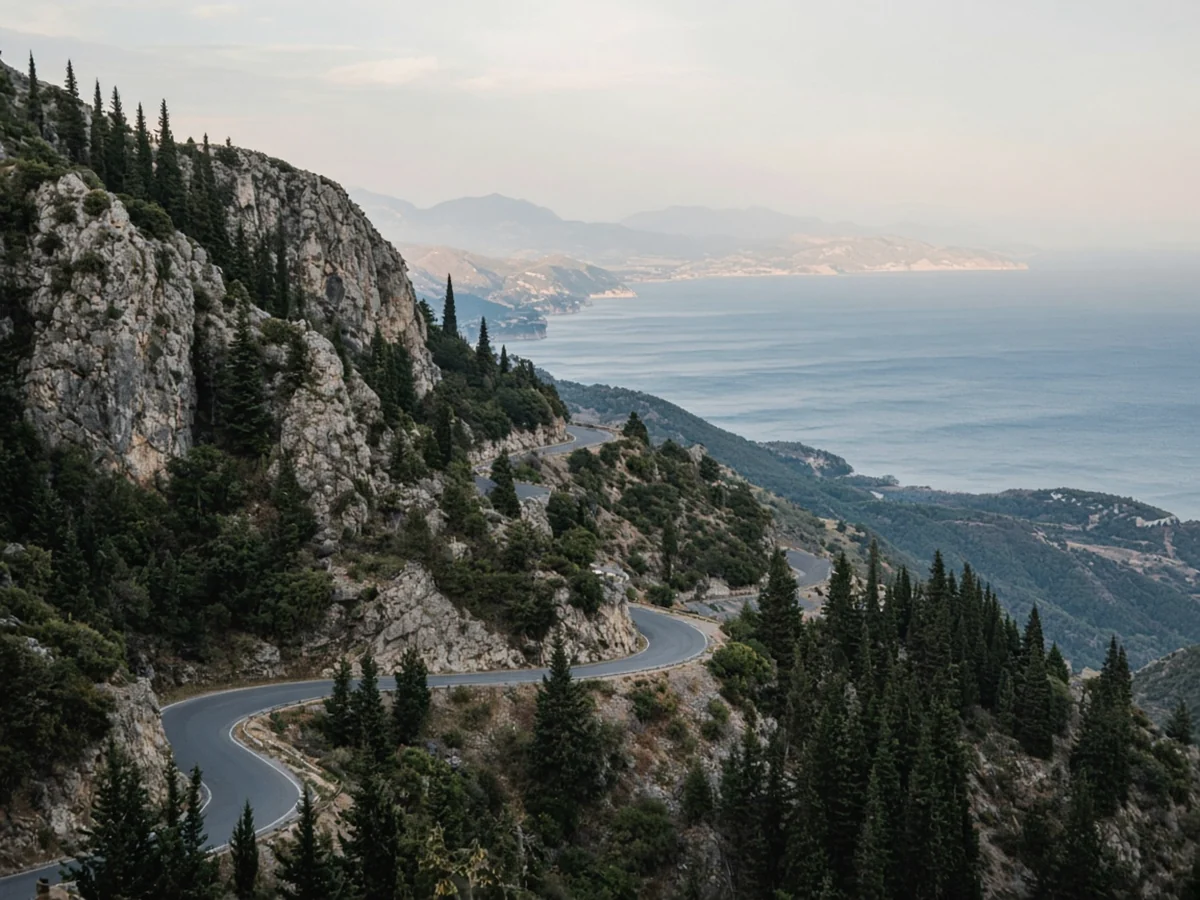
| Option | Good for | Downsides |
|---|---|---|
| Hire car | Almost everything | Narrow mountain roads; parking at Assos, Fiskardo and busy beaches |
| KTEL buses | Argostoli to the main villages | Infrequent; in autumn 2026, Argostoli–Fiskardo ran once a week |
| Taxi | Airport transfers, evenings | Expensive over the distances involved |
| Small boat hire | Coves near Fiskardo, Assos or Sami | Calm weather only |
KTEL Kefalonia publishes its local timetables online. In the autumn 2026 timetable, Argostoli–Sami had a couple of buses a day on weekdays and Argostoli–Fiskardo only one a week, so Kefalonia is one of the hardest Greek islands to see without a car. See Greek islands without a car if you don’t drive: you’ll need to stay in Argostoli or Lassi and book tours or taxis.
When to visit Kefalonia
| When | What to expect | Best for |
|---|---|---|
| May | Green and flowering; sea still cool early on | Walking, driving, quiet |
| June | Warm, open, not yet at peak | An all-round trip |
| July–August | Hot and busy; busy roads and beaches; best bus service | Families tied to school holidays |
| September | Warm sea, fewer people | Beaches, couples |
| October | Mild with more rain; buses and resorts wind down | Walking, a quiet week |
| November–April | Wettest months; most resorts closed | Not for a beach trip |
The month guides for May, June, September and October focus on the Aegean; the Ionian is greener and gets more rain, especially from late autumn.
A realistic five-day Kefalonia itinerary
- Day 1: Argostoli. The waterfront (look for turtles), then a swim at a Lassi beach.
- Day 2: Sami and the caves. Melissani and Drogarati, then Antisamos beach.
- Day 3: The north-west. The Myrtos viewpoint, then Assos for lunch and on to Fiskardo.
- Day 4: Ithaca or the mountain. A day trip to Ithaca from Sami, or Mount Ainos and a winery.
- Day 5: Lixouri peninsula. Petani or Xi beach and a slow sunset.
Common mistakes to avoid
- Not hiring a car. The buses won’t get you to most of the highlights.
- Staying in one far corner for a week. Split your stay, or choose a central base.
- Sitting under the cliffs at Myrtos. Rockfalls happen.
- Arriving at Melissani at closing time. Hours are short outside summer.
- Feeding the turtles in Argostoli harbour. Watch, but don’t feed or touch.
Comparing islands? See our best islands for couples and best islands for first-timers guides, and our Crete guide for another big road-trip island.
Frequently asked questions
Is Kefalonia worth visiting?
Yes, especially if you like scenery and don’t mind driving. It has dramatic beaches such as Myrtos, a cave lake at Melissani, a fir-covered mountain and pretty villages like Assos and Fiskardo, with much less nightlife and development than some other islands.
Do you need a car in Kefalonia?
Yes, for almost everyone. The island is large and the KTEL buses are infrequent, especially outside July and August. Without a car, stay in Argostoli or Lassi and use tours and taxis.
Where is the best place to stay in Kefalonia?
Argostoli or Lassi for convenience and the airport, Sami for a central base near the caves, Assos or Fiskardo for a romantic northern stay, and the south coast for sandy family beaches. For a week, consider two bases.
Can you swim at Myrtos beach?
Yes, when the sea is calm, but take care. A large rockfall hit the beach in July 2026, so follow any signs or closures and stay well away from the cliffs. The sea shelves steeply and waves can be strong.
Is Melissani Cave open?
In October 2026 the Municipality of Sami said Melissani and Drogarati were open daily from 10:00 to 15:00, with longer hours in summer. Check the municipality’s notice before you go.
How do you get to Kefalonia?
Fly into Kefalonia airport near Argostoli, or take a ferry: Kyllini to Poros takes about an hour and a half, and Patras to Sami about three hours. In summer there are also ferries from Lefkada, Zakynthos and Bari.
Can you visit Ithaca from Kefalonia?
Yes. Ferries run from Sami to Ithaca all year, taking about 20–30 minutes, which makes it an easy day trip.
Sources and useful links
- Kefalonia Airport (Fraport Greece)
- KTEL Kefalonia: local timetables
- Municipality of Sami: Melissani and Drogarati
- Ferryhopper: Kyllini–Poros
- Ferryhopper: Patras–Sami
- Ferryhopper: Kefalonia–Ithaca
- Ferryhopper: Lefkada–Kefalonia
- Ferryhopper: Zakynthos–Kefalonia
- Ferryhopper: Bari–Kefalonia
Timetables, opening hours and access to beaches change every season. This independent guide is for research and planning; always check current details before you travel.