Rhodes vs Kos: History and Variety, or an Easy Beach Holiday?
Last updated: November 2026
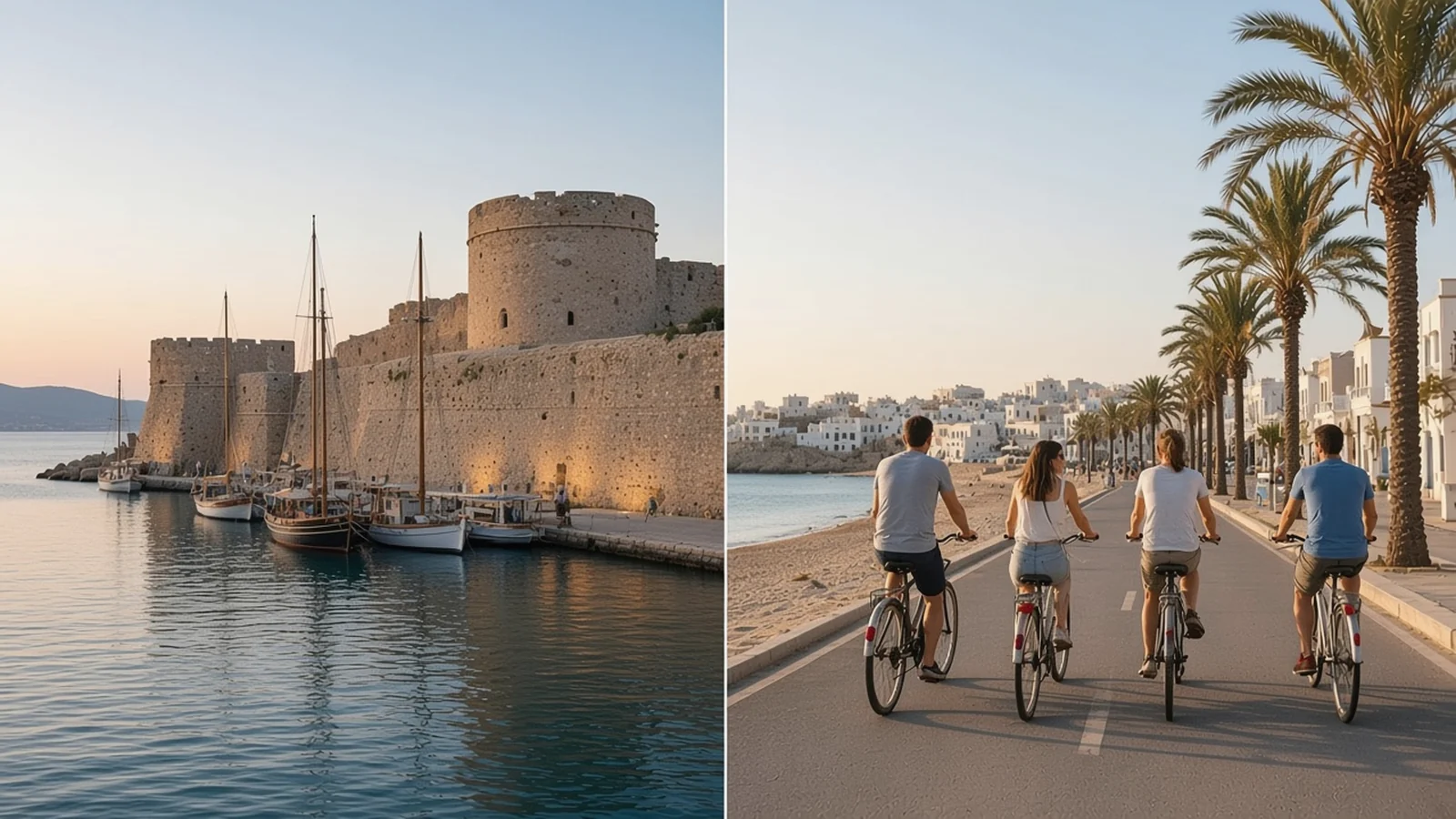
Short version: Rhodes is the bigger, richer island, with a UNESCO-listed medieval Old Town, Lindos, more varied beaches and enough to fill two weeks, but longer drives. Kos is smaller, flatter and simpler: long sandy beaches, easy cycling, ancient ruins in the middle of town and quick hops to little islands. For history and variety, Rhodes; for an easy beach week, Kos. Daily ferries link the two in season.
Both are big, sunny Dodecanese islands close to the Turkish coast, with international airports and plenty of package resorts. Both also have more to them than their resort strips. For each in full, see our Rhodes travel guide and Kos travel guide.
Before you travel: fares, schedules, opening hours, tax rates and seasonal rules change often, and the details on this page may be out of date. Always confirm current prices, times and rules with the operator or the official site, or locally, before you travel.
Quick answer
| Rhodes | Kos | |
|---|---|---|
| Best for | History, variety, a longer stay | Easy beach holidays, families, cycling, island hopping |
| Size | The largest Dodecanese island | About 290 km²; compact |
| Highlights | Medieval Old Town (UNESCO), Lindos, east-coast bays | Asklepion, ancient Kos Town, sandy north coast, Kefalos beaches |
| Terrain | Hilly and varied | Flat north coast, a mountain ridge inland |
| Car needed? | Helpful beyond Rhodes Town and the main bus routes | Not for Kos Town or the north coast |
| Day trips | Symi, Lindos, the wild south | Kalymnos, Nisyros, Pserimos; Bodrum in Turkey |
| Downside | Distances; busy Old Town and Lindos in summer | Resort-heavy; windy north coast; a party resort at Kardamena |
Size and feel
Rhodes feels like a small country: a real city at the northern tip, resort strips on both coasts and a quieter, wilder south. Rhodes Town to Lindos is roughly an hour by road. It rewards a longer stay, but you will spend more time travelling between the places you want to see.

Kos is compact. Its north coast is flat, which makes it one of the easiest Greek islands to explore by bike, and Kos Town has cycle lanes and bike-hire shops. Distances are short, and the island has a relaxed, easy-going feel, even though much of the coast is given over to resorts. Inland, the mountain villages of Zia and Pyli feel a world away from the beach strip.
History and sights
Rhodes wins clearly here. The Medieval City of Rhodes, built up by the Knights of St John, who held the island from 1309 to 1523, is a UNESCO World Heritage Site and one of the best-preserved medieval towns in Europe; it is a lived-in city, not a museum. Lindos, with its acropolis above a white village and a sheltered bay, is the other big sight. Add monasteries, castles and villages inland, and the ancient city of Kamiros on the west coast.
Kos has a different, older story. The Asklepion, a healing sanctuary linked to Hippocrates and the beginnings of medicine, sits on terraces just outside Kos Town, with views to the Turkish coast. In town, ancient ruins lie among the streets, beside the Knights’ castle by the harbour, which reopened to visitors in 2025 after restoration work. It is easy history, all within a short ride.
| Rhodes | Kos | |
|---|---|---|
| Headline site | Medieval Old Town (UNESCO, 1988) | Asklepion |
| Second | Lindos acropolis and village | Ancient agora and the excavated town |
| Inland | Villages, monasteries, the Valley of the Butterflies in summer | Mountain villages such as Zia and Pyli |
| Winter | Old Town lived-in all year; sites on winter hours from 1 November | Fewer services; sites on winter hours |
UNESCO listing; our live Rhodes and Kos guides. Check site hours on Hellenic Heritage.
Check locally: these fares, times and dates may be out of date. Confirm them with the operator or the official site, or locally, before you travel.
Beaches and sea
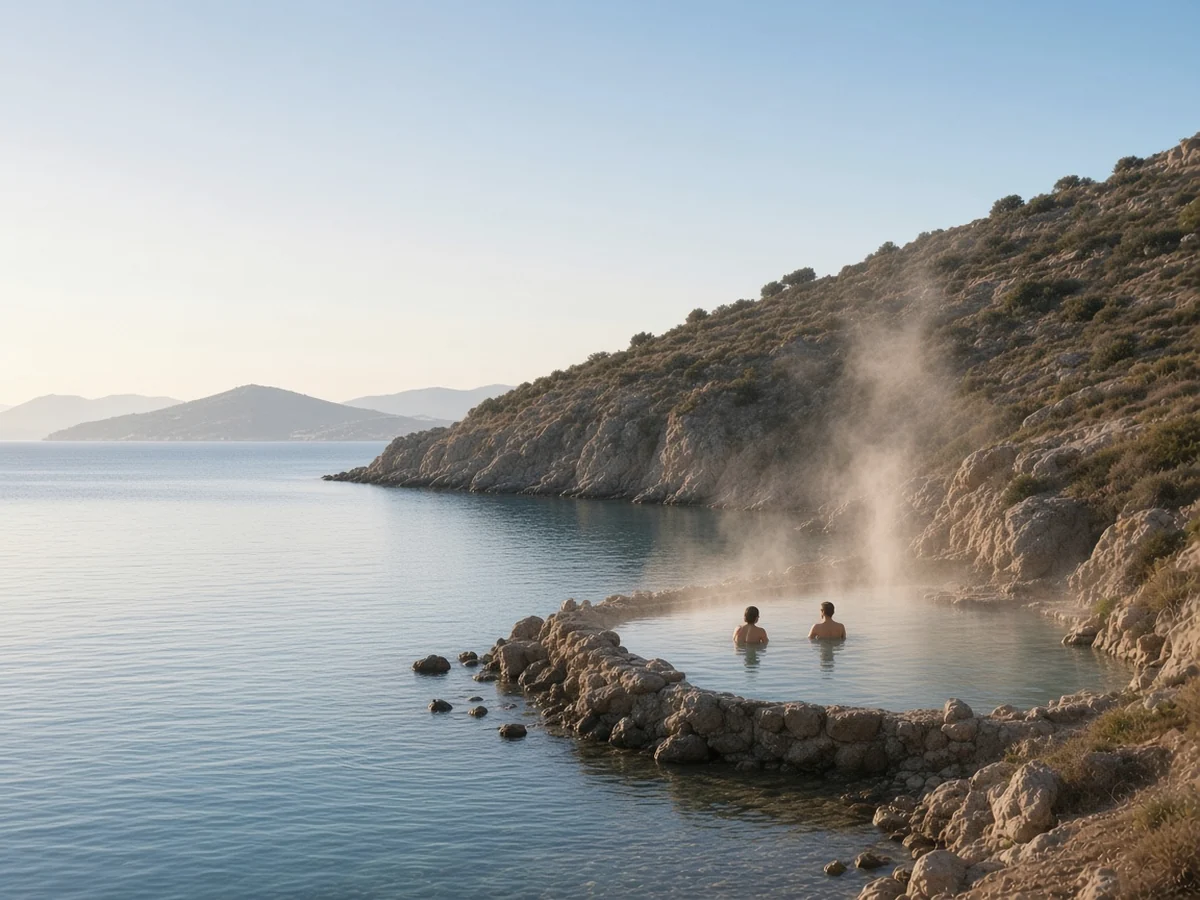
Kos is built for easy beach days: long, shallow sand at Tigaki and Marmari on the north coast, organised beaches along the south coast, and the island’s best scenery in the south-west around Kefalos, including Agios Stefanos with its early Christian basilica ruins. The north coast is windy on many summer afternoons; when the meltemi blows, head south. There is also a natural hot spring running into the sea at Therma.
Rhodes has more variety. The east coast has calmer, warmer water and the famous bays, such as Tsambika, St Paul’s Bay near Lindos and the long resort beach at Faliraki. The west coast is windier and more pebbly. At the southern tip, Prasonisi is a windsurfing and kitesurfing spot where two seas meet.
| Sea temperature (average) | Rhodes | Kos |
|---|---|---|
| June | 22.5°C | 22.1°C |
| August | 26.9°C | 25.1°C |
| October | 24.0°C | 22.7°C |
| November | 21.6°C | 20.8°C |
NOAA OISST v2.1 1991-2020 long-term monthly means for the nearest open-water grid cell, as used in our sea temperature research.
Verdict: for shallow sandy beaches with small children, Kos is easier. For more choice and more beautiful bays, Rhodes. Both have some of the warmest sea in Greece and a long swimming season; see October for late-season trips.
Getting around
| Rhodes | Kos | |
|---|---|---|
| Buses | City buses in Rhodes Town and KTEL island buses; good on the east coast | KTEL buses from Kos Town to the main resorts and airport; town buses |
| Bike | Hilly; fine in town | Excellent on the flat north coast |
| Car | Useful for the south and west, and for Lindos without coach crowds | Only needed for the south-west beaches and villages |
Check current timetables with KTEL Rodou and KTEL Kos.
Check locally: these fares, times and dates may be out of date. Confirm them with the operator or the official site, or locally, before you travel.
Neither island is perfect without a car, but Kos is the easier of the two. See Greek islands without a car.
Getting there
Both have international airports with many seasonal direct flights from Europe, and flights from Athens all year; see the Rhodes and Kos airport pages. By sea, both are long trips from Piraeus, so most people fly. Check current fares/times with Blue Star Ferries if you prefer the overnight ferry.

Families, couples and nightlife
| Rhodes | Kos | |
|---|---|---|
| Families | Good: pick an east-coast base with a sandy beach | Very good: flat, shallow sand, cycling, short transfers |
| Couples | Lindos, the Old Town, the quieter south | The Kefalos area, day trips to small islands |
| Nightlife | Faliraki is the party strip; the Old Town has bars | Kardamena is the party resort; Kos Town has plenty of bars |
| Quiet holiday | The south, beyond Lindos | Mountain villages or the south-west; avoid Kardamena |
For more on each, see the best islands for families and for couples.
When to go
Both islands have a long season, because they lie in the far south-east of Greece where the sea stays warm late. Late May, June, September and early October are the sweet spots: warm water, sights open on summer hours and far fewer coach groups at Lindos and in the Rhodes Old Town. July and August are hot and busy, and the north coast of Kos catches the strong afternoon wind. Rhodes has the edge out of season: Rhodes Town is a real city with life all year, while Kos goes much quieter once the resorts close at the end of October.
Orthodox Easter 2027 falls on 2 May. Rhodes in particular celebrates it in style, but state sites close on Easter Sunday and ferries and rooms are busier with Greek visitors that weekend. For months either side, see May and September.
Doing both
Rhodes and Kos are linked by ferry every day in season, by high-speed catamaran and by larger conventional ships, and the service continues in winter with fewer sailings. A week split as four nights on Rhodes and three on Kos, or the reverse, works well, and on the way you can stop at Symi, which is linked to both. From Kos, Nisyros and Kalymnos make easy day trips. Check current fares/times with Dodekanisos Seaways and Blue Star Ferries. Our 14-day itinerary has ideas for a longer trip.
A day trip from Kos to Bodrum in Turkey is popular in summer, but entry rules depend on your nationality and can change; check the official Turkish and Greek government guidance before you book.
Which should you choose?
| Choose Rhodes if… | Choose Kos if… |
|---|---|
| History is high on your list | You want a simple, sandy beach holiday |
| You have 7 days or more | You have a week or less |
| You will hire a car | You want to cycle or manage without a car |
| You want variety: city, village, wild south | You want to hop to small islands such as Kalymnos and Nisyros |
Still comparing? See the best islands for first-time visitors.
Frequently asked questions
Is Rhodes or Kos better?
Rhodes is better for history and variety, and for a longer stay. Kos is better for an easy, flat beach holiday, especially with children.
Which is bigger, Rhodes or Kos?
Rhodes, by a long way: it is the largest of the Dodecanese. Kos covers about 290 square kilometres.
How do you get from Rhodes to Kos?
By ferry, daily in season, on high-speed catamarans and larger conventional ships, with fewer sailings in winter. Check the current timetable with the operators.
Is Kos good for families?
Yes. The north coast has long, shallow sandy beaches, it is flat for cycling and transfers are short. Avoid Kardamena if you want quiet nights.
Do you need a car on Rhodes or Kos?
On Kos, only for the south-west beaches and villages. On Rhodes, a car helps more, especially for the south and west.
Can you see Rhodes and Kos in one week?
Yes. Four nights on one and three on the other works well, with a daily ferry between them in season. Add a night on Symi if you can spare it.
Which has the warmer sea, Rhodes or Kos?
Rhodes, slightly: its open-water average is close to 27°C in August against about 25°C off Kos.
Sources and useful links
- UNESCO: Medieval City of Rhodes
- Hellenic Heritage: official site hours and tickets
- NOAA OISST sea surface temperature climatology
- Dodekanisos Seaways
- Blue Star Ferries
- KTEL Rodou buses
- KTEL Kos buses
Ferry and bus timetables and site opening rules change every season. We do not quote fares, ticket prices or journey times; check current fares/times with the operators and site hours on the official listings.