The Best Greek Islands for Families, by Your Kids’ Ages
Last updated: October 2026
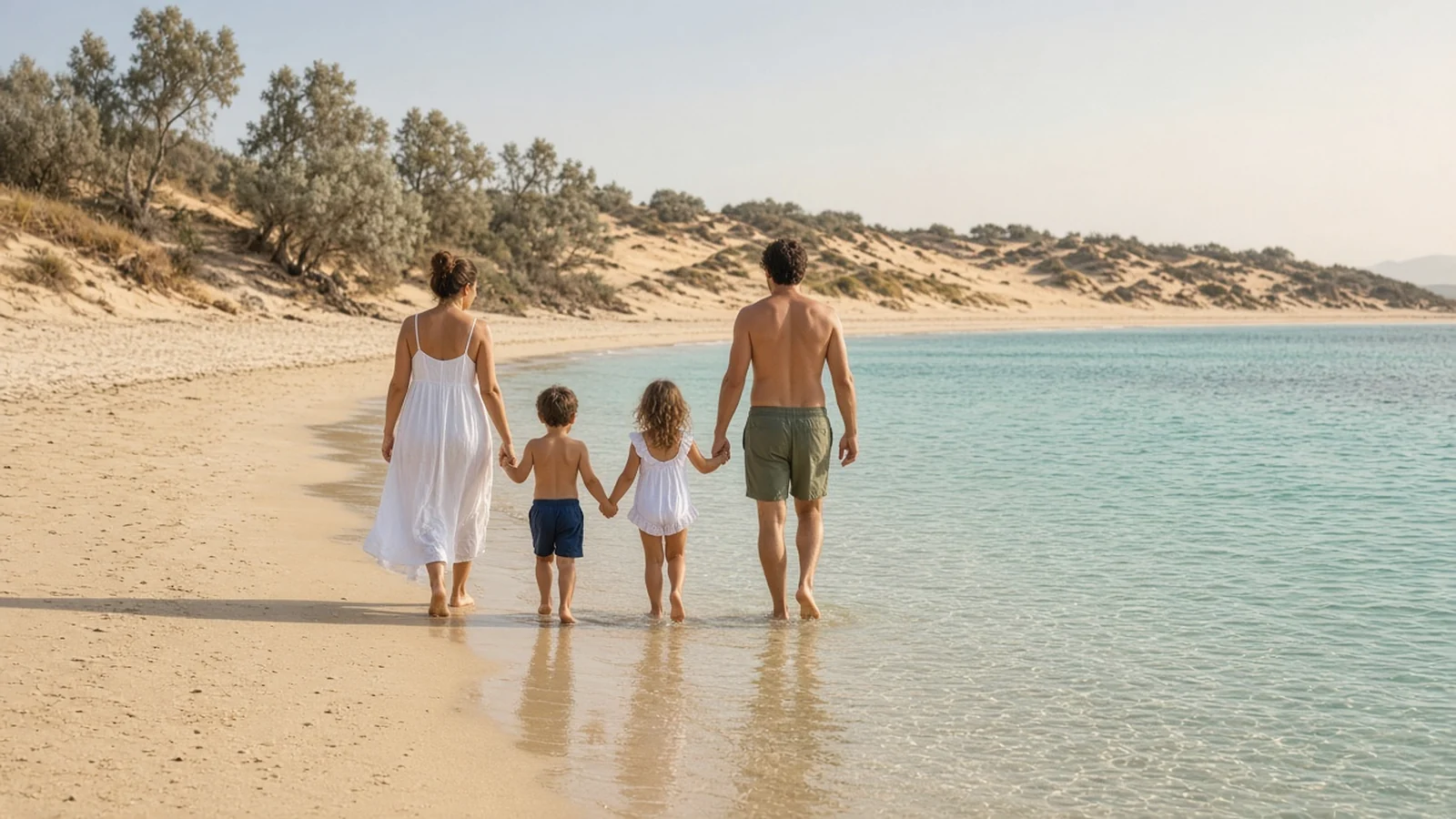
Which island suits a toddler, which suits a ten-year-old, and which will keep a teenager happy, with honest notes on shallow beaches, transfer times and stairs. For a wider pick by beach type, see our best Greek islands for beaches guide.
The best Greek island for your family depends far more on your children’s ages than on which island is prettiest. A toddler needs a short transfer, a shallow sandy beach and a room without 80 steps. A ten-year-old wants snorkelling, boat trips and space to run around. A teenager wants something to do and someone to see. This guide sorts the islands by age group and flags the things holiday listings tend to skip. It sits alongside our best Greek islands for first-time visitors guide and our detailed Naxos with kids guide.
Before you travel: fares, child-fare rules, flights and ferry schedules change often, and the details on this page may be out of date. Always confirm current prices and times with the airline or ferry operator, or locally at the port, before you travel.
Quick answer: the best Greek islands for families
Toddlers and under-5s: Kos, Corfu (north coast) or Rhodes. Each has an international airport, so no ferry is needed, plus long shallow sandy beaches and flat resort areas.
Ages 5–12: Naxos is our top pick, with easy sandy beaches near town, a real town and good food. Crete is the pick if you want variety and don’t mind driving.
Teens: Paros or Naxos for water sports, buses and evening life; Milos for boat trips and snorkelling; Crete for gorges and adventure.
Think twice with small children: Santorini (caldera stairs, hot dark-sand beaches), Folegandros and Amorgos (ferry-only, steep, few sandy beaches). For easier islands with fewer stairs, see our Greek islands with few stairs guide.
What makes an island family-friendly?
We looked at four things that matter more with children than any “family-friendly” label:
- Getting there. An island with direct flights from your home airport can save you a ferry, a port transfer and half a day. Ferry-only islands add hours, and wind can cancel small boats.
- Shallow, sandy beaches near your room. Long, gently shelving sand you can walk to beats a spectacular cove at the bottom of a cliff path.
- Stairs and slopes. Cliff-top villages and old towns full of steps are hard with a pushchair and tiring for small legs.
- Services. Bigger islands have hospitals, more supermarkets and pharmacies, and more choice of family rooms and apartments. Small islands may have only a basic medical centre.
Family verdict table: islands by age
| Island | Toddlers (0–4) | Kids (5–12) | Teens | Getting there | Shallow sand | Stairs and slopes |
|---|---|---|---|---|---|---|
| Kos | ✔ Top pick | ✔ | OK | International airport | Tigaki, Marmari | Mostly flat north coast |
| Corfu | ✔ Top pick | ✔ | OK | International airport | Roda, Acharavi (north coast) | Flat resorts; hilly west coast |
| Rhodes | ✔ | ✔ | ✔ | International airport | Faliraki and other east-coast bays | Lindos is steep |
| Naxos | ✔ | ✔ Top pick | ✔ | Ferry from Athens (about 3¼–7 hours), or a short domestic flight | Agios Georgios, Agios Prokopios, Plaka | Old town has steps; beach areas flat |
| Crete | ✔ | ✔ | ✔ Top pick | International airports (Heraklion, Chania) | Many; some famous ones are long drives | Depends on base |
| Paros | OK | ✔ | ✔ Top pick | Ferry from Athens (about 2¾–5½ hours), or a short domestic flight | Some sheltered sandy bays | Fairly gentle |
| Zakynthos | ✔ | ✔ | OK | International airport | Tsilivi, Alykes | Flat resorts |
| Kefalonia | OK | ✔ | ✔ | International airport | South-coast sandy beaches | Hilly; you need a car |
| Syros | OK | ✔ | OK | Ferry; domestic flights | Calm south-coast bays such as Agathopes | Ermoupoli has steep lanes |
| Milos | Hard | ✔ | ✔ Top pick | Ferry (about 2½–4½ hours) or a short domestic flight | A few sandy beaches; many rocky coves | Rough tracks to some beaches |
| Santorini | Hard | OK | OK | International airport | Dark sand that gets very hot | Caldera villages are steps |
Beach and area notes are from our own island guides; ferry times are from our Athens–Naxos, Athens–Paros and Athens–Milos ferry guides (2026 timetables). Direct international and domestic flights are mostly seasonal and depend on your departure airport, so check current routes for your dates.
Check locally: these fares and times may be out of date. Confirm them with the operator or at the port or bus station before you travel.

Best Greek islands with toddlers and under-5s
With very young children the journey and the walk to the beach matter more than anything. Go for an island you can fly to directly, a base on a long sandy beach, and a ground-floor or lift-served room.
Kos
Our first choice for toddlers. Kos has an international airport, and its north coast around Tigaki and Marmari has long, shallow beaches with flat ground behind them, which is good for pushchairs and bikes. See our Kos travel guide.
Corfu
Corfu’s north coast around Roda and Acharavi has long, shallow, sandy beaches that suit small children, and there are plenty of direct flights in season. The downside: Corfu is greener because it’s wetter, so avoid the shoulder months if you want guaranteed sun. See our Corfu travel guide.
Rhodes
Rhodes has the warmest sea of the islands we track and a long resort coast with facilities. Faliraki’s long sandy beach is a common family base. Lindos is beautiful but steep, so visit it rather than stay in it. See our Rhodes travel guide.
Also good: Zakynthos (Tsilivi or Alykes), and Naxos if you’re happy to take a ferry: stay near Agios Georgios in town or at Agios Prokopios.
Toddler checklist
- Ask the hotel about steps between the street, your room and the beach; listings rarely mention them.
- Ask for blackout blinds, a cot and a fridge in advance.
- Bring or book a car seat. Taxi and hire-car seats can’t be guaranteed on small islands.
- Plan beach time early and late. Midday sun is fierce, and sand gets very hot by the afternoon.
Best Greek islands for kids aged 5–12
This is the easiest age for island holidays. Children can manage a ferry, a short hike and a bus ride, and they’re thrilled by snorkelling and boat trips.
Naxos
Our top pick for this age. You get sandy beaches close to town (Agios Georgios is walkable from Chora; Agios Prokopios, Agia Anna and Plaka are short bus rides), a real town with plenty to eat, mountain villages for a day out, and ferries to most of the Cyclades. Our Naxos with kids and where to stay in Naxos guides go into detail.
Crete
Crete has the most variety: beaches, caves, Knossos, gorges and old harbour towns. The catch is distance. Pick one or two bases and limit driving days, because famous beaches such as Elafonisi are long drives from the main towns. See our Crete travel guide and our Crete with kids guide.
Paros
Similar to Naxos, but a little smaller and busier. Naoussa and the east coast are popular family bases, and the island is gentle to drive. See our Paros travel guide and where to stay in Paros.
Kefalonia and Syros
Kefalonia has lovely sandy beaches on its south coast and real wow factor, but you need a car. Syros has calm bays on its south coast, such as Agathopes, and a lived-in town, though Ermoupoli’s upper lanes are steep.
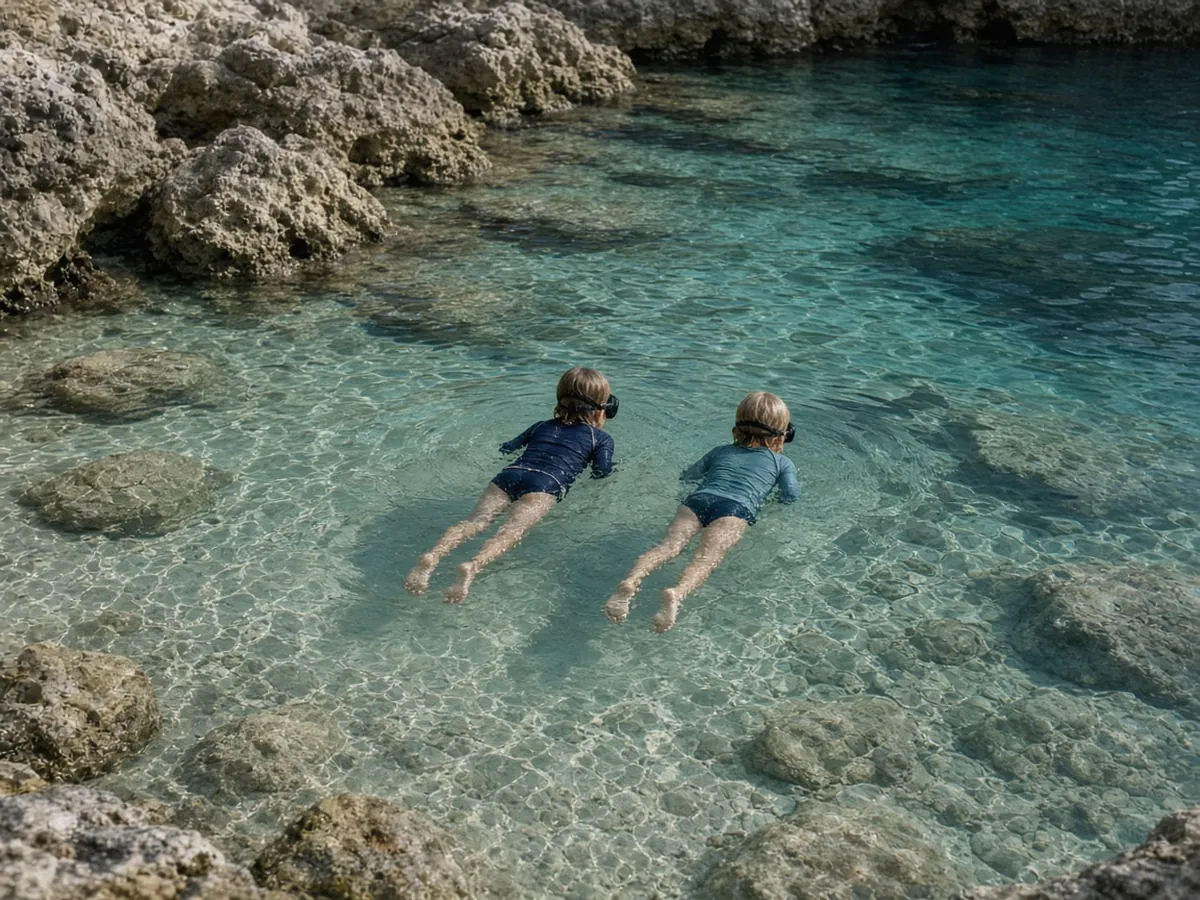
Best Greek islands for teenagers
Teenagers want independence, activity and a bit of life in the evenings. Choose an island with buses, water sports and a lively (not wild) main town.
- Paros: lively Naoussa and Parikia, good buses, and windsurf and kitesurf schools on the windy east-coast beaches around Golden Beach.
- Naxos: Mikri Vigla is a well-known kitesurfing beach, plus hikes up Mount Zas, the island’s highest peak, and the big beaches south of town.
- Milos: boat trips to Kleftiko’s sea caves and arches, cliff-jumping coves and snorkelling. Operators such as Polco run Kleftiko trips from April to October.
- Crete: gorges, caves and long beach days. Samaria Gorge is a big walk and its season varies (in 2026 it opened on 19 May and closed in early October after storm damage), so check the official park site before you plan around it.
Mykonos and Ios are famous for nightlife, but much of it is late-night clubbing aimed at adults, so they’re not ideal for a family trip with teens.
Islands to think twice about with small children
- Santorini. The caldera villages of Fira, Imerovigli and Oia are a maze of steps, many hotels are only reached on foot, and the beaches are dark volcanic sand or pebbles that get very hot. With older children it’s a great two-day visit.
- Folegandros and Amorgos. Wonderful for walkers, but they’re ferry-only, steep, and have few sandy beaches.
- The Small Cyclades. Islands such as Koufonisia have lovely shallow water, but medical services are basic and boats can be cancelled by wind.
Practical tips: ferries, sights and health
Ferries with children
Children travel cheaply. Blue Star Ferries’ current terms give under-5s free travel in Economy on conventional ships (half price for numbered airline-style seats and cabins) and 50% off for ages 5 to 10. On the local Small Cyclades Lines ferry, the 2026 price list showed under-4s free and ages 4–10 at half price. Child-fare rules differ by operator and change from year to year, so confirm them when you book. Big conventional ferries are steadier, with more space to move around, which is useful if anyone gets seasick. Read Greek island ferries for beginners.
Free entry to sites and museums
At state archaeological sites and museums, children and young people often get in free: visitors from EU countries up to age 25, and from non-EU countries up to age 18, with ID (Greek Ministry of Culture). Bring passports.
Heat, sun and wind
- July and August can be very hot. Plan sightseeing for early morning and rest in the afternoon.
- The summer meltemi wind can make some beaches rough. Pick a sheltered beach on windy days and use flotation aids that suit your child.
- For a warm sea without peak heat, go in June or September if school dates allow. See our June and September guides.
Health
Large islands such as Crete, Rhodes, Kos and Corfu have hospitals. Small islands may have only a health centre or a doctor’s office and a pharmacy, and serious cases are transferred. If a child has a medical condition, a big island is the safer choice, and it is worth checking where the nearest hospital or health centre is before you book.
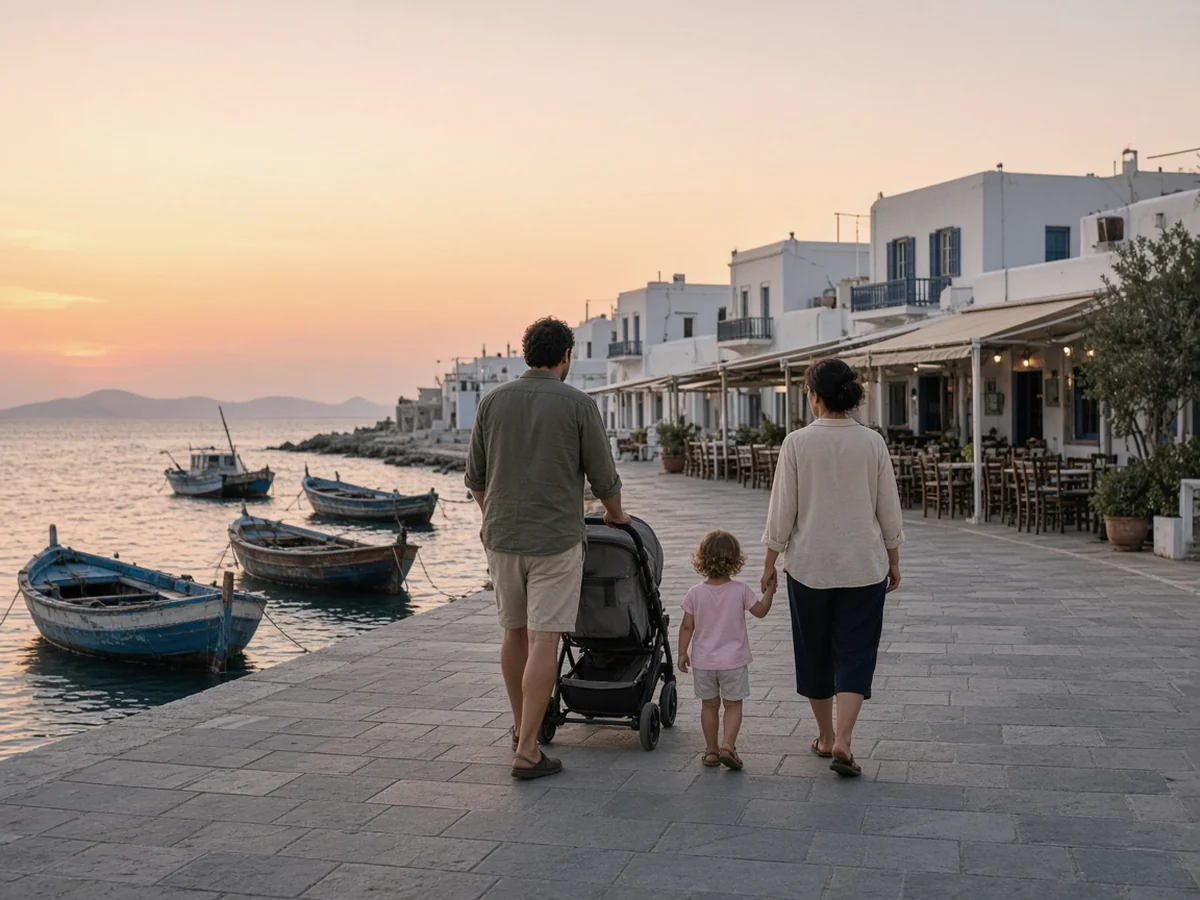
Sample family trips
A week with a toddler: Kos
Fly direct to Kos and stay seven nights on the north coast near Tigaki or Marmari. Add a day in Kos Town and, if everyone’s happy on boats, a calm-day excursion.
10 days with primary-age kids: Naxos and Paros
Five nights in Naxos near Agios Georgios or Agios Prokopios, then a short ferry to Paros for five nights. Our 10-day Paros and Naxos itinerary has the details.
Two weeks with teens: Crete, or Naxos and Milos
Split Crete between Chania and the north-east, or combine Naxos for beaches and kitesurfing with Milos for boat trips. Our 14-day Greek island itinerary can help with routes.
Our recommendation
With under-5s, keep it simple: a direct flight to Kos, Corfu or Rhodes, and a room on a shallow sandy beach. With 5–12-year-olds, Naxos is hard to beat, with Crete as the adventurous option. With teenagers, Paros, Naxos and Milos give them independence and things to do. Whatever their ages, check the stairs before you book, keep transfers short and leave a spare day in case the wind cancels a boat.
Frequently asked questions
Which Greek island is best for families?
It depends on your children’s ages. For toddlers, Kos, Corfu or Rhodes, which have direct flights and long shallow beaches. For ages 5–12, Naxos or Crete. For teenagers, Paros, Naxos, Milos or Crete.
Which Greek islands have shallow beaches for toddlers?
Good examples are Tigaki and Marmari on Kos, Roda and Acharavi on Corfu’s north coast, Agios Georgios and Agios Prokopios on Naxos, and Tsilivi and Alykes on Zakynthos. Conditions change with the wind, so always check before you swim.
Is Santorini good for families with small children?
It’s not ideal. The caldera villages are full of steps, many hotels are only reachable on foot, and the beaches are dark volcanic sand that gets very hot. It works better as a short visit with older children.
Do children pay on Greek ferries?
Usually less. Blue Star Ferries lets under-5s travel free in Economy on conventional ships and gives 50% off for ages 5–10. Small Cyclades Lines showed under-4s free and ages 4–10 at half price in 2026. Rules vary by operator.
Do children pay to enter Greek museums and archaeological sites?
At state sites and museums, visitors from EU countries up to 25 and from non-EU countries up to 18 get free admission with ID, according to the Greek Ministry of Culture.
What is the best time to visit the Greek islands with kids?
June or September, if school dates allow, for warm sea without peak heat and crowds. In July and August, plan beach time and sightseeing for mornings and late afternoons.
Sources and useful links
- Blue Star Ferries: discounts for the Cyclades, Dodecanese, N. Aegean and Saronic islands
- Small Cyclades Lines (Express Skopelitis)
- Greek Ministry of Culture: free admission to state sites and museums
- Polco: Milos Kleftiko trips
- epaithros.eu: Samaria National Park opening, 19 May 2026 (OFYPEKA notice)
Beach conditions change with the wind and season; always supervise children in the water. Fares and admission rules change; check them before you travel.