Best Time to Visit Santorini
Last updated: 22 November 2026
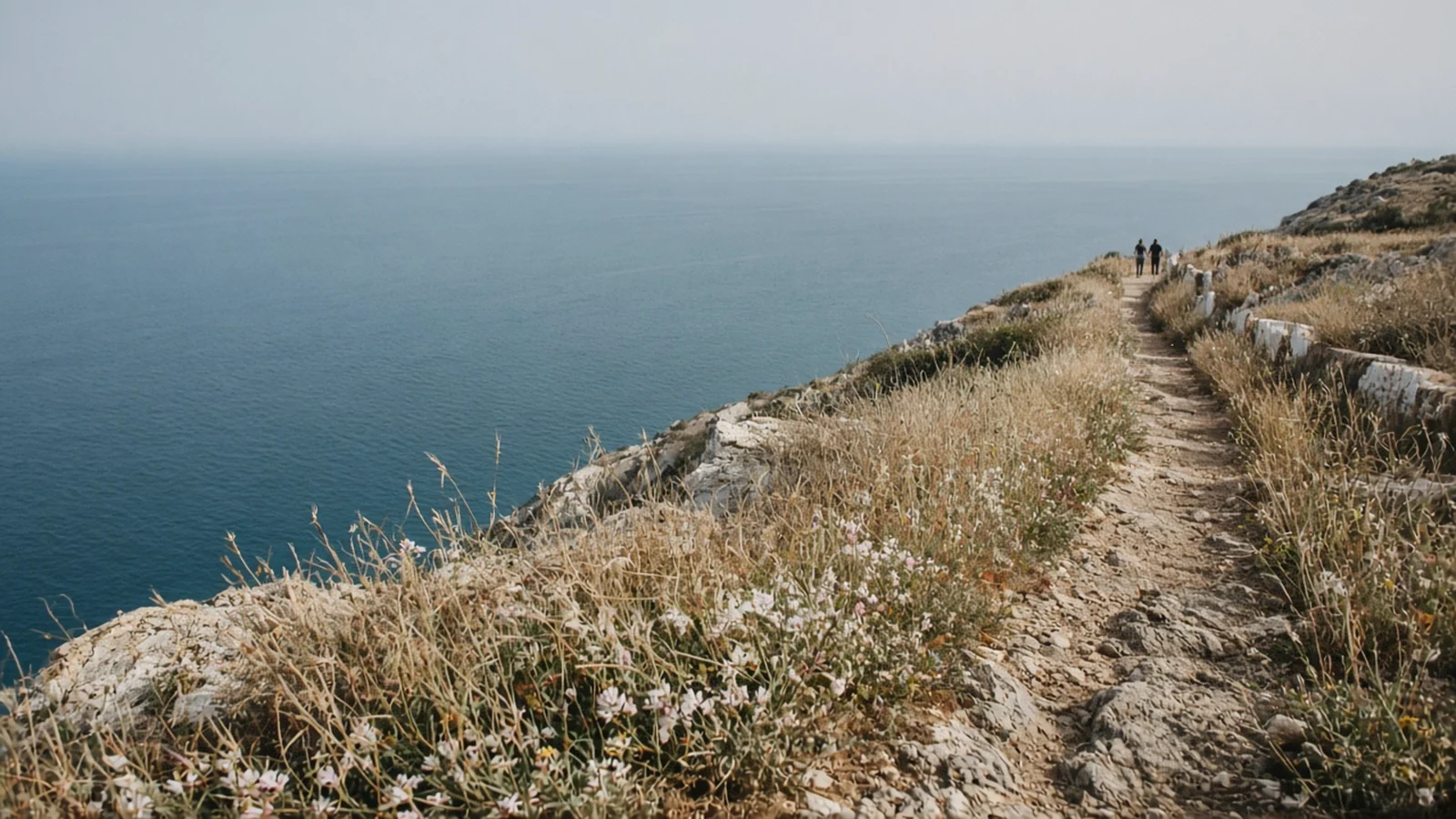
Short version: the most comfortable windows for Santorini are usually late spring and September, when more is open than in early April or late October, and the rim is not at its most packed. July and August are fully open, hot, busy, and more exposed to the summer wind. Winter is possible, but it is not the same holiday. This is a spoke from the site-wide timing pillar, not a table of invented temperatures.
Start with best time to visit the Greek islands and the Santorini travel guide. Month pages already exist for April, May, June, July and August, September and October. For wind, see meltemi. For whether the island is even the right trip, see is Santorini worth it.
Before you travel: fares, schedules, opening hours, tax rates and seasonal rules change often, and the details on this page may be out of date. Always confirm current prices, times and rules with the operator or the official site, or locally, before you travel.
Quick answer
| Period | What it is like, in plain terms |
|---|---|
| April | Shoulder, some openings, Easter can change everything; see islands in April |
| May and June | Often the most comfortable mix of light, swimming and open services; see May and June |
| July and August | Hottest, busiest, and most exposed to the summer wind; see July and August and meltemi |
| September and October | A favoured late season, with September usually livelier than late October; see September and October |
| Winter | Quieter, many visitor businesses closed; the island is still inhabited, but it is not the summer trip |
Month by month
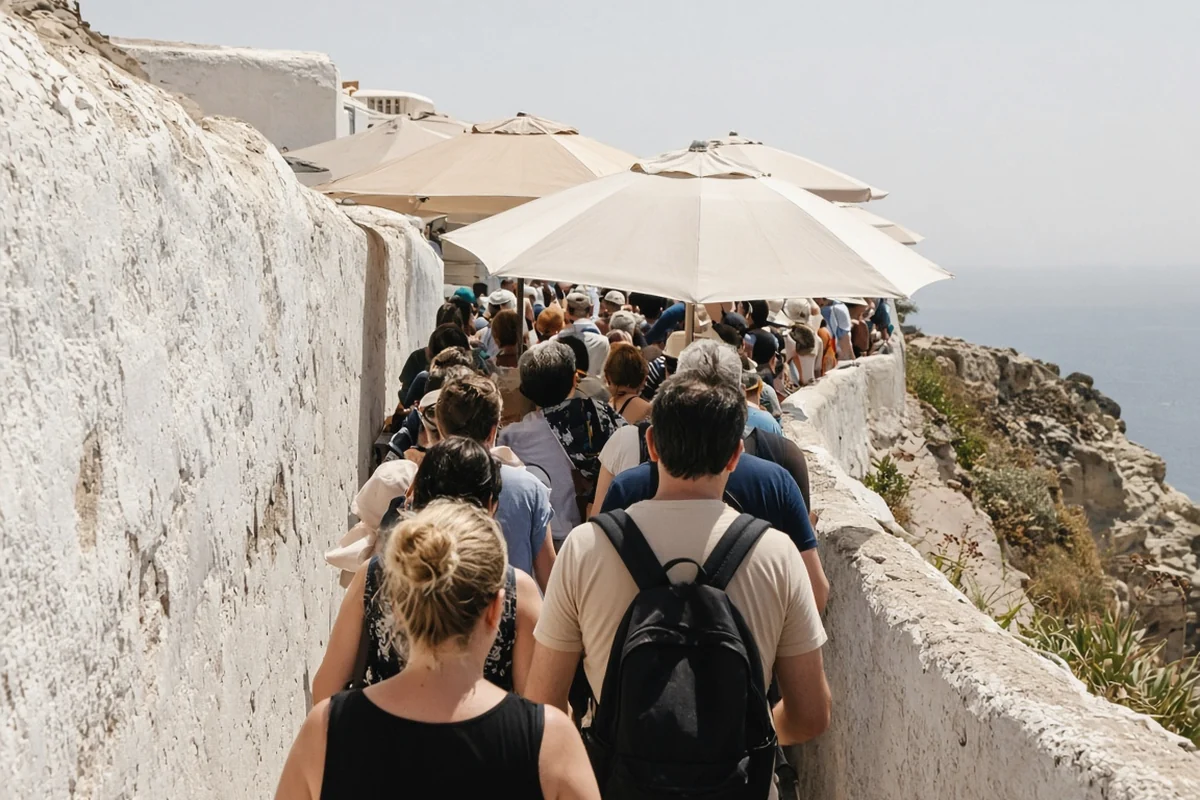
Santorini follows the broad Cycladic pattern, with a sharper crowding story than a quieter island because so much of the visit happens on a narrow rim. Shoulder months can be wonderful and also inconsistent: a week of still, clear days, or a week of wind and some closed doors. Midsummer is the opposite: you know what you are getting, and you pay for it in intensity.
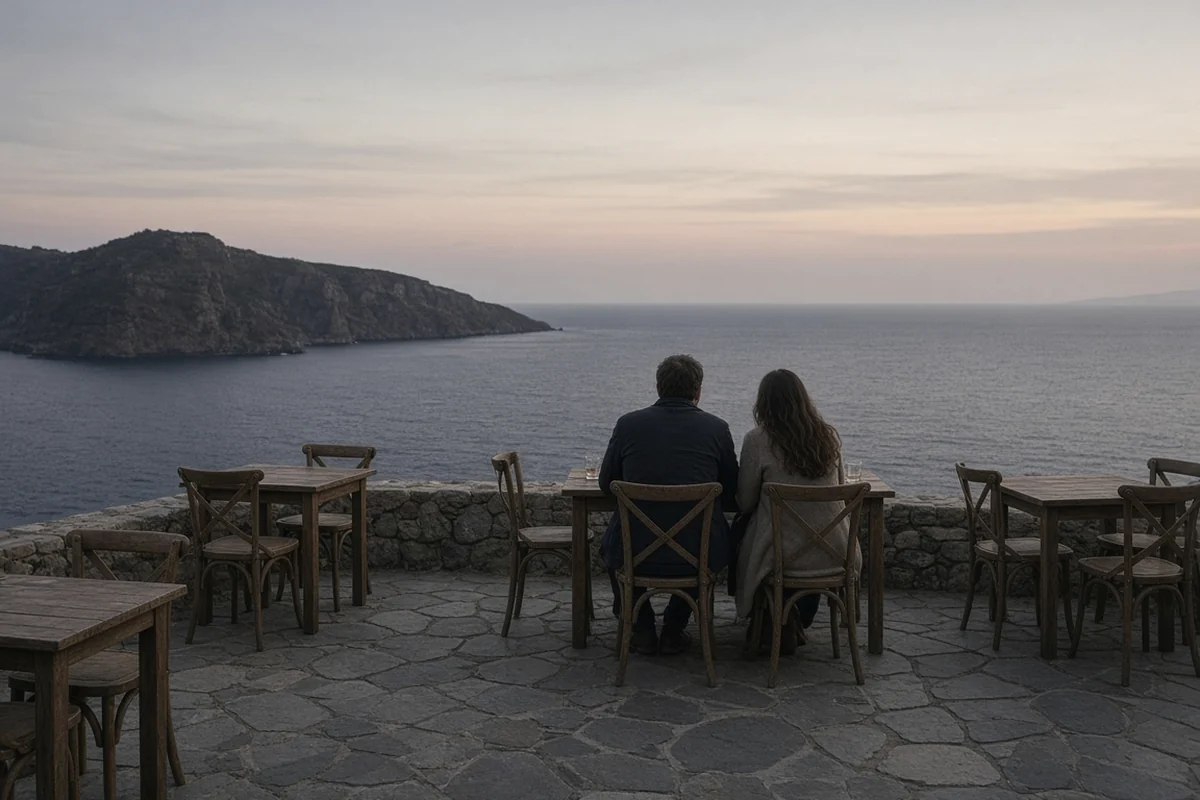
If your dates are fixed around school holidays, you can still have a good trip by choosing a base carefully, starting days early, and not treating Oia at sunset as a daily obligation. If your dates are flexible, move them towards June or September before you spend energy on a “secret” winter plan.
Crowds and the rim
The island is not only crowded because of hotel guests; day visitors and the geography of Fira and Oia concentrate people in the same lanes. That effect peaks in high summer and around famous sunsets. Sunset spots is the place to plan an evening that is not only a queue. Shoulder months do not make the island empty, but they change how the same walk feels.
Wind and ferries
The summer wind, the meltemi, can affect boats, some outdoor plans, and how pleasant a clifftop stay feels. It is not a reason to avoid Santorini by default, and it is a reason to leave slack around ferries in midsummer. Check current sailings with the operator close to travel, not only when you first book.
Swimming
People come to Santorini for the caldera more than for the beach, but swimming is part of many stays. Late summer and early autumn are the more reliable periods in general terms. Early in the season, some visitors find the water cool. For a group-wide discussion, use sea temperature rather than a single invented number for one Santorini bay.
Common mistakes
- Booking mid-August and expecting empty caldera paths.
- Booking late October or winter without checking what is open, including your hotel.
- Ignoring ferry buffers in the windy weeks.
- Choosing dates only from a temperature chart, and not from crowd and opening patterns.
Trip-ready checklist
Some links below are from our partners. We may earn a commission if you book, at no extra cost to you.
- Tickets — compare flights to Santorini for your dates, then check that ferries and stays are actually running in that week.
- Hotels — see where to stay in Santorini, Oia and Fira.
- Car — often unnecessary on the rim. See Santorini without a car.
- eSIM — set up a Greece data plan before you fly so tickets and maps work on arrival.
Frequently asked questions
What is the best month to visit Santorini?
May, June and September are the months most visitors find most comfortable, if they want open services without the height of the midsummer crowds. April and October can be excellent if you accept a quieter, sometimes windier, sometimes more closed island. Read is Santorini worth it if the season, not only the month, is what worries you.
Is July and August a bad time?
Not if you want guaranteed openings, long days, and you can live with heat, crowds and higher demand. It is a poor time if you hoped for empty lanes in Oia. See islands in July and August.
Can I visit Santorini in winter?
Yes, but it is a different trip: fewer visitor businesses, thinner ferries, and a more local rhythm. Check what is actually open for your dates.
When is the sea warm enough to swim?
Late summer and early autumn are the more reliable swimming months in general terms. Early summer can still feel cool to some visitors. For a wider, island-group view, see sea temperature rather than a guessed figure for one bay.
Sources and useful links
This page does not quote temperatures, rainfall totals or sea degrees from weather or booking sites. For month-by-month context across the islands, use our guides to the best time to visit the Greek islands and the individual month pages linked above.
Ferry operators such as Seajets and Blue Star Ferries publish current seasonal timetables. Check those for the week you travel.
Fares, timetables and opening seasons change. Check current details with the operator or official site before you book. This page does not quote prices or clock times from booking or guide sites.