Things to Do in Naxos, Greece: Ancient Marble, Mountain Villages and Long Beaches
Last updated: 17 November 2026
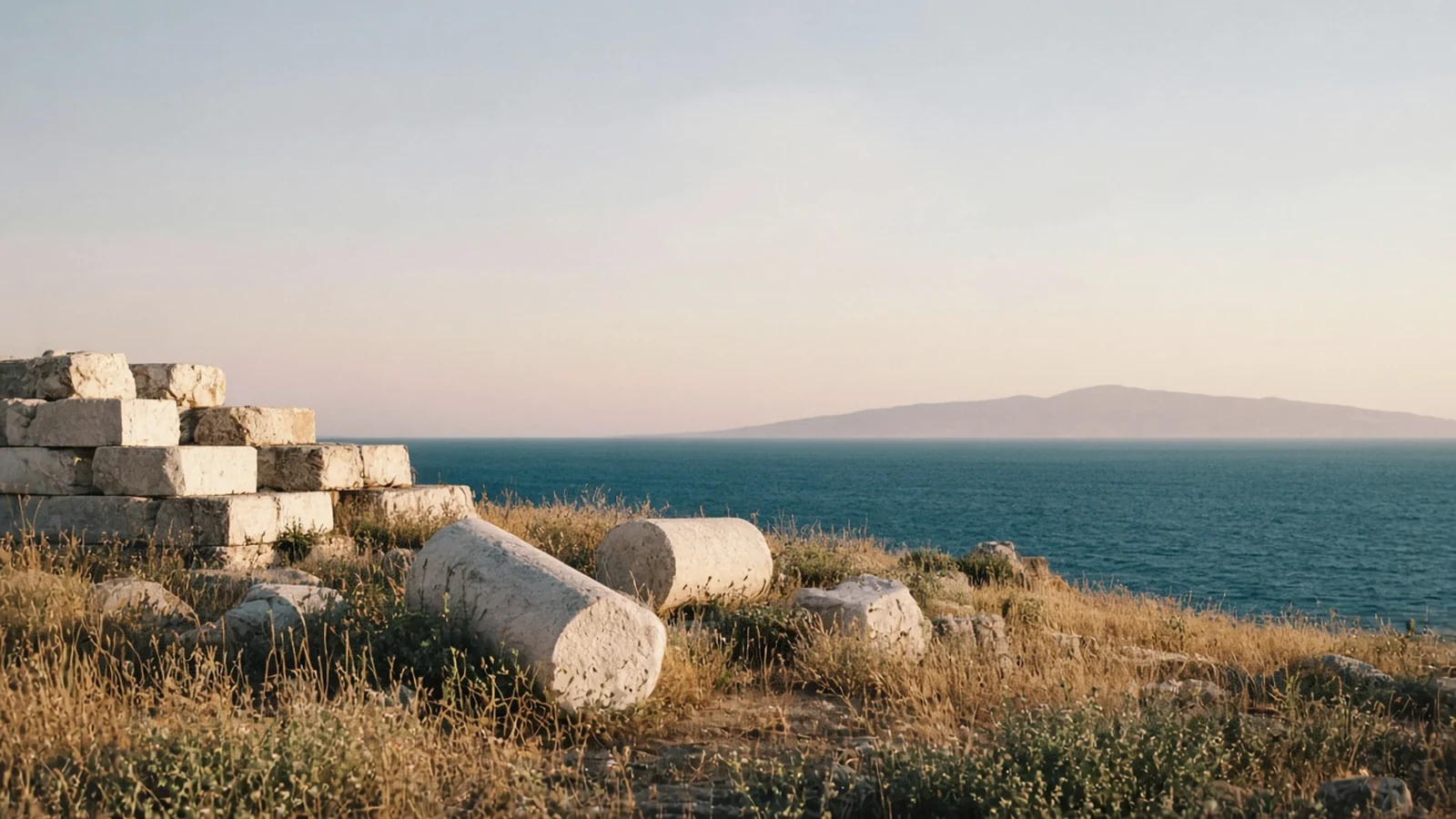
Short version: watch the sunset at the Portara, wander the Kastro and old town of Chora, spend a day on the sandy south-west beaches and another in the mountain villages, and see the giant unfinished marble statues still lying in the ancient quarries. Fit walkers can climb Mount Zas, the highest mountain in the Cyclades; in summer the wind brings kitesurfers to Mikri Vigla.
Naxos is the largest island in the Cyclades and one of the most varied: a port town with a medieval hilltop quarter, a mountain interior of olive groves and marble villages, and long sandy beaches. This page helps you choose what to do and how to fit it together; for the bigger picture, see our Naxos travel guide.
Before you travel: fares, schedules, opening hours, tax rates and seasonal rules change often, and the details on this page may be out of date. Always confirm current prices, times and rules with the operator or the official site, or locally, before you travel.
Quick answer: what to do in Naxos, by type of traveller
| If you are | Do this | Our verdict |
|---|---|---|
| On a first visit (3 to 4 days) | Portara at sunset, the Kastro, one south-west beach day, one mountain-village day | The classic mix |
| A family with young children | The town beach, a sandy bay on the south-west coast, an easy village lunch | Choose shallow, sheltered water and check the wind first |
| Into history | Portara, the archaeological museum exhibition, the Temple of Demeter, the kouroi | A full day with a car; start early |
| A walker | Mount Zas, then village paths around Halki and Apiranthos | Best in spring and autumn |
| Into wind sports | Mikri Vigla | Summer wind; book a school |
| An island-hopper | Koufonisia or another Small Cyclades island | Often better as a night or two |
| Travelling without a car | Chora, the south-west beaches and the villages by KTEL bus | Works; check the last bus back |
The Portara and Chora
The Portara is the huge marble doorway on the islet of Palatia, at the harbour entrance of Chora (Naxos Town). It is the one part still standing of a temple of Apollo begun around 530 BC by Lygdamis, the tyrant of Naxos. Work stopped when he was overthrown in 524 BC, and the temple was never finished. The door frame is made of four marble pieces, each about 6 metres long and weighing about 20 tonnes, according to the Ephorate of Antiquities of the Cyclades.
A paved path links the islet to the harbour front. Sunset is the famous time and gets crowded in summer; early morning is calmer. In rough weather, keep well back from the water’s edge. Legend links the islet with Ariadne and with Dionysus, the island’s god, as the municipal tourism site explains.
The Kastro, the old town and the museums
Behind the harbour, lanes climb through the old town to the Kastro, the castle quarter built in 1207 by the Venetian Marco Sanudo, who made Naxos the capital of his Duchy of the Aegean. It started as a fortress and grew into a walled town. Inside are Catholic churches, 17th-century monastic buildings and the mansions of old Latin families, as described by the Ephorate. Expect steps, smooth marble and dead ends; wear shoes with grip.
- Archaeological Museum of Naxos. While the museum building at the top of the Kastro is restored, most of the collection is shown in a temporary exhibition in the neighbouring former Ursuline building, with free admission, according to the Ephorate’s museum page. It lists morning-only hours, but its entries disagree on Tuesday closing, so check before you go.
- Venetian Museum. A privately run museum in the Della Rocca-Barozzi tower house, with period furniture, costumes and paintings, and evening music events in the courtyard from April to October, says the municipal tourism site. Hours are listed differently in different places; check locally.
- Metropolis on-site museum. Created in 1999, it lets you walk among excavated remains just as they were found, including a Mycenaean pottery workshop with a kiln. The Ephorate currently lists it as visits by appointment.
Temples and giant kouroi: ancient Naxos inland
Naxos was a centre of Archaic marble building and sculpture, and its countryside shows it better than any museum.
The Temple of Demeter near Sangri
On a low hill at Gyroulas, south of the village of Sangri, stands a temple of Demeter built entirely of marble, from the walls to the roof tiles. It dates to around 530 BC and was part of the building programme of Lygdamis. Its curves and optical corrections, the Ephorate notes, anticipate those of the Parthenon by about a century. A small museum beside it shows finds from the site. The Ephorate lists the site and museum as open daily except Tuesday, from morning to mid-afternoon, with a full ticket of €5.
The kouroi of Flerio and Apollonas
The most memorable ancient sight on Naxos may be the statues that never left the quarry. Near the village of Melanes, at Flerio, a colossal kouros, a standing male figure, lies where it was abandoned in the first half of the 6th century BC after its legs broke as it was being moved. Complete, it would have stood about 5.5 metres tall. A signposted path leads higher into the hills to a second kouros at Farangi, and near the springs of Flerio is an ancient rural sanctuary, known as the Sanctuary of the Springs.
At Apollonas, on the far north-east tip of the island, an even larger figure lies on the hillside above the village: 10.45 metres long, which makes it the largest known sculpture of the Archaic period, according to the Ephorate’s page on the three colossal statues. It is usually called a kouros, but it is actually a clothed, bearded figure, perhaps Apollo or Dionysus, left unfinished in the quarry. The drive is long and winding, so combine it with the mountain villages.
The mountain villages: Halki, Filoti and Apiranthos
Inland Naxos is a different island of terraced hills, olive groves and Venetian towers. Three villages make an easy day by car or bus; our Naxos mountain villages guide covers the loop in detail.
- Halki. Also known as Tragea, after its district, and once the island’s administrative centre, Halki sits in an olive grove with Byzantine and Venetian towers. It has the Byzantine church of Panagia Protothroni with its frescoes, and the village has galleries and cafes. The Vallindras distillery, whose family has made citron liqueur since 1896, gives tours of its old stills and tastings; check its current opening times.
- Filoti. The largest village on the island, about 19 km from Chora on the slopes of Mount Zas. Cafes sit in the shade of a plane tree over 100 years old, and the church of Panagia Filotitissa has a white marble screen, says KTEL Naxos. The main Zas trail starts here.
- Apiranthos. Also spelled Apeiranthos, it sits at about 650 metres on the slopes of Mount Fanari, with marble-paved lanes, often under archways, that have barely changed in centuries. It has four museums: archaeological, folk art, geological and natural history. The Ephorate lists the archaeological collection as open daily except Tuesday, with a full ticket of €5. Look for hand-woven textiles from its women’s cooperative.

Leave time for a long lunch and do not add the coast as well: the roads are slower than the map suggests.
Climb Mount Zas
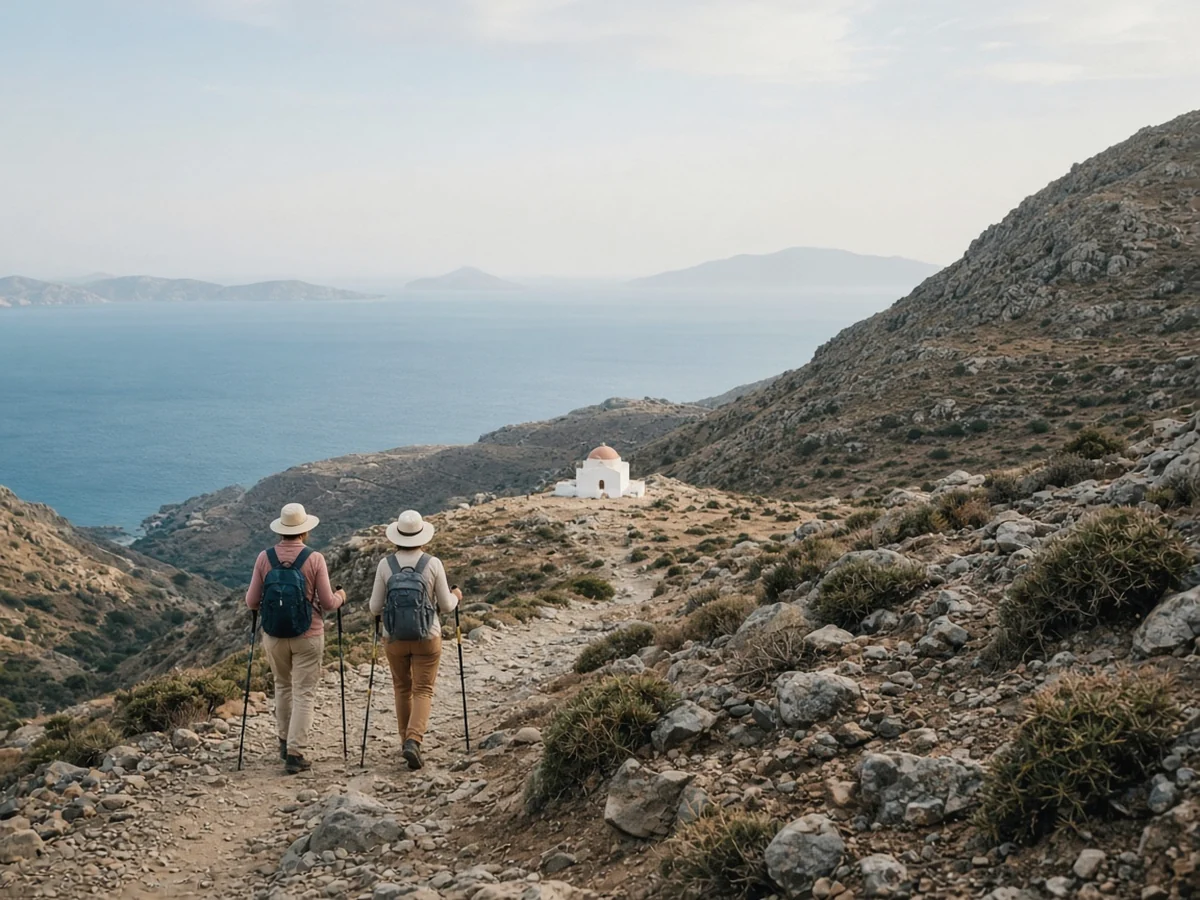
Mount Zas, named after Zeus, is the highest mountain in the Cyclades, at a little over 1,000 metres (published heights differ by a few metres). In myth, Zeus was raised in a cave on its slopes; near the Levgasa spring an ancient inscription cut into the rock reads, in translation, “Mount of Zeus, Protector of the Sheep”, according to the municipal trail page.
There are two usual routes. The shorter starts at the chapel of Agia Marina above Filoti, which has its own stop, “Ag. Marina (Mount Zas)”, on the KTEL Naxos timetable. The official Trail 2 is a circuit from Filoti: up past Agia Marina and the Levgasa spring to the summit, then a steep descent towards the Zas cave, where the path becomes rugged and hard to make out, then back via the Arion fountain under an old plane tree.
Treat it as a real mountain walk, not a stroll. Wear proper shoes, carry plenty of water, sun protection and an offline map, and check the forecast. Turn back in strong wind, cloud or summer heat. Our Mount Zas hike guide covers both routes in detail.
Beaches: the long sandy south-west
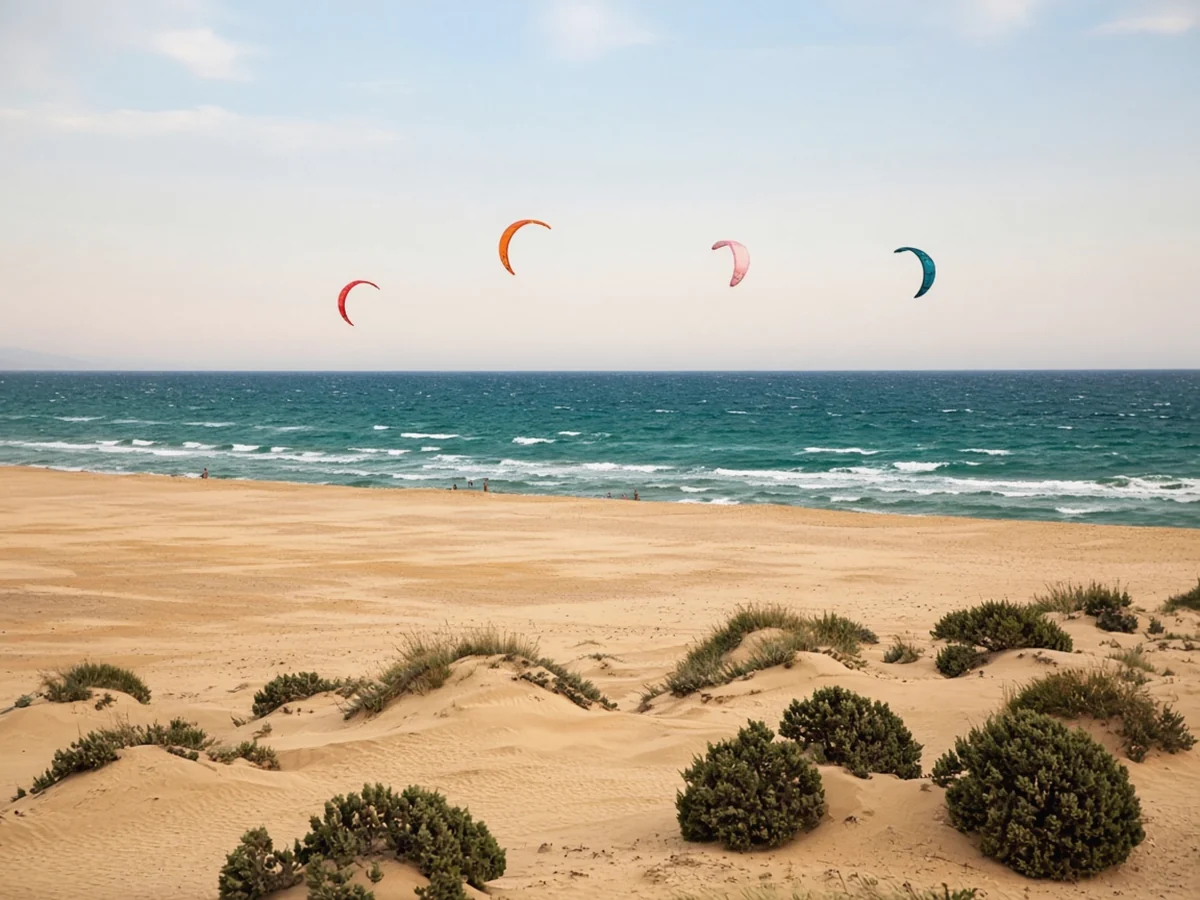
The best-known beaches line the west and south-west coast. Agios Georgios is Chora’s own beach, with shallow water that suits families. Heading south, Agios Prokopios (about 5 km from town and roughly a kilometre long), Agia Anna, with tavernas almost on the water, and long Plaka run one into the next, all on the bus route. Further south come Mikri Vigla, the wind-sports beach, quieter Parthena beside it with a white chapel on the rocks, and Alyko and Pyrgaki, with sand dunes and low trees. In the north, Abram and Apollonas are wilder and stonier, with deep, clear water, as Visit Greece describes them.
The wind decides the day. In summer the strong north wind, the meltemi, can make exposed beaches choppy and sandy; pick a sheltered stretch or spend that day inland. With children, think about shade, the walk from the bus stop and the waves. See our best beaches in Naxos, Naxos with kids and meltemi wind guides.
Kitesurfing and windsurfing at Mikri Vigla
Mikri Vigla, about 12 km south of Chora, is described by KTEL Naxos as one of the best places in the Aegean for windsurfing and kitesurfing, and Visit Greece credits its steady winds. Several schools work from the bay, including Thalasea Sports and Flisvos Kite Centre, with lessons and rental. Season dates differ, roughly spring to autumn, so check with the school, and book ahead in July and August.
Koufonisia and the Small Cyclades
South-east of Naxos lie the Small Cyclades: Iraklia, Schinoussa, Koufonisia and Donousa, small islands with few cars and very clear water. Their lifeline is the Express Skopelitis of Small Cyclades Lines, which runs six services a week linking Naxos, the Small Cyclades and Amorgos. A new public-service contract keeps it on the route until October 2029, as reported by Naxos Times (1 November 2026).
That boat serves the islanders: on its 2026 timetable it left Naxos in the early afternoon and came back from the islands in the morning, so it does not give you a same-day return. In summer, faster ferries and day cruises can make a day on Koufonisia work; otherwise, stay a night or two. Check current fares/times with the operators. Our day trips from Naxos, Koufonisia travel guide and Small Cyclades guide compare the options.
Food and drink: what to try in Naxos
Naxos is a farming island, known for its cheese, potatoes, meat, olive oil and honey, says the municipal tourism site:
- Cheese. Graviera of Naxos, a hard table cheese made mostly from cow’s milk, has had protected designation of origin status since 1996, according to the municipal cheese page. Also try aged arseniko, spicy kopanisti and soft, slightly sour xinomyzithra.
- Potatoes. Naxos potatoes are registered in the EU as a protected geographical indication, and the municipal tourism site calls them among the best in Greece. Order them simply fried, with a village salad.
- Kitro. A liqueur distilled from the leaves of the citron tree, made only on Naxos, in three styles: green, gold and clear, according to the municipal kitro page. Distillers have shops at the port, and you can see it made at the Vallindras distillery in Halki.
- Wine and honey. As the island of Dionysus, Naxos has its own local wines; ask for the house wine in village tavernas, and look for thyme honey.
Eat at least once in a mountain village. Ask about fish sold by weight before you order. Our what to eat in Naxos guide goes further.
At a glance: what, where, time needed and whether you need a car
| What | Where | Time needed | Car needed? |
|---|---|---|---|
| Portara | Harbour, Chora | 30 to 60 minutes | No; walk from town |
| Kastro and old town | Chora | 2 to 3 hours | No |
| Temple of Demeter | South of Sangri | 1 to 2 hours | Easiest by car or taxi |
| Kouros of Flerio | Near Melanes | 1 to 2 hours | Easiest by car; buses to Melanes are few |
| Kouros of Apollonas | Far north-east | A full day with the drive | In practice yes; buses are rare outside summer |
| Halki, Filoti and Apiranthos | Central mountains | A full day | No; KTEL buses, but a car is more flexible |
| Mount Zas | Above Filoti | Half a day to a full day | No; bus stop at Agia Marina, check the return |
| South-west beaches | Agios Georgios to Plaka | Half a day or more | No; on the bus route |
| Mikri Vigla | South-west coast | Half a day or more | Bus or car; check the timetable |
| Alyko and Pyrgaki | South coast | Half a day | Usually yes |
| Koufonisia | Small Cyclades | A day in summer, or stay over | No; it is a boat trip |
Times are our own planning estimates, not official figures.
Getting around and where to base yourself
KTEL Naxos runs buses from Chora to the main beaches and mountain villages all year, but the service shrinks a lot out of season. On its timetable for 7 to 30 November 2026, for example, the south-west beach buses ran on weekdays only, and Apollonas had a bus only on Tuesdays and Thursdays. Check current fares/times on the KTEL site, and the return bus before you set out. See Naxos without a car and renting a car in Naxos.
Chora and Agios Georgios are the practical base for buses, boats and evenings out; Agios Prokopios and Agia Anna suit a beach-first stay; a mountain village suits walkers who have a car. Our where to stay in Naxos guide compares the areas. Arriving by sea? See the ferry from Athens to Naxos and Paros to Naxos ferry guides.
How many days, and when to go
- 3 days: Chora, the Kastro and the Portara; one beach day; one mountain-village day.
- 5 days: add the Temple of Demeter and the kouroi, plus Mount Zas or an afternoon at Mikri Vigla.
- A week or more: add Apollonas and the north, and a night or two in the Small Cyclades.
Our how many days in Naxos guide has fuller day-by-day plans. For walking and village days, spring and autumn are the most comfortable; see our guides to the Greek islands in May, June, September and October. July and August are hot, busy and often windy. In winter, buses are fewer and some seasonal businesses close.
Frequently asked questions
What is there to do in Naxos?
See the Portara at sunset, explore the Kastro in Chora, spend a day on the south-west beaches and another in the mountain villages of Halki, Filoti and Apiranthos. Add the Temple of Demeter, the unfinished marble kouroi, Mount Zas, kitesurfing at Mikri Vigla or a trip to the Small Cyclades.
What should I not miss on a first visit to Naxos?
The Portara and the Kastro, one beach day on the south-west coast and one day in the mountain villages.
Do I need a car in Naxos?
No. KTEL buses link Chora with the main beaches and villages, more often in summer. A car for a day or two helps for the kouroi, Apollonas and the quieter south coast.
How hard is the Mount Zas hike?
It is a proper mountain walk to a little over 1,000 metres. The route from the chapel of Agia Marina is the shorter way up; the circuit from Filoti has a steep, rugged descent near the Zas cave. Avoid it in strong wind, cloud or heat.
Can you visit Koufonisia as a day trip from Naxos?
In summer, yes, on faster ferries or organised day cruises. The year-round Express Skopelitis leaves Naxos in the early afternoon and returns in the morning, so out of season plan to stay a night. Check current fares and times with the operators.
Where is the best kitesurfing on Naxos?
Mikri Vigla, on the south-west coast, with several schools offering lessons and rental. Season dates vary by school, so check with them directly.
Are the archaeological sites on Naxos open in winter?
Yes. The Ephorate lists the Temple of Demeter and the Apiranthos collection as open daily except Tuesday, morning to mid-afternoon, and the museum exhibition in the Kastro with morning hours. Check before you go.
Sources and useful links
- Ephorate of Antiquities of the Cyclades: the sanctuary of Delian Apollo (Portara)
- Ephorate of Antiquities of the Cyclades: hours and admission
- Ephorate of Antiquities of the Cyclades: Byzantine Naxos and the Kastro
- Ephorate of Antiquities of the Cyclades: Archaeological Museum of Naxos
- Ephorate of Antiquities of the Cyclades: Sangri site and collection
- Ephorate of Antiquities of the Cyclades: the kouroi of Melanes and Apollonas
- Naxos and the Small Cyclades (municipal tourism): the Temple of Apollo, Portara
- Naxos and the Small Cyclades: Trail 2, Filoti and Mount Zas
- Naxos and the Small Cyclades: Naxian cheese
- Naxos and the Small Cyclades: kitro
- KTEL Naxos: routes and current timetables
- Visit Greece: beaches of Naxos
- Small Cyclades Lines (Express Skopelitis)
- Naxos Times: Express Skopelitis contract to 2029 (1 November 2026, Greek)
Opening hours, bus timetables, boat programmes and local rules change every season. We do not quote fares or crossing times; check current fares/times with the operators, and hours on the official pages above.